
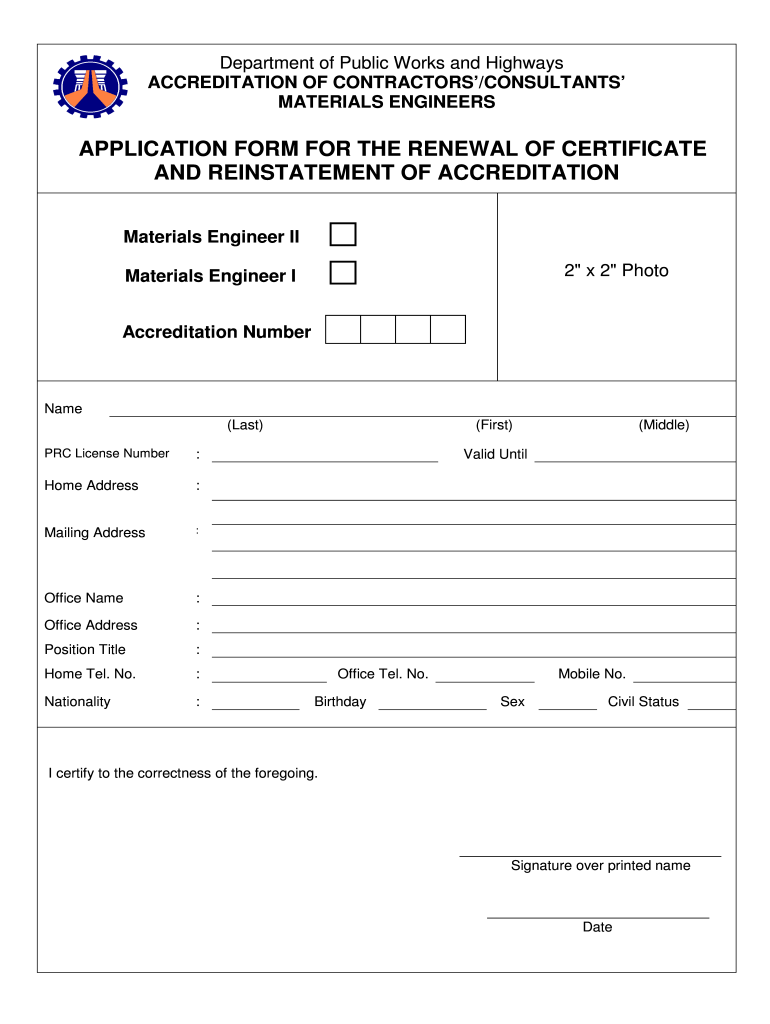







Definition and Meaning of Materials Engineer Accreditation Renewal
The renewal of materials engineer accreditation is a formal process allowing qualified engineers to maintain their professional status within the field of materials engineering. Accreditation serves as a recognition of the engineer's education, experience, and expertise. Through this process, engineers demonstrate their commitment to ongoing professional development and adherence to industry standards.
Renewal typically involves submitting necessary documentation that reflects continued education, relevant work experience, and adherence to a code of ethics. The accreditation is essential for professionals looking to work in regulated environments or industries requiring certified engineering practices.
Importance of Accreditation Renewal
Maintaining accreditation is vital for career advancement and job opportunities. It enhances credibility, assures clients and employers of a professional standard, and is often a legal requirement for specific positions within the engineering field.
- Professional Credibility: Accredited engineers are viewed as specialists in their domain, improving their professional standing.
- Legal Compliance: In many jurisdictions, active accreditation is required for legal practice in engineering-related fields.
- Job Opportunities: Many employers prioritize or require accreditation status for recruitment.
Steps to Complete Materials Engineer Accreditation Renewal
Renewing materials engineer accreditation involves a series of structured steps to ensure compliance with the regulatory body's requirements. The following steps outline the process typically followed:
- Review Accreditation Requirements: Familiarize yourself with the renewal criteria set by the accrediting body. This may include understanding the continuing education units (CEUs) required and any specific documentation needed.
- Gather Required Documentation: Collect necessary records such as proof of completed professional development courses, project summaries, and employment verification forms.
- Complete Required Forms: Fill out the appropriate renewal application forms accurately, ensuring that all information is up-to-date.
- Submit Application and Fees: Send the completed application along with any applicable renewal fees to the designated authority, ensuring it is submitted before the expiration date to avoid lapses.
- Await Confirmation: After submission, monitor for a confirmation of receipt and any follow-up actions required.
Following these steps diligently will help ensure a successful renewal of materials engineer accreditation.
Key Documents for Renewal
The renewal process typically requires the following documents:
- Proof of Continuing Education: Certificates from completed courses, workshops, or seminars.
- Work Experience Verification: Documentation from employers confirming relevant engineering experience.
- Accreditation Application Form: The official renewal form that provides personal and professional details.
Eligibility Criteria for Renewal of Materials Engineer Accreditation
To renew materials engineer accreditation, certain eligibility criteria must usually be met, which may include the following:
- Active Status: The engineer must hold a current valid accreditation before applying for renewal.
- Continuing Education Requirements: Meeting the mandated CEUs, often a specific number within a defined period, is crucial to demonstrate ongoing professional growth.
- Code of Ethics Compliance: A commitment to ethical practices as outlined by the accrediting body is typically required, ensuring the integrity of the profession.
Ensuring compliance with these criteria is fundamental to a successful renewal application.


Required Documents for Renewal of Materials Engineer Accreditation
The documentation required for the renewal of materials engineer accreditation varies by institution, but typically includes:
- CEU Documentation: Records of completion for courses or workshops that meet the continuing education requirements.
- Application Form: The official form needed for renewal, providing personal and professional information to the accrediting authority.
- Professional References: Sometimes, references or endorsements from supervisors or colleagues may be necessary.
Organizing and submitting these documents accurately ensures compliance and expedites the renewal process.
Application Process and Approval Time for Renewal
The application process for renewing materials engineer accreditation involves a systematic approach, and the timeframe for approval can vary. Here’s an outline of the process and expected timelines:
- Submission Window: Most bodies have a defined period prior to accreditation expiration when applications may be submitted. This could be six months or more before the accreditation expiry date.
- Processing Time: Once submitted, the processing time to review the renewal application often ranges from four to eight weeks. Factors impacting the time may include the volume of applications, completeness of submitted documents, and specific institutional policies.
- Notification of Status: Applicants will receive confirmation regarding their renewal status. If additional information or corrections are needed, this could affect the overall processing time.
Understanding this timeline helps applicants plan effectively to avoid any interruptions in their professional accreditation.
Legal Use of Materials Engineer Accreditation
The legal use of materials engineer accreditation can significantly impact an engineer’s practice. Here are key aspects to consider:
- Regulatory Compliance: Holding a valid accreditation status is often a legal requirement to practice materials engineering in many states. Without it, an engineer may not be permitted to sign off on projects or documents legally.
- Contracts and Liabilities: Accreditation may affect contractual obligations, as clients often require proof of qualifications. Non-compliance may lead to potential legal issues related to contract breaches or liability claims.
- Professional Standards: Engineers must adhere to legal standards set forth in their regulations. This includes maintaining ethical practices and completing renewal requirements timely.
Staying informed about the legal implications of accreditation ensures that materials engineers can avoid potential pitfalls in their professional practice.




