







Definition & Meaning
The "How to Answer a Lawsuit for Debt Collection Debt Collection Defense in Washington State" is a legal document guide tailored to assist defendants in responding to a creditor's lawsuit. It outlines the necessary steps and considerations for effectively defending against a debt collection lawsuit in Washington State. The main purpose of this document is to equip defendants with the knowledge needed to either contest the debt claim, negotiate a settlement, or prepare for a court appearance. This document includes a breakdown of terms, procedures, and various defenses that can be utilized to protect one's legal rights in debt collection cases.
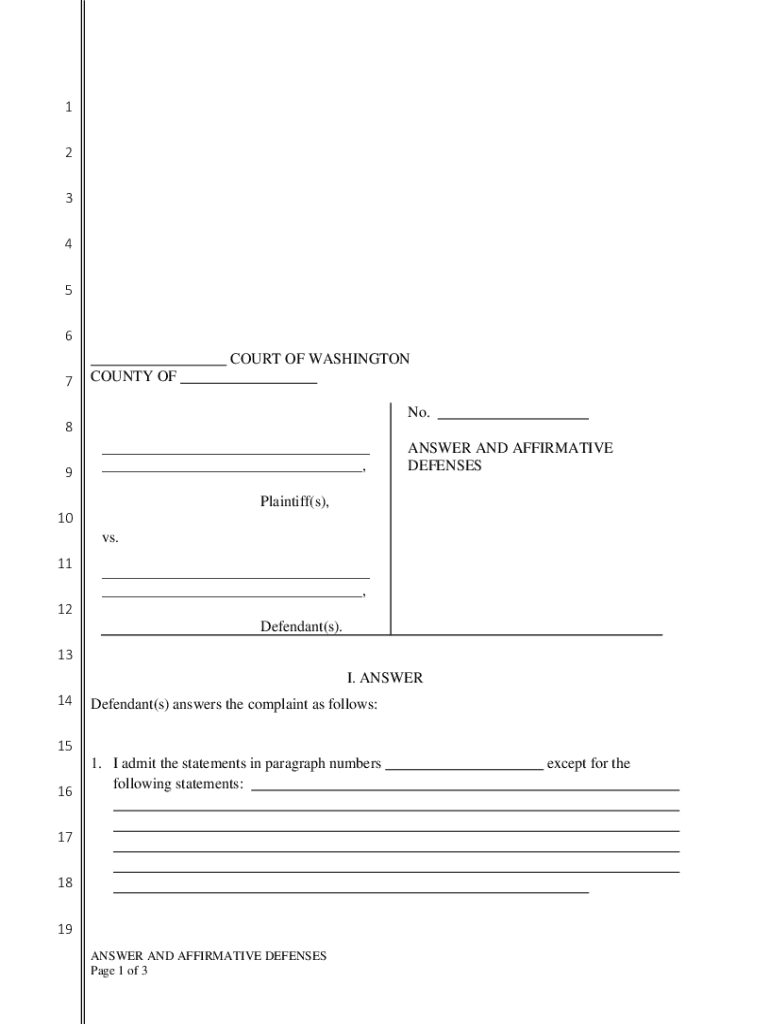
Steps to Complete the Response Form
Responding to a debt collection lawsuit in Washington involves several critical steps:
-
Review the Complaint: Carefully read through the plaintiff's complaint, identifying each claim and noting deadlines for your response.
-
Admit or Deny Allegations: For each allegation in the complaint, you must either admit, deny, or state you lack the knowledge to respond.
-
Raise Affirmative Defenses: Outline any affirmative defenses you plan to assert, such as erroneous debt details or violations of Fair Debt Collection Practices.
-
File a Notice of Appearance: Submit this document to indicate your involvement and intent to participate in the lawsuit.
-
Prepare the Certificate of Service: This confirms that a copy of your response has been served to the plaintiff or their attorney as required by law.
-
Submit Your Response: File your completed response with the court clerk and ensure it is submitted within the specified timeframe.
Key Elements of the Defense Form
Several important components constitute the defense form:
-
Identification of Parties: Clearly list the plaintiff's and defendant's names and contact details.
-
Detailed Response: Each point in the plaintiff's complaint must be addressed - whether admitted, denied, or stated as unknown.
-
Affirmative Defenses: Present any valid defenses like statute of limitations or errors in the debt claim.
-
Signature and Verification: Ensure the document is signed and, if required, notarized.
-
Filing Information: Include court details, case number, and submission date prominently.
Legal Use of the Document
The form primarily serves a legal purpose in disputing a debt claim:
-
Protecting Rights: Provides an opportunity to assert defenses that can mitigate or nullify the debt claim.
-
Court Preparation: Enables the defendant to formally prepare for trial or settlement discussions.
-
Legal Compliance: Ensures the defendant adheres to state and federal legal requirements in debt disputes.
State-Specific Rules
In Washington State, particular rules must be observed while completing the debt collection defense:
-
Statute of Limitations: Verify that the debt falls within Washington's limitation period (typically six years for written contracts).
-
Specific Formatting: Follow local court rules regarding document structure, filing fees, and submission methods.
-
Consumer Protection Laws: Leverage state-specific protections under Washington's Consumer Protection Act.
Who Typically Uses This Form
Different parties may need to engage with this form:
-
Defendants: Individuals facing lawsuits from creditors for unpaid debts.
-
Attorneys: Legal professionals who represent clients in debt collection cases.
-
Pro Se Litigants: Individuals choosing to represent themselves without an attorney.
Required Documents
Compiling necessary documents is crucial for a valid defense:
-
Debt Validation Notices: Provide evidence of efforts to verify the debt.
-
Payment Records: Demonstrate any payments made towards the debt in question.
-
Correspondence: Include any communications with the creditor or collection agency.
-
Legal Correspondence: Copies of all filings and legal notices received.
Important Terms Related to Debt Collection Defense
Understanding key terminology can aid in the process:
-
Affirmative Defense: A legal strategy where the defendant introduces evidence to negate liability.
-
Notice of Appearance: A formal declaration of a party's intention to participate in the proceedings.
-
Certificate of Service: Documentation verifying delivery of legal documents to the opposing party.




