




01. Edit your notarized bill of sale for car online
Type text, add images, blackout confidential details, add comments, highlights and more.

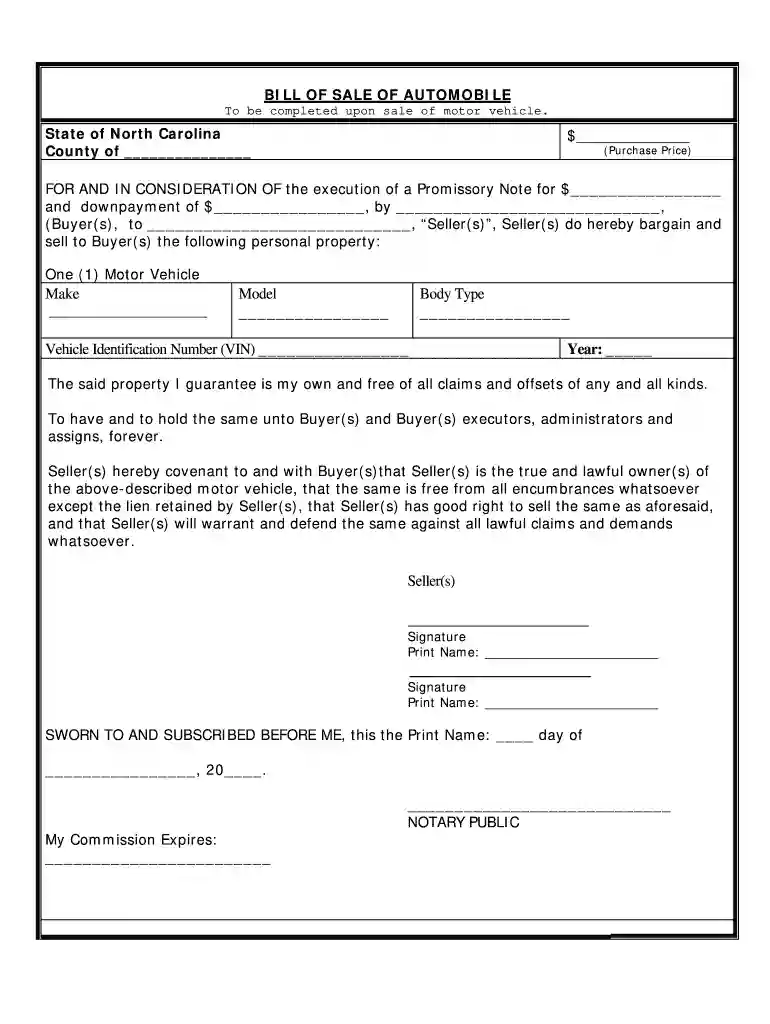
Type text, add images, blackout confidential details, add comments, highlights and more.

Draw your signature, type it, upload its image, or use your mobile device as a signature pad.

Send vehicle bill of sale with notary via email, link, or fax. You can also download it, export it or print it out.
The NC bill of sale is a legal document that records the transfer of ownership of personal property, typically a vehicle, from one party to another in North Carolina. It serves as proof of purchase and includes critical information about the transaction. This document not only outlines the details of the sale, including parties involved and sale price, but it also provides legal protection for both the buyer and seller.
An NC bill of sale for a car should have specific components for it to be legally binding and effective:
The document serves as a legal record of the sale and protects both the seller and the buyer:
Creating a bill of sale in North Carolina is a straightforward process. Following these steps can help ensure that the document meets legal requirements:
Gather Necessary Information:
Select a Template:
Fill Out the Document:
Review the Document:
Sign the Document:
While notarization is not mandatory in North Carolina, having a notarized bill of sale can provide additional security and legality to the transaction.
Once the bill of sale is completed and signed, it is essential for the buyer to use this document for DMV registration:
The NC bill of sale is commonly used in various scenarios:
North Carolina offers a standard bill of sale template that can be obtained online for free. This printable bill of sale ensures that individuals have access to a compliant form.
To maintain clarity and legality in your transactions, always ensure accurate completion of the NC bill of sale. Key practices include:
Implementing these practices can significantly enhance the security and clarity of transactions involving the NC bill of sale while protecting both buyers and sellers.
At DocHub, your data security is our priority. We follow HIPAA, SOC2, GDPR, and other standards, so you can work on your documents with confidence.



A car bill of sale is an agreement made by a dealership and buyer that proves ownership and confirms both parties rights and responsibilities regarding theRead more
Each form must be completed in duplicate, signed by the buyer and seller, and the original or copy provided to the buyer and a copy of original retained by theRead more
Mar 31, 2023 Vehicle Title Bill of Sale Title Application (MVR-1) Odometer Disclosure Statement (MVR-180) Damage Disclosure Statement (MVR-181).


