
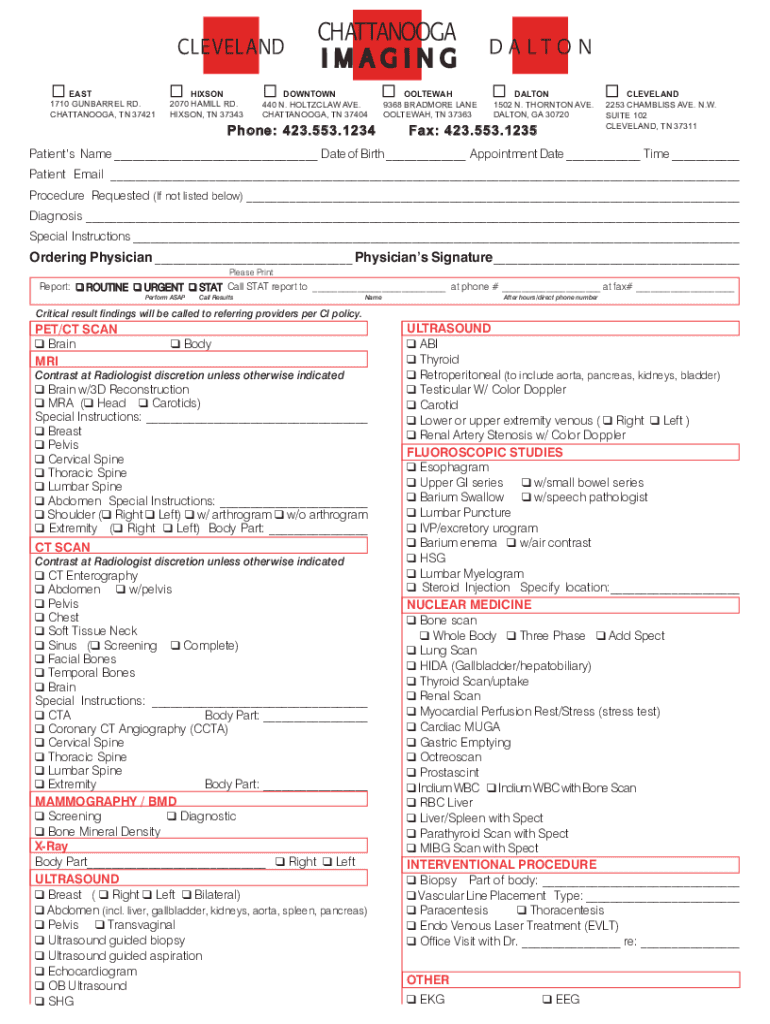







Definition & Meaning of Chattanooga Imaging East
Chattanooga Imaging East, located at 1710 Gunbarrel Rd in Chattanooga, TN, is a specialized medical facility offering a range of imaging services. These services include diagnostic tools such as PET/CT scans, MRIs, CT scans, mammograms, and ultrasounds. The facility is part of a network of imaging centers that provide essential diagnostic and screening services to patients in Chattanooga and surrounding areas. Understanding the offerings and capabilities of this facility is crucial for patients seeking precise medical imaging for diagnosis and treatment planning.
How to Use the Imaging Services at Chattanooga Imaging East
Using the imaging services at Chattanooga Imaging East involves several steps to ensure comprehensive care.
- Appointment Scheduling: Patients can schedule appointments by contacting the facility directly via phone or through their healthcare provider's referral system.
- Preparation Instructions: Before the day of the appointment, patients are typically given specific preparation instructions depending on the type of imaging procedure they will undergo. For example, fasting may be required for certain scans, while others may involve no dietary restrictions.
- Arrival and Check-In: Upon arriving at the facility, patients are required to check in at the reception where their personal and insurance information is verified.
- Procedure: The imaging procedure is performed by qualified technologists, who guide patients through the process and ensure they are comfortable throughout.
- Results Consultation: After the imaging is complete, results are typically sent to the referring healthcare provider, who will consult with the patient to discuss findings and next steps.
Tips for a Smooth Experience
- Arrive early to complete any necessary paperwork.
- Bring valid identification and insurance information.
- Wear comfortable clothing and avoid wearing jewelry or metal accessories.
Steps to Complete the Imaging Procedure
Completing an imaging procedure at Chattanooga Imaging East involves a streamlined process to ensure efficiency and accuracy.
- Pre-Procedure Consultation: Discuss any medical history or current medications with the imaging technologist.
- Procedure Preparation: Follow the specific instructions provided, which may include changing into a hospital gown or removing specific items.
- Imaging Process: Remain still during the imaging process to ensure clear and accurate results. The technologist will communicate with you throughout the procedure.
- Post-Procedure Guidelines: Follow any post-procedure guidelines given, such as drinking additional fluids or avoiding strenuous activity if contrast material was used.
Key Elements of Chattanooga Imaging East Services
Chattanooga Imaging East offers several key elements that make it a preferred choice for diagnostic imaging.
- Comprehensive Imaging Modalities: The center provides a wide range of diagnostic imaging techniques, ensuring that patients receive the most effective method for their particular condition.
- Advanced Technology: The facility is equipped with state-of-the-art imaging technology that provides high-resolution images, crucial for accurate diagnosis.
- Experienced Staff: The team includes certified radiologists and technologists who are trained to conduct and interpret complex imaging tests, providing expert analysis.
- Patient-Centric Approach: The facility emphasizes patient comfort and understanding, offering clear instructions and support throughout the imaging process.
Important Terms Related to Imaging
Understanding specific terms related to imaging procedures can enhance a patient's experience and clarity:
- MRI (Magnetic Resonance Imaging): A non-invasive test using magnetic fields to produce detailed images of organs and tissues.
- CT (Computed Tomography) Scan: Uses X-rays to create detailed images of structures inside the body, often used for cancer detection.
- PET (Positron Emission Tomography) Scan: A type of nuclear medicine imaging that helps evaluate organ and tissue functions.
- Ultrasound: Utilizes sound waves to produce images of structures within the body, commonly used for monitoring pregnancies and evaluating organ function.
Legal Use and Compliance
Chattanooga Imaging East adheres to strict healthcare regulations to maintain the privacy and security of patient information, aligning with laws such as the Health Insurance Portability and Accountability Act (HIPAA). Patients are required to provide consent for procedures and the sharing of their medical information with healthcare providers or insurance companies. The facility also ensures compliance with medical imaging protocols and safety standards to protect patient health and safety.
Required Documents for Imaging Appointments
Patients need to prepare several documents for their imaging appointments to facilitate a smooth check-in process:
- Referral Form: Provided by the healthcare provider recommending the imaging service.
- Insurance Card: Required for billing purposes and confirmation of coverage.
- Identification: A government-issued ID to verify patient identity.
- Medical History: Any relevant medical records or details of previous imaging procedures that may assist in the current diagnosis.
Who Uses Chattanooga Imaging East
The facility serves a broad demographic, including:
- General Patients: Individuals needing routine scans as part of annual check-ups or follow-ups.
- Referred Patients: Those who have been referred by their healthcare providers for specific diagnostic tests.
- Specialty Patients: Patients with chronic conditions or complex medical needs requiring advanced imaging techniques.
- Emergency Cases: Individuals needing urgent imaging following accidents or sudden medical developments.
Examples of Imaging Applications
Cases where imaging services may be utilized at Chattanooga Imaging East include:
- Cancer Screening: Regular mammograms or CT scans for early detection of cancer.
- Injury Assessment: MRIs for evaluating soft tissue injuries and planning treatments.
- Chronic Condition Monitoring: PET scans for tracking the progression of neurological diseases.
Each of these imaging services plays a critical role in modern healthcare by providing essential information to diagnose and treat various medical conditions.




