
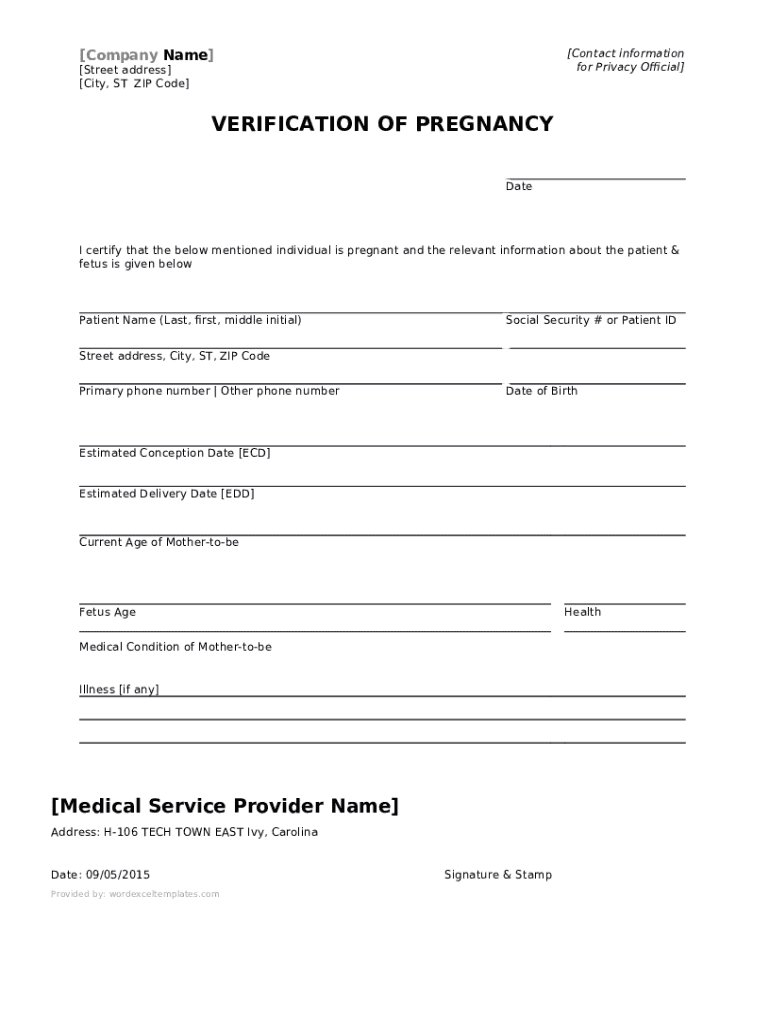







Definition and Meaning
The "Pregnancy Verification" papers serve as official proofs of pregnancy status. Typically, these documents are issued by a verified healthcare provider and include crucial information such as personal details of the patient, estimated conception and due dates, and relevant medical conditions. They may also bear the signature and stamp of the medical service provider to authenticate the details.
How to Obtain Pregnancy Verification Papers
To obtain legitimate pregnancy verification papers, a consultation with a healthcare provider is essential. This involves scheduling a prenatal appointment with an obstetrician or a licensed medical practitioner. During this session, the healthcare provider evaluates the pregnancy through various methods like physical exams or ultrasound imaging. Following the verification of pregnancy, the provider prepares the document containing the necessary verification information. Ensure that the document includes the healthcare provider's credentials to ensure authenticity.
Steps to Complete the Pregnancy Verification Form
- Schedule an Appointment: Book a meeting with a certified healthcare provider.
- Undergo Examination: Allow the healthcare provider to conduct necessary examinations to confirm pregnancy.
- Request Verification: Once pregnancy is confirmed, specifically request for a pregnancy verification form.
- Review Details: Carefully check that personal details, estimated conception date, and expected delivery date are accurately listed.
- Confirm Provider Information: Verify that the document is signed and stamped by the issuing healthcare provider.
Why Obtain Pregnancy Verification Papers
There are several reasons to obtain valid pregnancy verification papers, including:
- Health Insurance: Used to activate healthcare benefits associated with maternity and prenatal care.
- Employment: Employers may require this documentation for maternity leave applications.
- Legal and Administrative: State or federal benefits related to maternal care require official verification.
Key Elements of Pregnancy Verification Papers
Valid pregnancy verification papers typically contain several key elements:
- Patient’s Personal Information: Full name, date of birth, and address.
- Pregnancy Details: Estimated conception and delivery dates.
- Healthcare Provider’s Information: Name, address, contact details, and professional credentials.
- Official Signature: Document should be signed by the healthcare provider to certify its validity.
- Official Stamp: A healthcare provider's stamp to further authenticate the document.
Legal Use of Pregnancy Verification Papers
Pregnancy verification papers must be used responsibly within legal parameters. Common legal uses include:
- Medical and Insurance Claims: Essential for claims related to prenatal and postnatal care.
- Workplace Accommodation: Provides grounds for maternity leave or special accommodations in the workplace.
- Government Benefits: Essential for obtaining maternal and child health benefits provided by federal or state governments.
State-Specific Regulations
Different states may have unique requirements for pregnancy verification papers. While most states accept documents signed by a certified healthcare provider, certain jurisdictions might require additional certification or documentation. Always check with state-specific health departments to ensure that all required criteria are met.
Examples of Using Pregnancy Verification Papers
- Healthcare Access: Companies may request a pregnancy verification form to commence covered maternity care under a health plan.
- Maternity Leave Applications: Employers require these documents to verify maternity leave eligibility for pregnant employees.
- Government Assistance: Used as proof to qualify for state-sponsored prenatal and maternity programs.
Each of these examples underlines the importance of accurate and legitimate pregnancy verification documents in accessing necessary services and entitlements.




