
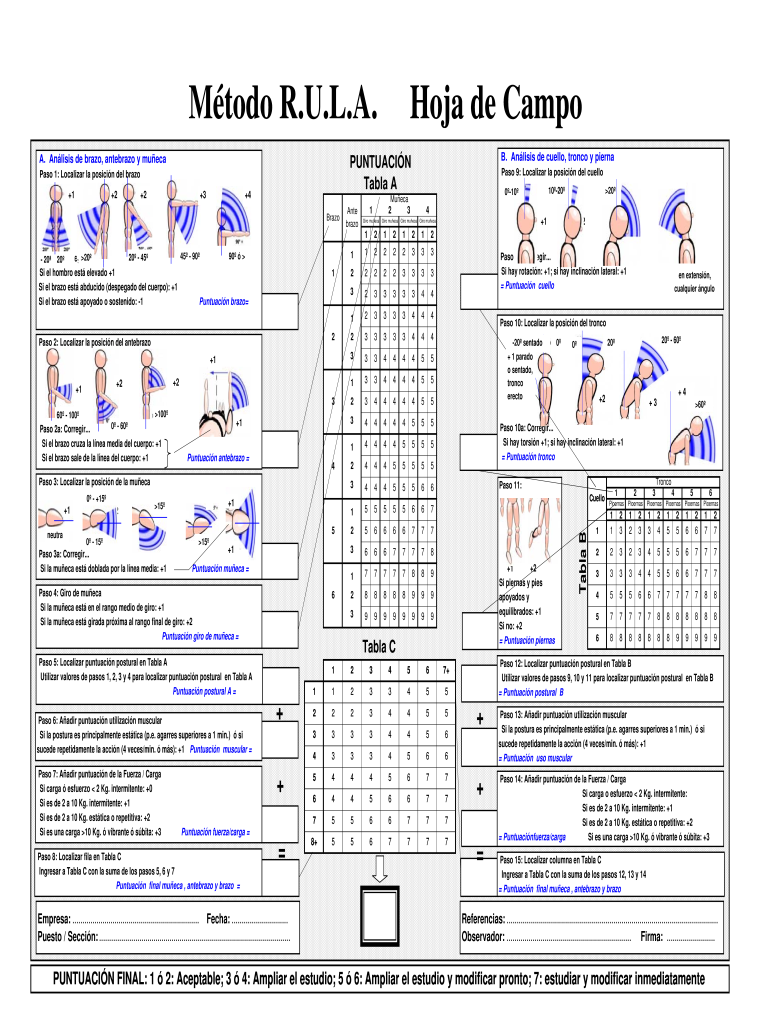







Definition and Significance of the Método RULA Hoja de Campo Excel
The Método RULA (Rapid Upper Limb Assessment) is a widely recognized ergonomic assessment tool used to evaluate the risk associated with upper limb posture and repetitive tasks. The method focuses on the assessment of various body segments, including arms, forearms, wrists, neck, trunk, and legs, to identify and quantify physical stressors at work. By systematically evaluating these posture criteria, organizations can determine the need for ergonomic modifications aimed at improving workplace safety and employee comfort. The hoja de campo excel serves as a practical document for recording data, helping professionals to compile score sheets in an organized manner and analyze ergonomic risks effectively.
Steps to Complete the Método RULA Hoja de Campo Excel
Completing the hoja de campo for the Método RULA involves a series of methodical steps that integrate ergonomic principles into practical workplace assessments. Follow these steps for accurate and comprehensive evaluations:
-
Observation: Inspect the work environment and observe the employee's posture during tasks. Document the position of the arms, neck, and trunk, ensuring that the context of their movements is clear.
-
Score Assignment: Assign scores based on predefined criteria. Each limb position or exertion level corresponds to a specific score, which includes:
- Arm position (overhead, at waist level, etc.)
- Neck position (bending, twisting)
- Wrist angle (neutral, flexed)
- Trunk angle (bending forward or backward)
-
Calculate Final Score: Sum the scores obtained for each body part, and refer to the scoring matrix provided by the Método RULA guidelines. Determine the overall score, which will indicate whether the posture is acceptable or if interventions are necessary.
-
Recommendations and Action Plan: Based on the final score, develop an action plan detailing necessary ergonomic adjustments, such as workstation redesign, tool modifications, training, or breaks.
-
Documentation: Input all gathered data accurately into the hoja de campo excel. This structured documentation will facilitate future reviews and modifications.
How to Use the Método RULA Hoja de Campo Excel Effectively
Using the hoja de campo excel for the Método RULA provides a systematic approach for ergonomists and workplace safety professionals. Here's how to leverage it effectively:
-
Input Data Consistently: Enter posture observations directly into the hoja de campo in a systematic manner. Consistency in data entry ensures reliability in risk assessments.
-
Utilize Formulas: Implement formulas within the spreadsheet to automate score calculations. This minimizes errors and speeds up the assessment process, allowing for quick adaptability in various work settings.
-
Generate Reports: Use the excel format to create detailed reports. These reports can serve as evidence for workplace assessments and can be shared with stakeholders to illustrate the importance of ergonomic initiatives.
-
Track Changes Over Time: Regularly update the hoja de campo excel to track improvements or regressions in ergonomic conditions. This historical data is invaluable for monitoring the effectiveness of implemented ergonomic strategies.
Who Typically Uses the Método RULA Hoja de Campo Excel
Various stakeholders in a workplace setting utilize the Método RULA hoja de campo excel. Primary users include:
-
Ergonomists and Safety Engineers: They conduct assessments to identify risk factors and develop ergonomic interventions to mitigate physical stress.
-
Occupational Health Professionals: These individuals focus on ensuring the health and safety of workers, often using the methodology to evaluate and recommend changes.
-
Managers and Supervisors: They leverage findings from RULA assessments to enhance workplace productivity and employee well-being.
-
Workers: Employees themselves may participate in assessments, providing insights on their ergonomic experiences and highlighting areas for improvement.
This collaborative approach ensures comprehensive evaluations and fosters a safety-first culture in the workplace.


Key Elements of the Método RULA Hoja de Campo Excel
Understanding the essential components of the hoja de campo excel is crucial for effective ergonomic assessments. Key elements include:
-
Posture Assessment Criteria: Clearly defined categories for upper limb positions, neck angles, and trunk bending, which guide users in accurately scoring observations.
-
Scoring Matrix: An essential tool that correlates posture scores with corresponding risk levels, which aids in interpreting results appropriately.
-
Action Plans: Sections designated for documenting potential ergonomic interventions based on risk scores, allowing for immediate strategic response.
-
Feedback Recording: A space to gather insights from employees regarding their experiences and suggestions on ergonomic practices, fostering inclusiveness in safety initiatives.
-
Version Control: Features for tracking changes to the document over time, ensuring that all interested parties can access the latest information and improvements.
By focusing on these elements, users can easily navigate the complexities of ergonomic assessments while fostering a safer and more productive work environment.




