
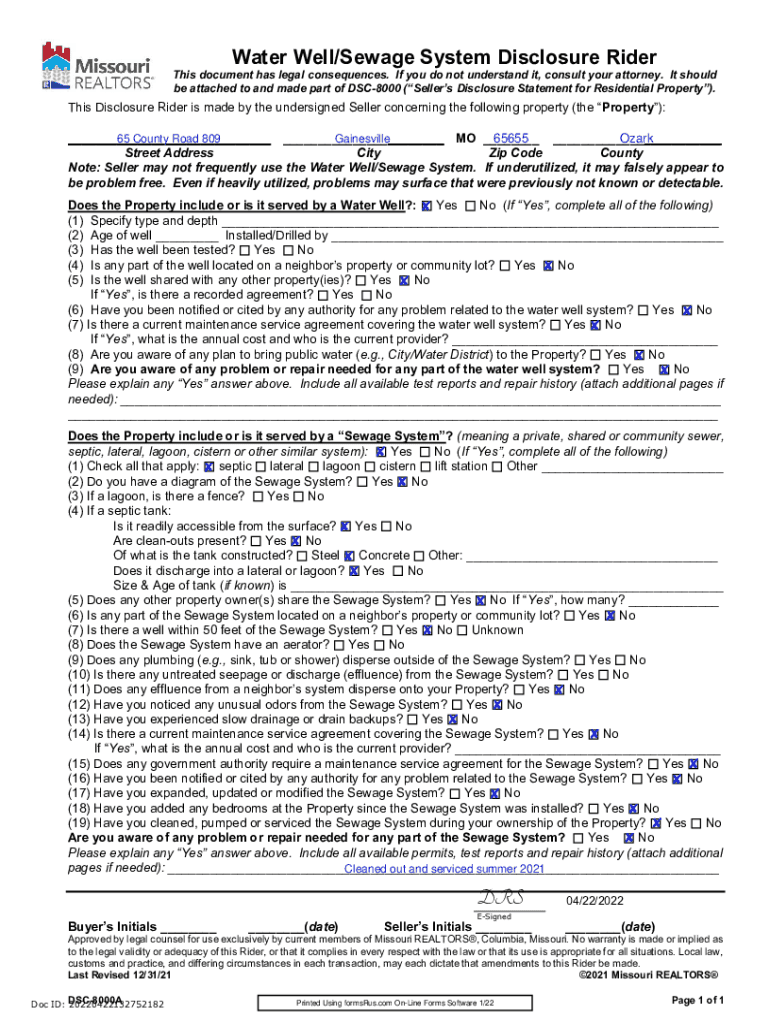







Definition and Importance of Water Well/Sewage System Disclosure Rider - Land
The Water Well/Sewage System Disclosure Rider is a legal document often utilized in real estate transactions, primarily designed to provide transparency about the condition and status of water wells and sewage systems on a property. This document is crucial for potential buyers as it ensures they are informed about the maintenance history, possible issues, and overall state of these essential utilities. Understanding this rider is critical as it can influence decision-making, property value assessments, and future maintenance responsibilities. Consulting an attorney may also be advisable to fully comprehend its legal implications.
How to Use the Water Well/Sewage System Disclosure Rider - Land
To effectively use the Water Well/Sewage System Disclosure Rider, sellers should begin by accurately detailing all relevant information about the water well and sewage systems. This includes specifying their current conditions, past maintenance activities, and any known issues or repairs. Buyers should carefully review the disclosed information upon receiving the document. Both parties should ensure that the rider is completed and signed before finalizing the sale, as this form is legally binding. Throughout the transaction process, maintain clear communication to address any questions or discrepancies that may arise.
Steps to Complete the Water Well/Sewage System Disclosure Rider - Land
- Gather Information: Sellers must collect detailed information about the water well and sewage system, including maintenance records and inspection reports.
- Fill Out the Form: Complete all sections of the rider, ensuring accuracy and transparency in reporting the condition and history of the utilities.
- Signatures: Obtain the necessary signatures from all involved parties, including buyers, sellers, and any legal representatives.
- Provide Copies: Distribute copies of the completed rider to all signatories for their records and further verification.
- Review and Address Discrepancies: Encourage all parties to review the disclosed information and discuss any potential issues or errors to avoid future disputes.
Key Elements of the Water Well/Sewage System Disclosure Rider - Land
- Condition and Maintenance History: Detailed accounts of the current state and historical upkeep of the water well and sewage systems.
- Disclosure of Issues: Any existing problems or concerns that may affect the functionality or safety of these systems.
- Legal Obligations: Clarity on rights and responsibilities related to the maintenance and repair of the water well and sewage systems post-sale.
- Signatory Sections: Areas designated for signatures of all parties involved to confirm authenticity and agreement to the disclosed information.
State-Specific Rules for the Water Well/Sewage System Disclosure Rider - Land
Laws and regulations regarding water well and sewage system disclosures can vary significantly from state to state. It is crucial for sellers and buyers to familiarize themselves with local laws that may dictate additional requirements or disclosures. Some states may have stringent reporting standards or require additional documentation or inspection reports, while others might have a more lax approach. Keeping informed of these variations helps ensure compliance and a smooth transaction process.
Who Typically Uses the Water Well/Sewage System Disclosure Rider - Land
This document is commonly used by individuals involved in the sale and purchase of properties in the United States, particularly in rural or semi-rural areas where private water and sewage systems are prevalent. Both buyers and sellers, along with their real estate agents and legal representatives, engage with this form to ensure thorough transparency and legal compliance throughout the transaction.


Legal Use of the Water Well/Sewage System Disclosure Rider - Land
The legal significance of the Water Well/Sewage System Disclosure Rider lies in its role as a binding agreement within the property sale process. It provides a transparent account of essential property amenities, making all disclosed information legally binding once agreed upon by both parties. Failing to comply with disclosure obligations can lead to legal disputes, financial penalties, and potential damage to reputations.
Examples of Using the Water Well/Sewage System Disclosure Rider - Land
- Real Estate Transactions: In a real estate deal for a country property, the seller uses the rider to disclose recent repairs to the septic system, ensuring that the buyer is aware of potential future maintenance needs.
- Issue Resolution: In instances where discrepancies arise post-sale, the rider serves as a reference document to address concerns and clarify initially agreed-upon disclosures provided by the seller.




