




01. Edit your toyota multi point inspection pdf online
Type text, add images, blackout confidential details, add comments, highlights and more.

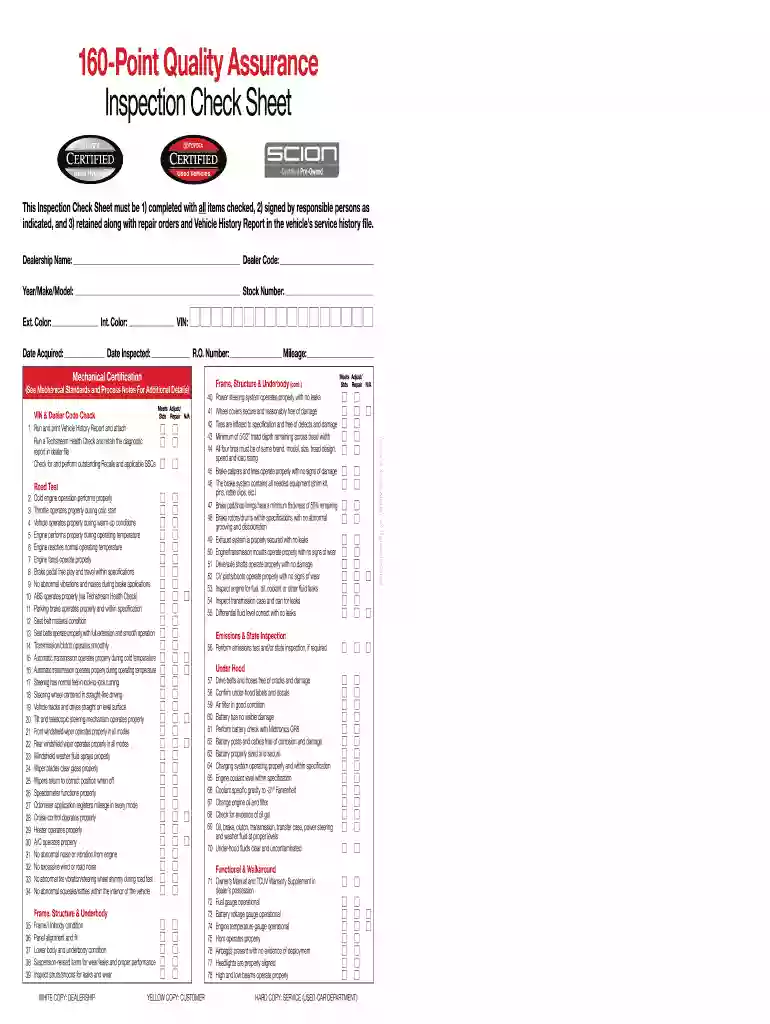
Type text, add images, blackout confidential details, add comments, highlights and more.

Draw your signature, type it, upload its image, or use your mobile device as a signature pad.

Send toyota 160 point inspection checklist via email, link, or fax. You can also download it, export it or print it out.
The Toyota multi point inspection PDF serves as a structured document that outlines a systematic approach to evaluate a vehicle's overall condition. This inspection is vital for ensuring that all mechanical and safety aspects of a Toyota vehicle are functioning correctly. Typically performed during routine maintenance or before a vehicle sale, the inspection includes various checkpoints that cover critical vehicle components, aiding in preventative maintenance and identifying potential issues early.
Key components of the inspection include:
Providing a clear, detailed framework for vehicle evaluation, this PDF is indispensable for service departments and mechanics, ensuring they adhere to quality standards and customer safety.
Completing the Toyota multi point inspection PDF involves a systematic process that ensures thoroughness and accuracy. Here’s a step-by-step guide:
Gather Necessary Materials:
Review the Checklist:
Perform the Mechanical Checks:
Conduct Safety Assessments:
Finish with Aesthetic Evaluations:
Document Findings:
Review and Sign-Off:
This organized approach not only promotes efficiency but also guarantees that all bases are covered in terms of vehicle evaluation.
To derive maximum value from the Toyota multi point inspection PDF, it's crucial to use it effectively within your workflow:
Training Personnel: Ensure that all team members understand how to complete the inspection PDF correctly and what each section entails, fostering consistency and thoroughness.
Utilizing for Customer Communication: Share the completed inspection PDF with customers to enhance transparency. Providing this document can help customers understand vehicle conditions and justifications for recommended services.
Staying Updated: Regularly check for updates to the inspection PDF as Toyota may revise inspection requirements to accommodate new models or changing regulations. Access the latest version to ensure compliance and accuracy.
This proactive management of the inspection process fosters trust with customers and supports service teams in maintaining high-quality standards.
Various stakeholders benefit from the use of the Toyota multi point inspection PDF, including:
Automotive Technicians: Service professionals utilize this document to assess the vehicle’s condition methodically, ensuring every critical area receives attention.
Dealerships: Dealerships use this inspection form as a standard tool to uphold quality assurance across their service departments.
Vehicle Owners: Car owners can also use the inspection PDF to understand what mechanics look for, enabling informed discussions regarding vehicle care and maintenance.
Fleet Managers: Those managing vehicle fleets utilize the inspection to ensure compliance with safety standards and vehicle performance, maintaining operational efficacy.
This broad user base highlights the importance of the multi point inspection PDF in various automotive contexts and emphasizes its role in supporting vehicle upkeep and safety.


The Toyota multi point inspection PDF contains several essential elements that enhance its utility:
Detailed Checklist: A thorough checklist that includes all components that need to be examined in a vehicle, ensuring nothing is overlooked during an inspection.
Documentation Space: Sections for recording findings, recommended services, and notes from technicians, which are vital for effective communication.
Compliance Guidelines: Adherence to safety regulations and manufacturer guidelines stations ensure the inspection meets industry standards.
Visual References: Some inspection PDFs may include diagrams or images to aid in identifying different parts of the vehicle which require inspection.
Customer Identification: Sections for customer details support personalized communication, ensuring that the right information gets to the appropriate individuals.
By integrating these elements, the Toyota multi point inspection PDF effectively enhances the inspection process and contributes to comprehensive vehicle evaluations.
At DocHub, your data security is our priority. We follow HIPAA, SOC2, GDPR, and other standards, so you can work on your documents with confidence.
8) Inspection of floor mat application and retention is conducted with each Multi-Point Inspection (MPI) and results documented on the MPI form and Repair OrderRead more
Jun 15, 2018 FMC will subvert lost time due to the multiple stops taken by the shipping provider and gain a direct shipping route to the Elkhart facility.Read more
The hybrid navigation system receives radio waves from satellites to determine the current location.GPS, The current location of the own vehicle isRead more


