




Here's how it works
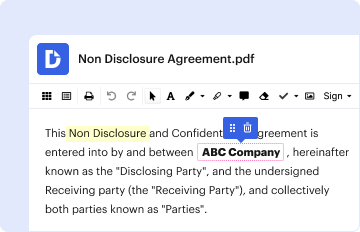
01. Edit your georgia magistrate court forms online
Type text, add images, blackout confidential details, add comments, highlights and more.
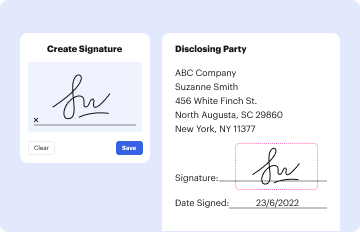
02. Sign it in a few clicks
Draw your signature, type it, upload its image, or use your mobile device as a signature pad.

03. Share your form with others
Send georgia small claims court forms via email, link, or fax. You can also download it, export it or print it out.
How to use or fill out ga magistrate forms with our platform

- Click ‘Get Form’ to open the ga magistrate form in the editor.
- Begin by entering the Civil Action Number at the top of the form. This is essential for tracking your case.
- Fill in the Plaintiff's name and address in the designated fields. Ensure accuracy as this information is crucial for legal correspondence.
- Next, provide the Defendant's name and address. Double-check these details to avoid any delays in processing.
- Indicate your phone number and that of the Defendant for communication purposes.
- In the Statement of Claim section, select the type of claim you are filing (e.g., Suit on a Note, Suit on Account) and specify the amount owed, including court costs.
- Complete the sworn statement by signing and dating it before a Notary Public or Attesting Official.
- Finally, review all entries for accuracy before submitting your completed form through our platform.
Start using our platform today to easily fill out your ga magistrate forms online for free!
Fill out ga magistrate forms online
It's free
It's free
Got questions?
We have answers to the most popular questions from our customers. If you can't find an answer to your question, please contact us.
Contact us
Do rules of evidence apply in Magistrate Court in Georgia?
Magistrate Court is a court of inquiry, not a court of record. Although the Civil Practice Act does not apply, the rules of evidence do. Magistrate Court is also the forum in which a majority of the dispossessory, or eviction, actions are filed and addressed.
What is the Rule 43.1 in Georgia Magistrate Court?
The party seeking entry of a default judgment in any action shall certify to the court the following: the date and type of service effected; that proof of service was filed with the court; the date on which proof of service was filed; and that no defensive pleading has been filed by the defendant as shown by court
Can a judge overrule a magistrate?
The judge may conduct a hearing, take additional evidence, or refer the case back to the magistrate for a new trial. The judge will agree (sustain), disagree (overrule), or change the magistrates decision and enter a final judgment.
What is the rule 31 in Georgia Magistrate Court?
Rule 31. An action on behalf of a corporation, sole proprietorship, partnership, or unincorporated association, except affidavits in attachment, may be filed and presented by such designated agent.
What happens after a default judgement is issued in Georgia?
If the judge grants a default judgment, the plaintiff is entitled to the amount of money damages specified in the suit, plus court costs. If the plaintiff is asking for any non-money damages (such as property), a separate hearing must be held to determine the dollar value of the damages.
Security and compliance
At DocHub, your data security is our priority. We follow HIPAA, SOC2, GDPR, and other standards, so you can work on your documents with confidence.
Learn more


People also ask
How much can you sue for in Magistrate Court in Georgia?
The Magistrate Court handles claims of not more than $15,000. Any person may file a claim in Magistrate Court in his or her own name, without an attorney.
What are the requirements for a magistrate judge in Georgia?
To qualify as a Magistrate, an individual must have resided in the county for at least one year preceding his or her term of office, be 25 years old, and have a high school diploma. Other qualifications may be imposed by local legislation. There are 159 Chief Magistrates and 346 Magistrates in Georgia.
Why would I get a letter from the Magistrate Court?
0:19 2:55 Another reason you might receive a letter is if youve been charged with a misdemeanor. This couldMoreAnother reason you might receive a letter is if youve been charged with a misdemeanor. This could be due to a citation. Or a complaint and summon which includes details of the offense. And the date.