







Essential Components of a Forklift Pre Start Checklist
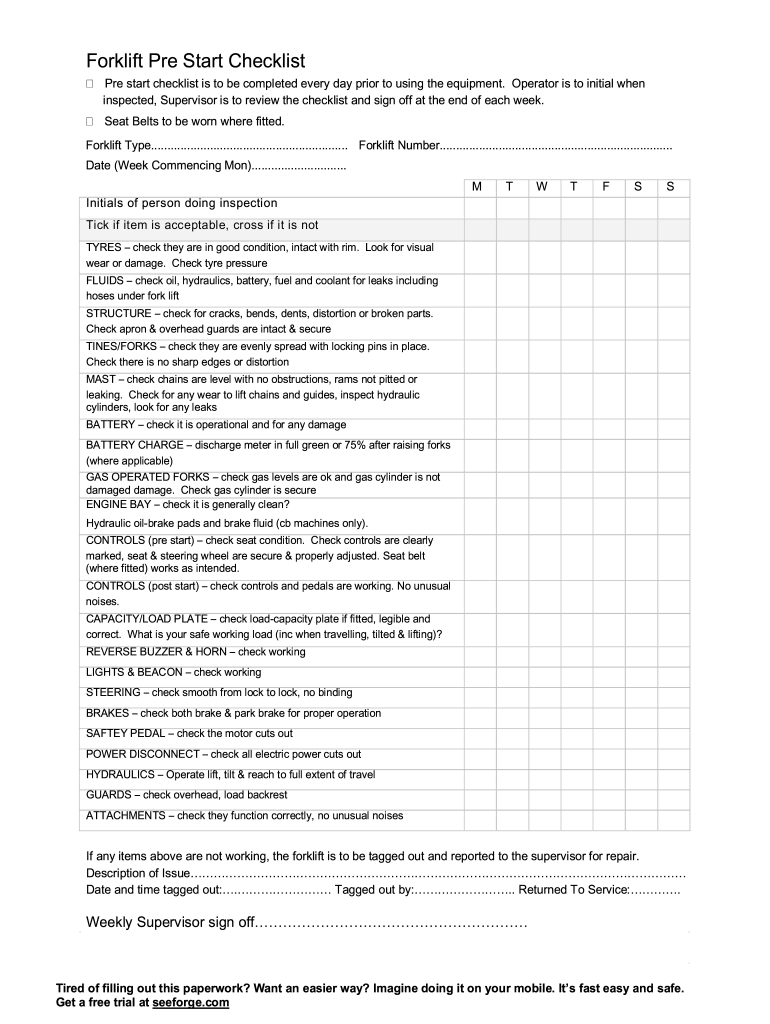
A comprehensive forklift pre start checklist is crucial for maintaining safety and operational efficiency in the workplace. This checklist helps operators to systematically inspect and ensure that all essential safety features and equipment are functional before operating the forklift. Here are the key components to include in your checklist.
Safety Inspections Overview
Conducting pre-operation safety inspections mitigates the risk of accidents. Operators must assess several critical components before commencing operations.
- Tyres: Inspect for adequate tread depth and any signs of damage or wear. Ensure that they are properly inflated to manufacturer specifications.
- Fluids: Check fluid levels such as engine oil, hydraulic fluid, coolant, and fuel. Low fluid levels can compromise performance and safety.
- Structure: Examine the forklift’s structural integrity, including the mast, chassis, and frame for any signs of damage, rust, or cracks.
- Tines: Inspect forks for bends, cracks, or excessive wear. They should be straight and properly attached, as any defect can lead to load instability.
- Battery: For electric forklifts, check the battery's condition, connections, and charge level. Ensure there is no corrosion present on terminals.
Controls and Safety Features Check
Safety features and controls are vital for the safe operation of the forklift. Operators should ensure that they are functioning properly.
- Controls: Test all operational controls including the steering, lights, horn, and brakes. This ensures that the forklift can be operated safely under various conditions.
- Safety Features: Verify that built-in safety features like seat belts, backup alarms, and parking brakes are functioning. These are crucial to protect the operator and nearby personnel.
- Operators Manual: Ensure that the operator's manual is readily available in the forklift for reference. Familiarity with the manual helps in understanding specific operational procedures.
Documentation and Signage
Proper documentation and signage are critical for compliance and safety.
- Daily Checklist: Operators should complete and initial a daily checklist confirming all safety inspections have been performed. This documentation provides a record of compliance and accountability.
- Supervisor Review: Regular reviews and sign-offs by supervisors help maintain a high safety standard. Supervisors should sign off on the checklist weekly to verify consistent compliance.
- Tag Out Procedures: In the event that faults are detected during the prestart inspection, operators should be trained on tagging out the forklift for repairs. This reduces the risk of accidents from using unsafe equipment.
Specific Inspection Considerations
Different types of forklifts may require tailored considerations based on their design and operation.
- Electric Forklifts: Consider the unique aspects of electric forklifts, such as checking the charger and ensuring that the battery is adequately charged for operational needs.
- Propane Forklifts: Inspect propane tanks for vacuum leaks and ensure they are secured properly. An improperly secured tank can result in dangerous situations.
- Operational Environment: Evaluate the surroundings where the forklift will operate. Check for overhead obstructions and uneven surfaces that could pose risks during operation.
Sample Forklift Pre Start Checklists
Utilizing templates or samples can streamline the task of creating a pre start checklist.
- Printable Templates: Access printable forklift pre start checklist templates designed to cover all necessary checks. This can facilitate training and provide a consistent method for inspections.
- Digital Solutions: Consider using an electronic form for the forklift start checklist to simplify documentation and submission processes. Platforms like DocHub enable easy creation and management of this documentation.
Implementing a thorough forklift pre start checklist ensures operational safety and compliance with relevant workplace regulations. Each component plays an integral role in preserving both the equipment and personnel involved in its operation.




