Definition and Purpose of the Skintestor OMNI Testing Sheet
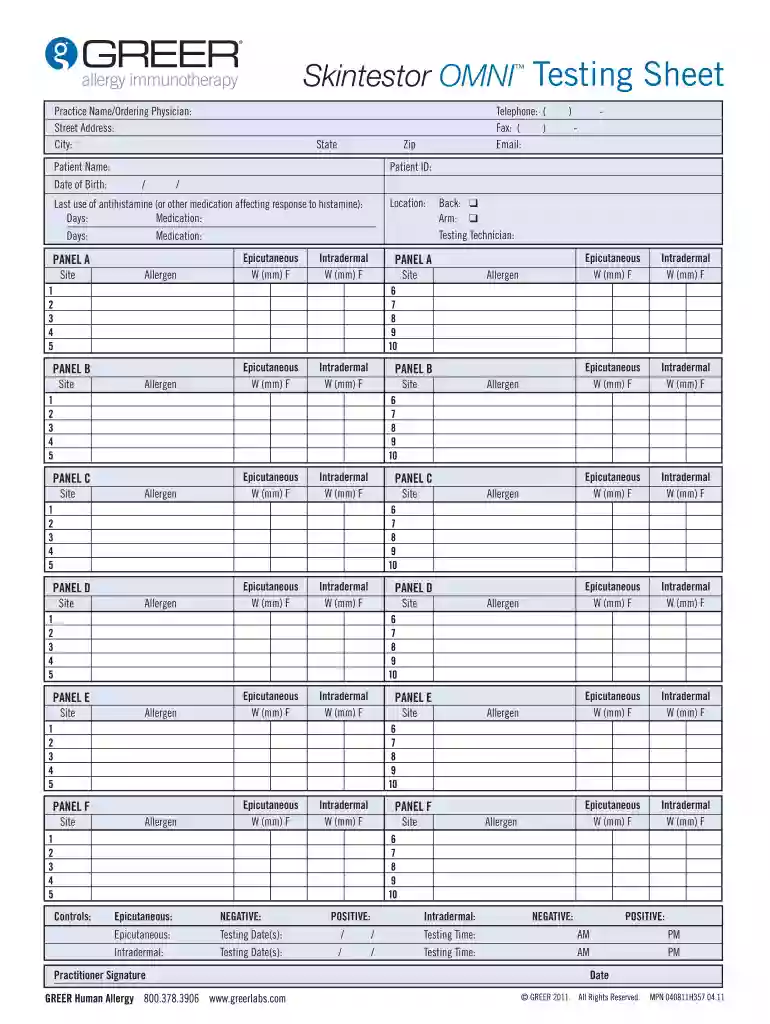
The Skintestor OMNI Testing Sheet is a specialized document used in the context of allergy testing. It captures critical patient information, including demographics, medical history, and details regarding the allergen tests conducted. This sheet is valuable for both healthcare providers and patients, as it ensures that all relevant information is systematically recorded and easy to reference.
- Patient Information: The sheet typically requires patients to provide their name, date of birth, and contact information. This ensures that patient records are accurate and easily retrievable.
- Allergy History: Documentation of past allergic reactions and relevant medical conditions is crucial for interpreting test results effectively. This section aids healthcare practitioners in tailoring testing protocols and managing patient care.
By organizing this information, the Skintestor OMNI Testing Sheet helps streamline the allergy testing process, making it efficient and comprehensive.
How to Use the Skintestor OMNI Testing Sheet
Using the Skintestor OMNI Testing Sheet involves several steps that healthcare practitioners should follow to ensure accurate data collection. The practical usage of the sheet may vary slightly depending on specific testing procedures in different locations.
- Preparation: Before starting any allergy tests, ensure that the patient completes the personal information section accurately. This includes names, health history, and any medications being taken.
- Selecting Allergen Panels: The testing sheet includes panels labeled A through F. Practitioners should decide which panels to test based on the patient's medical history and reported symptoms.
- Documenting Test Results: As the tests are performed using epicutaneous and intradermal methods, results need to be accurately documented in the corresponding sections of the sheet. Measurements for allergen responses, such as diameter and redness, should be recorded clearly.
- Reviewing Controls: Each panel will also include spaces for negative and positive control results to validate the accuracy of tests conducted.
- Signatures and Finalization: After completing the testing, all involved practitioners should sign the sheets to confirm the accuracy of the recorded information, making it a legally compliant document for patient records.
Understanding these steps provides a clear path for using the Skintestor OMNI Testing Sheet effectively, which is essential for achieving reliable allergy testing results.
Key Elements of the Skintestor OMNI Testing Sheet
The Skintestor OMNI Testing Sheet consists of several critical components that contribute to its functionality and effectiveness in allergy testing.
- Allergen Panels: As mentioned, the sheet features multiple panels (A to F) that relate to different allergen groups, such as food, environmental, and insect allergens.
- Patient and Medical Information: Essential for patient identification and providing a medical context for allergy tests.
- Symptom Review Section: Allows practitioners to note any current symptoms related to allergies, which aids in analysis.
- Test Methodology: Clear instructions guide practitioners in conducting tests correctly and recording measurements accurately.
- Documentation of Controls: This ensures the reliability of test results by comparing patient responses against known control reactions.
These elements make the Skintestor OMNI Testing Sheet a comprehensive tool for allergic assessment, facilitating the thorough collection and analysis of data.
Steps to Complete the Skintestor OMNI Testing Sheet
Completing the Skintestor OMNI Testing Sheet entails a systematic approach to ensure all relevant data is collected efficiently.
- Gather Information: Ask the patient to fill out their details at the top section, including name, age, and contact information.
- Record Medical History: Ensure the patient discloses any allergies, medications, and past allergic reactions.
- Select and Apply Allergen Tests: Choose the appropriate panels based on the patient's health history and lead the patient through the testing process.
- Measure Reactions: After the testing period, document the size of reactions. This includes measuring the diameter of any welts or reddening present at the application site.
- Final Checks: Review all entries for accuracy and make sure that all sections are filled out completely before signing off on the document.
By following these steps, practitioners can ensure that the Skintestor OMNI Testing Sheet is completed thoroughly and accurately, resulting in reliable data for patient care.
Legal Use of the Skintestor OMNI Testing Sheet
The Skintestor OMNI Testing Sheet plays a significant role in the legal framework surrounding healthcare practices in the U.S. Proper use and documentation are vital for compliance and safeguarding patient rights.
- Documentation for Medical Records: Legally, healthcare providers must maintain comprehensive records for all patient interactions, including allergy tests. The Skintestor OMNI Testing Sheet serves this purpose excellently by ensuring all necessary details are captured.
- Informed Consent: Before conducting allergy tests, practitioners should obtain informed consent from the patient. The testing sheet can serve as a record of this consent if it includes a section where patients acknowledge their understanding of the tests being conducted.
Legal adherence ensures that practices using the Skintestor OMNI Testing Sheet are within guidelines, protecting both patients and healthcare providers.
Examples of Utilizing the Skintestor OMNI Testing Sheet
To illustrate the application of the Skintestor OMNI Testing Sheet, several scenarios can highlight its practical utility in different contexts.
- Scenario One: A patient with known environmental allergies is assessed. The practitioner utilizes the Skintestor OMNI Testing Sheet to document the patient's symptoms, apply the environmental allergen panels, and track the patient's reactions. This systematic approach helps tailor the management plan effectively.
- Scenario Two: A pediatric patient undergoes testing for suspected food allergies. The caregiver completes the relevant panels on the Skintestor OMNI Testing Sheet, detailing the patient's medical history and recording allergy test responses, which are critical for crafting an appropriate dietary plan.
- Scenario Three: In a clinical research setting, a group of patients participates in allergen exposure tests. The Skintestor OMNI Testing Sheet is used to maintain standardized data collection across all subjects, ensuring uniformity for later analysis.
These examples demonstrate the versatility of the Skintestor OMNI Testing Sheet in different settings, highlighting how it serves essential functions in patient care and clinical research alike.