




01. Edit your massage intake form online
Type text, add images, blackout confidential details, add comments, highlights and more.

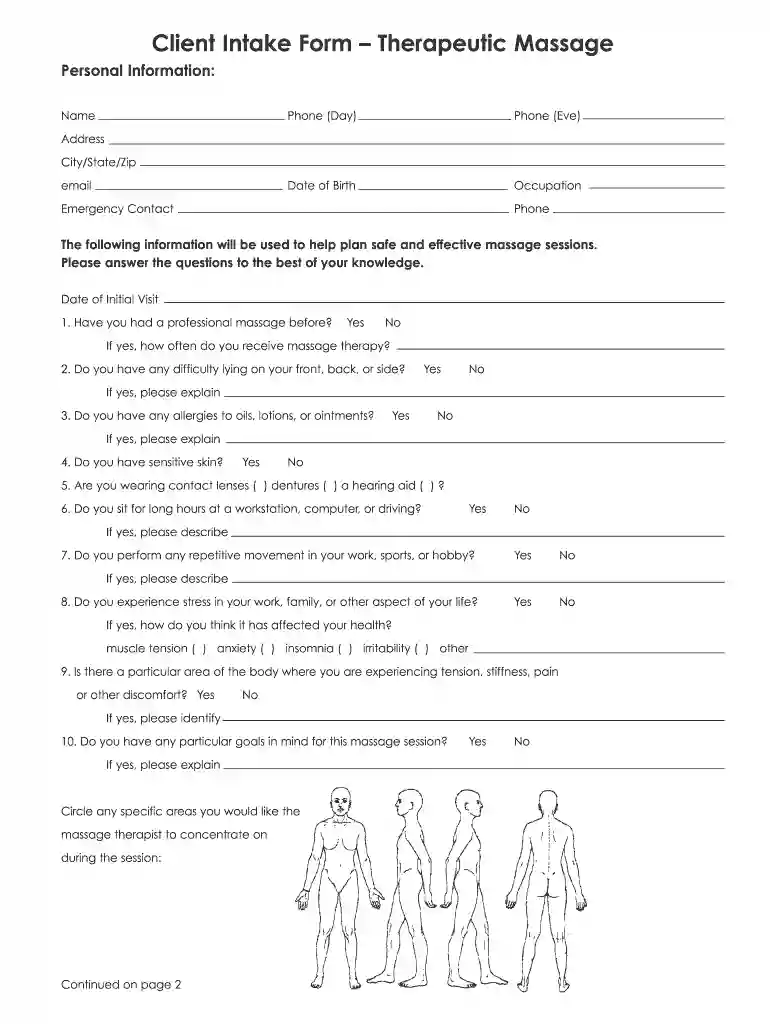
Type text, add images, blackout confidential details, add comments, highlights and more.

Draw your signature, type it, upload its image, or use your mobile device as a signature pad.

Send massage form template via email, link, or fax. You can also download it, export it or print it out.
The massage intake form is a crucial document used by massage therapists to gather essential information from clients prior to a session. This form serves a dual purpose: it not only collects personal and medical details but also establishes a foundation for effective communication between the therapist and client. By completing this form, clients provide their consent for treatment and disclose any relevant health information that could affect the massage services.
By filling out a massage intake form, clients ensure that their specific needs are addressed during the session, ultimately enhancing their overall experience and safety.
Utilizing a massage intake form effectively involves several steps that ensure all pertinent information is accurately captured and understood. This process streamlines the client intake experience for both the therapist and the client.
By following these steps, therapists can ensure that they have a comprehensive understanding of each client's unique needs and enjoy a smoother working relationship.
A well-structured massage intake form encompasses several key elements that are vital for successful client evaluation and treatment planning. Each section serves a distinct purpose, contributing to the overall effectiveness of the massage therapy session.
These elements ensure that the therapist has a comprehensive picture of the client’s health and preferences, fostering a safe and effective massage experience.
Client consent is a foundational aspect of conducting massage therapy. The massage intake form not only gathers necessary information but also requires clients to provide informed consent, acknowledging their agreement to partake in the therapy.
Implementing these practices contributes to a more ethical and professional massage therapy environment.
The massage intake form may come in various formats to accommodate different client needs and therapeutic practices. Understanding these variations helps in choosing the most effective form for a specific context.
Ensuring the availability of varied formats enhances accessibility and user experience, making it easier for clients to engage with the intake process.
The requirements for massage intake forms can vary from state to state, reflecting different regulations and standards in the massage therapy profession. Therapists must be aware of these distinctions to remain compliant and uphold best practices.
Being informed about state-specific rules allows therapists to tailor their intake forms effectively, ensuring both legal compliance and enhanced client safety.
At DocHub, your data security is our priority. We follow HIPAA, SOC2, GDPR, and other standards, so you can work on your documents with confidence.


Jan 14, 2025 Nonpharmacologic interventions may include a physical activity program to improve functional capacity and activity tolerance; psychosocial.Read more
Date of Initial Visit. 1. Have you had a professional massage before? Yes. No. If yes, how often do you receive massage therapy?Read more
Standard client intake forms are available at the Massage Therapy Service desk. Each new client must be asked to fill out the intake form with contactRead more


