
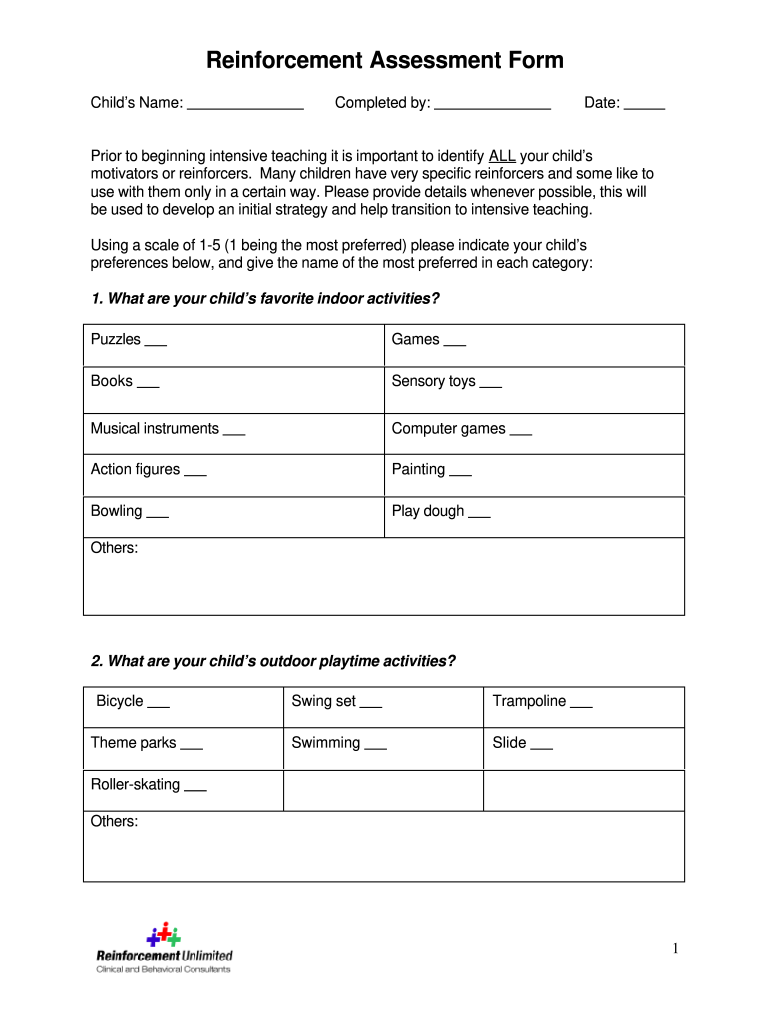







Definition and Meaning of Printable Reinforcer Assessment Forms
Printable reinforcer assessment forms are tools designed to identify and measure an individual’s preferences and motivations in various contexts, particularly in educational and therapeutic settings. These forms provide a structured approach to collect valuable data about what reinforces behavior effectively, ensuring that tailored reinforcement strategies can be developed. The aim is to facilitate the understanding of preferences related to activities, items, or social interactions that can enhance learning and engagement.
The forms typically include different categories, such as:
- Activities: Indoor and outdoor pursuits, games, or sports that individuals enjoy.
- Items: Snacks, beverages, toys, or books that the child finds appealing.
- Type of Media: Preferences for television shows, movies, or video games.
- Social Interactions: Preferred peers or family members as potential reinforcers.
By completing these assessments, caregivers, educators, and practitioners can better understand how specific stimuli can positively influence behavior, learning, and motivation.
How to Use the Printable Reinforcer Assessment Forms
Using printable reinforcer assessment forms requires a systematic and thoughtful approach to yield the most accurate and useful data. Here are the steps involved in effectively utilizing these forms:
- Selection of the Form: Choose a reinforcer assessment form that best suits the individual's age, setting, and specific needs. Various templates may cater to different assessment requirements.
- Provide Clear Instructions: Ensure that all participants understand how to fill out the form accurately. Provide examples of how to identify preferences within each category.
- Complete the Form: Facilitate the completion process by encouraging honest inputs from the individual or their caregivers. This might involve direct interviews or allowing caregivers to fill in questionnaires.
- Analysis of Data: After collecting the forms, analyze the responses to determine the preferred reinforcers. Look for patterns that indicate strong interests or motivating factors.
- Application of Findings: Use the insights gained from the assessment to develop personalized reinforcement strategies that promote engagement and learning.
Maintaining clarity and support throughout the process will ensure the form is used most effectively, facilitating a deeper understanding of the individual's motivations.
Steps to Complete the Printable Reinforcer Assessment Forms
Completing printable reinforcer assessment forms involves several straightforward steps to gather and interpret valuable data effectively. The following steps outline this process:
- Gather the Necessary Materials: Ensure you have the printable reinforcer assessment form ready, along with writing tools for recording responses.
- Choose a Comfortable Setting: Provide a calm environment where the individual can express preferences without distractions.
- Begin with Introductory Questions: Start by asking general questions to facilitate conversation and engagement before diving into specific categories.
- Encourage Honest Reflection: Invite individuals to think critically about what they enjoy, providing examples to clarify preferences. For instance, if you ask about snacks, offer options such as fruit, chips, or candy.
- Document Responses Thoroughly: Record all answers accurately on the form, ensuring that they reflect the individual’s true preferences. Allow space for additional notes on unique interests not covered by the template.
- Review Together: Once completed, review the entries with the individual to confirm accuracy and to explore additional preferences that may arise during the discussion.
By following these steps, you can ensure that the printed forms yield high-quality information that supports effective reinforcement strategies.
Key Elements of the Printable Reinforcer Assessment Forms
Understanding the key elements of printable reinforcer assessment forms can enhance their effectiveness in practice. These elements include:
- Categories: The form typically includes various sections such as activities, items, and social preferences, allowing for a comprehensive overview of interests.
- Rating Scale: Many forms implement a rating or ranking scale to categorize the strength of preferences, which can include options like "strongly like," "like," or "dislike."
- Open-ended Questions: This feature enables individuals to provide specific examples or in-depth responses, offering additional insight into their motivations.
- Actionable Insights: Each completed assessment yields actionable insights that can be utilized to develop tailored reinforcement strategies, aiding in behavior modification and learning enhancement.
- Updates and Variability: The forms should be updated regularly based on new interests or as individuals grow, ensuring that the strategies remain relevant and effective.
Incorporating these elements into the assessment process will lead to more effective and personalized reinforcement strategies.
Important Terms Related to Printable Reinforcer Assessment Forms
Familiarizing yourself with important terms related to printable reinforcer assessment forms is essential for effective communication and understanding. These terms include:
- Reinforcer: Any stimulus that, when presented after a behavior, increases the likelihood of that behavior occurring again in the future.
- Preference Assessment: A systematic method to determine what options are most preferred by the individual, assisting in developing tailored interventions.
- Motivational Strategies: Techniques that leverage identified preferences to enhance engagement and learning outcomes.
- Data Collection: The process of systematically gathering information through the assessment forms for analysis and strategy development.
- Functional Behavioral Assessment (FBA): A broader process that identifies the reasons for specific behaviors and helps develop intervention plans.
Understanding these terms allows practitioners to navigate discussions around assessment and intervention with clarity and precision.
Legal Use of the Printable Reinforcer Assessment Forms
The legal use of printable reinforcer assessment forms primarily pertains to the ethical and compliant usage of collected data in educational and therapeutic contexts. It is vital to be aware of:
- Confidentiality: Protecting the identity and data of individuals assessed is a fundamental legal requirement. Ensure that all forms are stored securely.
- Informed Consent: Obtain consent from guardians or individuals before conducting assessments involving minors or sensitive information.
- Adherence to Educational Regulations: Comply with local and federal laws governing educational assessments and interventions, such as IDEA (Individuals with Disabilities Education Act).
- Data Handling: Be transparent about how data will be used, ensuring it is only for the intended purposes of enhancing educational or therapeutic outcomes.
By adhering to these legal guidelines, practitioners can ensure their use of printable reinforcer assessment forms is both ethical and compliant, fostering trust and integrity within the assessment process.




