






Definition and Meaning of the Spanish Presentation Rubric
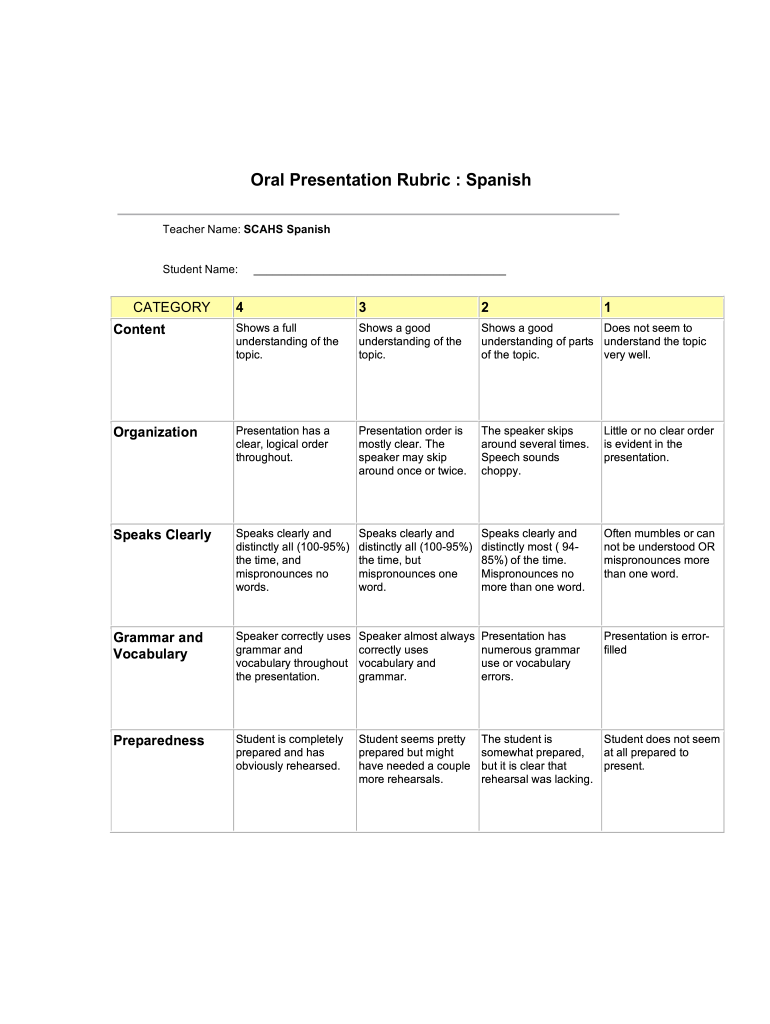
The Spanish presentation rubric is a structured assessment tool designed to evaluate students’ oral language skills in Spanish. This rubric typically covers various criteria, including content knowledge, organization, clarity of speech, grammar and vocabulary usage, and preparedness. Each of these categories is essential for assessing how well students can communicate their ideas in Spanish during a presentation context.
- Content Knowledge: Assesses students' understanding of the subject matter and their ability to communicate this knowledge effectively.
- Organization: Evaluates the clarity and logical flow of the presentation, considering how well the students structure their information to engage the audience.
- Clarity of Speech: Measures the pronunciation, fluency, and overall clarity with which students present their material, impacting audience comprehension.
- Grammar and Vocabulary: Focuses on the accuracy of the students’ language use, including correct grammar and the richness of vocabulary employed during the presentation.
- Preparedness: Assesses how well students prepare for their presentations, including practice and familiarity with the subject.
This rubric not only serves educators in grading but also provides students with a framework for self-evaluation and improvement in their Spanish-speaking skills.
Key Elements of the Spanish Presentation Rubric
A well-structured Spanish presentation rubric consists of specific criteria that guide both students and educators in the evaluation process. The key elements typically include the following:
-
Score Descriptors: Ratings often range from one to four, where four signifies excellence and one indicates significant deficiencies. Each score category includes descriptive criteria, helping both evaluators and students understand performance expectations.
-
Clear Categories: The rubric divides assessment into distinct categories, each focusing on critical aspects of presentation skills. This categorization helps streamline feedback, allowing students to identify strengths and weaknesses clearly.
-
Flexibility for Different Levels: The rubric can be adapted for different proficiency levels, catering to beginners to advanced speakers. This adaptability ensures it meets the diverse needs of students in a classroom setting.
-
Self-Assessment Components: Incorporating self-assessment opportunities helps students reflect on their work and identify personal goals for improvement, thereby fostering a growth mindset.
-
Feedback Opportunities: Teachers using the rubric can provide detailed comments based on specific criteria, enhancing the learning experience by guiding students on where they can improve.
How to Use the Spanish Presentation Rubric
Using the Spanish presentation rubric effectively entails several steps both for educators and students.
For Educators
- Introduce the Rubric Early: Present the rubric to students well in advance of the presentations to ensure they understand the assessment criteria.
- Use for Grading and Feedback: Apply the rubric systematically while grading to maintain consistency and fairness. Provide constructive feedback in alignment with rubric descriptors.
- Facilitate Self-assessment: Encourage students to evaluate their presentations using the rubric before the actual performance. This practice aids in identifying areas requiring further practice.
For Students
- Familiarize with the Criteria: Review each category and score descriptor before preparing the presentation to align your work with the expectations.
- Practice According to the Rubric: Utilize the rubric to guide practice sessions. Aim to hit the high-score descriptors in each category during rehearsals.
- Request Feedback: After practicing, ask peers or instructors for feedback based on the rubric, which can provide additional insights into areas for improvement.
Examples of Using the Spanish Presentation Rubric
The Spanish presentation rubric can be effectively utilized with various student presentations. Below are some contextual examples illustrating its application:
-
Student Presentations on Cultural Topics: A student presents on a Spanish-speaking country, discussing its traditions, customs, and societal norms. The rubric is used to assess the depth of content knowledge as well as the organization and clarity of the presentation.
-
Book Reports in Spanish: When presenting a summary of a Spanish novel, students can use the rubric to refine their understanding of vocabulary and grammar, as the clarity of speech and preparedness will be evaluated.
-
Group Projects on Historical Events: In a team presentation focusing on a historical event relevant to the Spanish-speaking world, the rubric helps assess how well the group collaborates to convey their message while meeting the rubric's criteria.
-
Debates in Spanish Class: Students partake in a debate on a relevant social issue. The rubric aids in evaluating not only their arguments but also their proficiency in using the language effectively under pressure.
Who Typically Uses the Spanish Presentation Rubric?
The Spanish presentation rubric is primarily utilized by:
- Teachers and Educators: Particularly those involved in language instruction, who use it to assess and guide students' oral proficiency.
- Students: Especially in high school and college-level Spanish courses, where presentations are common.
- Language Program Coordinators: Those responsible for curriculum design may incorporate this rubric into their assessment strategies to ensure consistency across different classes and instructors.
- Tutors and Language Coaches: Individuals providing additional support to students may use the rubric to track progress and set learning objectives.
By understanding its various applications, users can maximize the benefits of the Spanish presentation rubric in enhancing language skills and presentation effectiveness.