psychologist clinical form online Preview on Page 1

Phd clinical intake 2026

Here's how it works

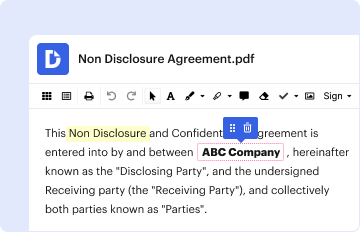
  • 01. Edit your psychologist clinical form online online

    Type text, add images, blackout confidential details, add comments, highlights and more.

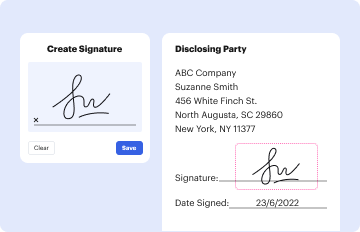
  • 02. Sign it in a few clicks

    Draw your signature, type it, upload its image, or use your mobile device as a signature pad.

  • 03. Share your form with others

    Send psychologist clinical intake via email, link, or fax. You can also download it, export it or print it out.

How to use or fill out phd clinical intake with our platform

Form edit decoration
9.5
Ease of Setup
DocHub User Ratings on G2
9.0
Ease of Use
DocHub User Ratings on G2
  1. Click ‘Get Form’ to open the phd clinical intake in the editor.
  2. Begin by entering your Client Name and Date at the top of the form. This information is essential for identification and record-keeping.
  3. Fill in your Birth Date, Age, and Gender. These fields help provide context for your treatment.
  4. Complete the Social Security Number and Address sections. Ensure accuracy as this information is crucial for confidentiality and communication.
  5. Provide your Home, Work, and Cell Phone numbers along with permission to leave messages. This ensures that you can be contacted easily.
  6. Indicate your Marital Status and fill out Emergency Contact details. This helps in understanding your support system.
  7. Answer questions regarding previous counseling, current medications, and specific problems you wish to address. Be honest for effective treatment planning.
  8. Review all sections carefully before submitting to ensure all information is complete and accurate.

Start filling out your phd clinical intake form today for free on our platform!

be ready to get more

Complete this form in 5 minutes or less

Got questions?

We have answers to the most popular questions from our customers. If you can't find an answer to your question, please contact us.

For PhD programs, especially in clinical psychology, the competition can be intense due to low acceptance rates (often
No matter which field youre in, getting accepted to a PhD program is extremely competitive. The level of competition of course will vary by university, discipline and the type of program, but any way you look at it, getting into grad school is not super easy.
Yes, as far as non-profit schools are concerned, PhD programs are generally far more difficult to get into AND to complete than PsyD programs because PhD programs produce well-balanced scholar-practitioners while PsyD programs do not emphasize research by definition.
Admission to Ph. D. programs in clinical psychology is very competitive. Ratios of 300 applicants to 8 positions are common (though perhaps 10-15 people would have to be accepted to fill the 8 slots; some who are accepted decide to go elsewhere, or enter a different kind of graduate or professional program ).
The pattern is clear: clinical PhD programs are more selective than clinical PsyD programs as a rule, and APA-accredited programs are more selective than non-APA accredited programs. The average acceptance rates range from 10% to 60%.

Security and compliance

At DocHub, your data security is our priority. We follow HIPAA, SOC2, GDPR, and other standards, so you can work on your documents with confidence.

People also ask

For instance, university professors with a PhD in Clinical Psychology often earn between $70,000 and $120,000 annually, depending on their rank and institution. For PsyD graduates, clinical positions are more common, and salaries generally range from $85,000 to $100,000, depending on the setting.
Clinical trials work can lead to rapid promotions and lucrative professional transitions. While a PhD is not strictly required for work as a clinical research associate, its a tremendous asset.

Related links

Training the Next Generation of Clinical Psychological Scientists

by DG Gee 2022 Cited by 68 In this review, we marshal a range of new data to identify the most important challenges to training the next generation of clinical psychological scientists.Read more

Learn more
Cystinuria: clinical practice recommendation

Reducing sodium intake to 1-1.5 mEq/kg (adults 100 mEq/day or NaCl 6 g/d) is recommended. Reduced methionine intake is recommended to lower cystine productionRead more

Learn more
If you believe that this page should be taken down, please follow our DMCA take down process here