
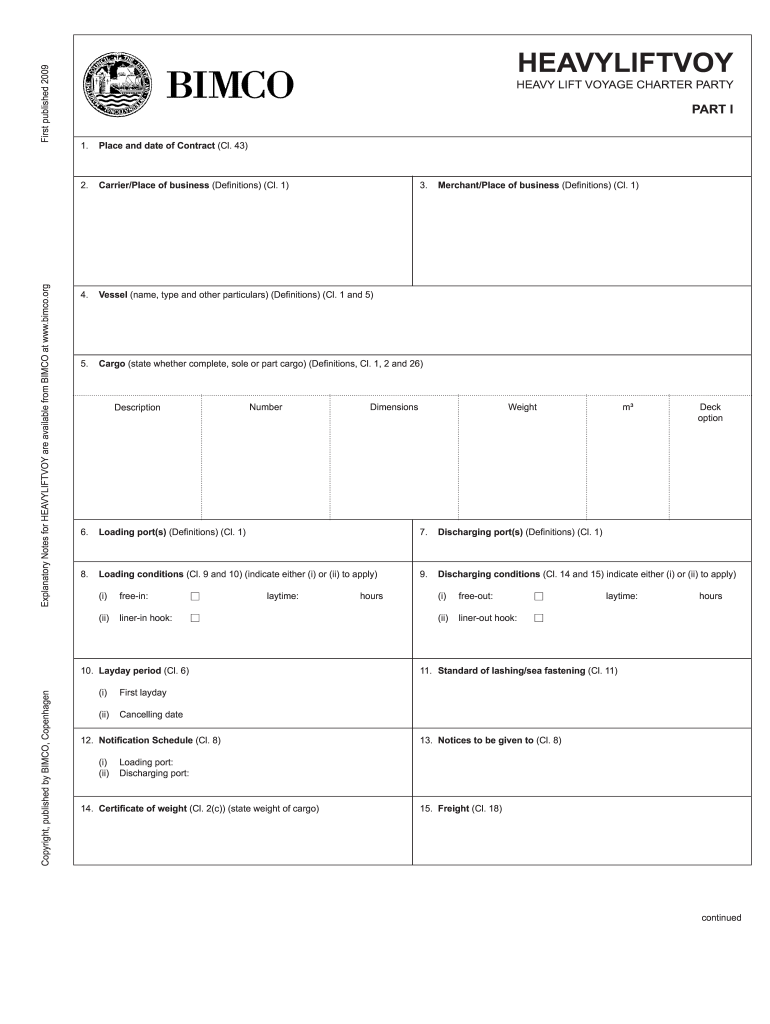







Understanding Charter Party Forms
Charter party forms serve as essential documents in the shipping and freight industry, detailing the agreements between carriers and merchants for the transportation of goods. These contracts can take various forms, such as voyage charter parties or time charter parties, and are integral for ensuring all parties understand their rights, obligations, and the parameters of the shipping arrangement.
Definition and Types of Charter Parties
A charter party is a legal contract where the owner of a vessel (the Carrier) agrees to transport goods for a merchant, the Merchant, in exchange for freight payment. The major types include:
-
Voyage Charter Party: A type of contract where the ship is hired for a single journey between specified ports, detailing the exact freight, cargo details, and laytime.
-
Time Charter Party: This type allows the charterer to hire the vessel for a predetermined period, offering them more flexibility over the ship’s operation.
Key Elements of Charter Party Forms
Understanding the critical elements of these forms is crucial for both parties involved. Key items typically included are:
-
Vessel Details: Specific information about the ship, including its name, registration details, and capacity.
-
Cargo Description: Clear details on the type of cargo being transported, its quantity, and any special handling instructions.
-
Ports of Loading and Discharging: Identifies where the cargo will be loaded and where it will be delivered, along with any provisions for delays or changes.
-
Laytime Conditions: Outlines the time allowed for loading and unloading, along with demurrage rates if exceeded.
-
Freight Payment Terms: Specifies how and when payments are to be made, including any potential penalties for late payments.
Practical Considerations for Using Charter Party Forms
When preparing to use charter party forms, it is essential to ensure that all sections are accurately completed and understood. Consider these practical guidelines:
-
Reviewing Legal Requirements: Ensure that the contract complies with U.S. maritime law and regulations, as non-compliance can lead to disputes.
-
Incorporating Standard Clauses: Use commonly accepted clauses within the charter party industry, such as BIMCO standard clauses, to ensure legal robustness.
-
Limiting Liability: Clearly outline any limitations of liability for damages or losses to protect both parties.
Steps to Complete Charter Party Forms
Completing a charter party form requires careful attention to detail. Here’s a structured approach:
-
Gather Required Information: Collect all necessary details about the shipment, including the parties’ names, address, and contact information.
-
Select the Appropriate Template: Choose a suitable charter party template based on the type of shipment (voyage or time charter).
-
Fill Out Key Sections: Include all relevant sections as discussed above—vessel details, cargo description, invocations of insurance, etc.
-
Review and Edit: Carefully review the document for accuracy, ensuring all terms are clearly defined to prevent any potential misunderstandings.
-
Legal Review: If necessary, have the document reviewed by a legal expert familiar with maritime law.
-
Sign and Distribute: Ensure all parties sign the document, and retain copies for record-keeping.
Common Uses of Charter Party Forms
Charter party forms are predominantly used in shipping and freight transportation. Here are some common scenarios:
-
Commercial Shipping: Used by businesses transporting goods internationally or domestically.
-
Construction and Heavy Lift Operations: Relevant for companies needing to move heavy equipment or materials.
-
Bulk Carriers: Essential for operators planning to transport large quantities of bulk materials.
Legal Background and Compliance
A charter party must adhere to specific legal frameworks in the U.S. maritime industry, including:
-
The Carriage of Goods by Sea Act: Governs the rights and responsibilities of parties involved in marine shipping.
-
The Federal Maritime Commission: Provides regulatory oversight, ensuring fair and competitive practices in maritime shipping.
Summary of Key Documents and Subsequent Steps
Utilizing charter party forms effectively can streamline the shipping process. After creating and signing the form, parties should keep these next steps in mind:
-
Document Copies: Ensure both parties retain signed copies for reference.
-
Monitor Compliance: Regularly check that all terms are followed, especially concerning laytime and payment schedules.
-
Resolve Disputes: Be prepared with a predefined dispute resolution clause to manage disagreements amicably and effectively.
By comprehensively understanding and effectively using charter party forms, businesses can enhance their workflow and reduce the potential for conflicts in shipping contracts.




