
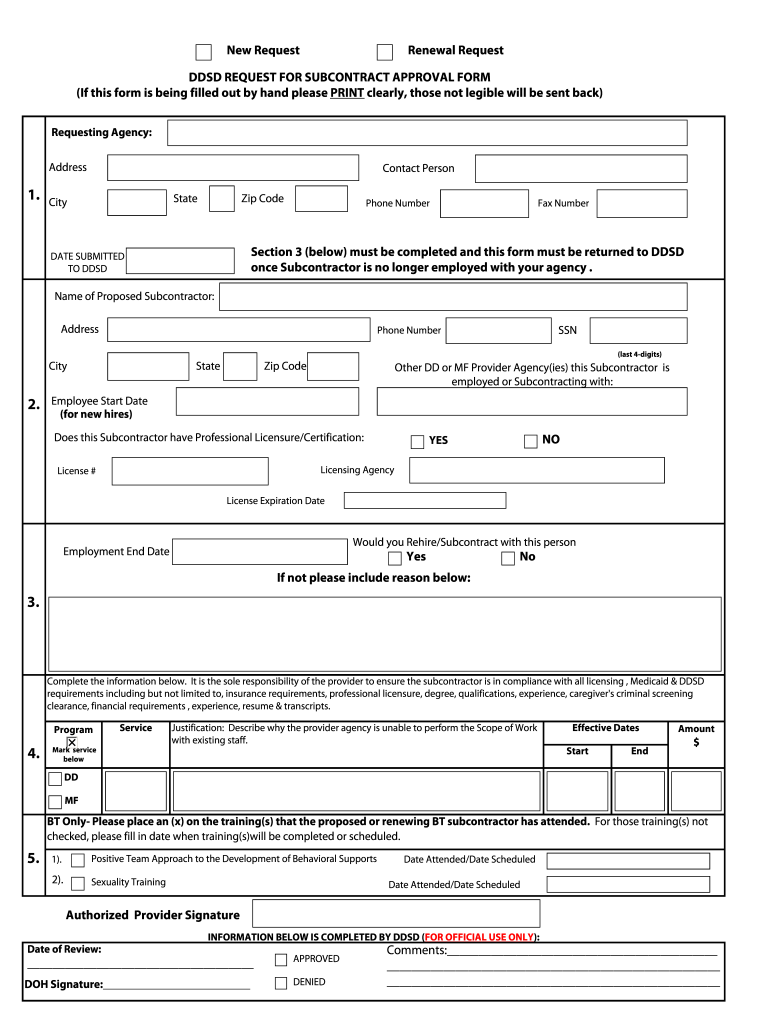







Definition and Meaning of the Subcontractor Application Form
The subcontractor application form is a crucial document used by businesses to evaluate and formally request approval for subcontractors. This form collects essential information regarding the potential subcontractor to ensure they meet the necessary qualifications and standards set by the main contractor or project manager. Common elements included in the form are the subcontractor's contact details, professional experience, licensing information, references, and any relevant insurance or bonding details. This comprehensive collection of data helps organizations ascertain the qualifications and reliability of subcontractors before entering into agreements.
In addition, this form often serves as a compliance mechanism, ensuring that all subcontractors adhere to industry standards and legal requirements. By standardizing the application process, companies can more easily compare applicants and make informed decisions that align with their operational needs.
Key Elements of the Subcontractor Application Form
- Contact Information: Includes name, address, phone number, and email.
- Business Structure: Requires information on whether the subcontractor operates as an individual contractor, partnership, or corporation.
- Licensing and Certifications: Documentation confirming the subcontractor’s qualifications and legal permissions to perform the specified work.
- References: Previous clients or projects that can vouch for the subcontractor’s competence and reliability.
- Insurance Details: Information about liability insurance, workers' compensation coverage, and bonding capacity.
Steps to Complete the Subcontractor Application Form
Filling out a subcontractor application form requires careful attention to detail to ensure all information is accurate and complete. Here are the steps typically involved in the process:
- Gather Required Information: Compile all necessary details, including business registration documents, insurance papers, and workforce details.
- Fill Out the Form: Ensure all sections are completed, providing thorough and accurate information about the subcontractor’s capabilities, experience, and compliance.
- Attach Supporting Documents: Include copies of relevant licenses, certifications, and insurance policies to support the application.
- Review for Accuracy: Double-check the entire form for errors or omissions. This step is critical to prevent delays in processing.
- Submit the Application: Depending on the organization's process, submit the form either electronically or in print, making sure to follow any specific submission guidelines outlined by the contractor.
Completing these steps diligently can streamline the evaluation process and increase the chances of successful approval.
Important Terms Related to the Subcontractor Application Form
Understanding specific terminology related to the subcontractor application process can enhance comprehension and ensure appropriate actions are taken:
- Subcontractor: An individual or business that undertakes a specific task or project as part of a larger contract but is not an employee of the main contractor.
- Bonding: This refers to a type of insurance that protects the project owner against losses due to a subcontractor's failure to complete the job.
- Liability Insurance: Coverage that protects the subcontractor against legal claims arising from accidents or injuries that occur on the job site.
Why Use the Subcontractor Application Form?
Utilizing a subcontractor application form is beneficial for several key reasons:
- Standardization: Ensures a uniform process across all applications, allowing for easier comparison and assessment of potential subcontractors.
- Risk Mitigation: Helps identify reputable subcontractors, minimizing the risk associated with hiring unreliable or unqualified personnel.
- Documentation: Provides a clear record of all subcontractors considered for a project, which can be crucial for compliance and auditing purposes.
- Efficiency: Streamlines the vetting process, allowing project managers to focus on evaluating the most qualified candidates without excessive back-and-forth communication.
Legal Use of the Subcontractor Application Form
The legal implications of the subcontractor application form are significant, particularly in terms of compliance and liability. The form can be used to ensure that:
- Legal Compliance: Subcontractors possess the licenses and permits required for their trade, adhering to local, state, and federal regulations.
- Contractual Obligations: The process aligns with contractual stipulations set by the primary contractor, safeguarding the interests of all parties involved.
- Liability Protection: Properly vetted subcontractors decrease the likelihood of liabilities arising from negligent work, thereby protecting the primary contractor from potential lawsuits.
Using the subcontractor application form correctly establishes a framework for legal compliance and contractual integrity, promoting a safe and efficient project environment.




