
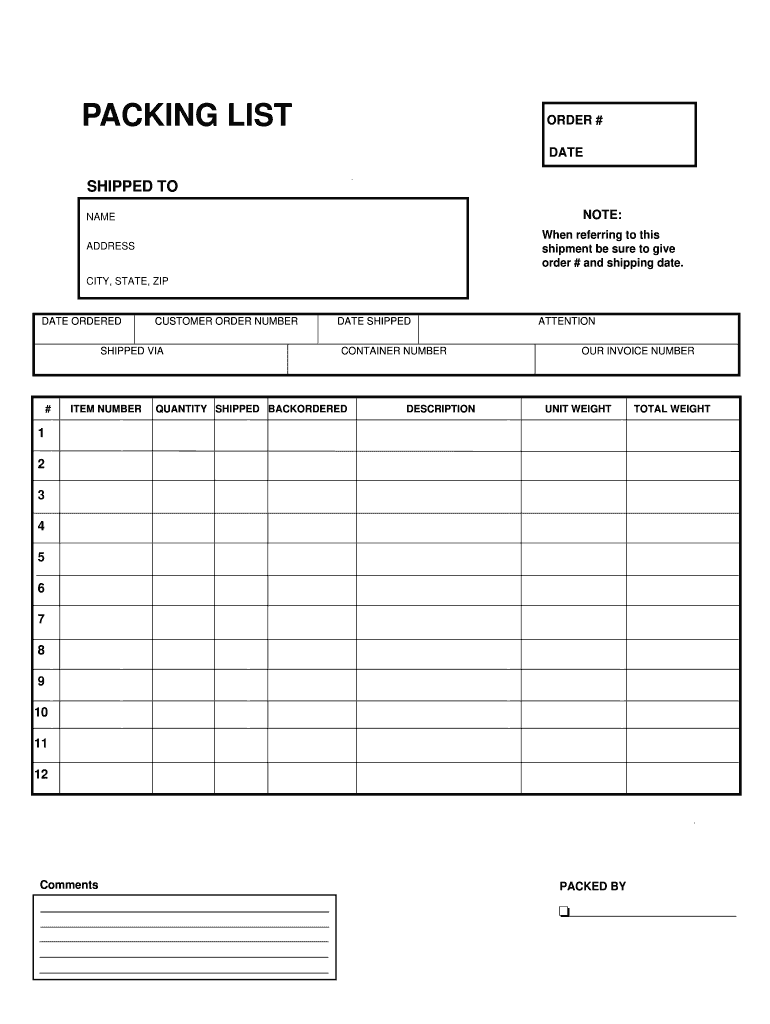







Overview of Packing List Template
A packing list template serves as a crucial document for shipping and logistics. Its primary purpose is to provide a comprehensive breakdown of the contents being sent, ensuring that all items are accounted for during transit. Typically, this template includes details such as the order number, shipping date, recipient information, item descriptions, quantities shipped, and total weight. It acts as both a record and a guide, helping both the sender and the recipient stay organized.
Key Elements of a Packing List Template
- Order Number: This reference number links the shipment to a specific order, facilitating tracking and inventory management.
- Shipping Date: Indicates when the items were dispatched, aiding in logistical planning and delivery timing.
- Recipient Information: Includes the name, address, and contact details of the recipient, ensuring that the package reaches the correct destination.
- Item Descriptions: Clear descriptions of each item being shipped, including size, color, and any relevant specifications.
- Quantities Shipped: Lists how many of each item are included in the shipment, which is essential for inventory reconciliation upon delivery.
- Total Weight: Indicates the weight of the entire shipment, necessary for calculating shipping costs and compliance with carrier regulations.
Importance of Using a Packing List Template
Using a packing list template provides several advantages for both individual and business shipping needs:
- Organization: A well-structured template keeps all shipping details in one place, reducing the risk of missing items or inaccuracies.
- Documentation: Serves as official documentation of what was shipped, which is critical for tracking and resolving disputes should they arise.
- Efficiency: Streamlines the packing and shipping process, allowing for quicker preparation of shipments with less likelihood of error.
- Professionalism: A polished packing list enhances the sender's reputation and can improve customer satisfaction by showing thoroughness and attention to detail.
Creating a Packing List Template
Creating a packing list template can be done using various formats, including digital documents or pre-printed forms. Here are steps to effectively create one:
- Determine Required Information: Outline all the essential details, such as those mentioned above, that should be included in your packing list.
- Choose a Format: Decide whether to use a digital format, like a Word document or Excel spreadsheet, or a traditional paper format.
- Design the Layout: Arrange fields logically for easy reading, such as grouping item descriptions with their corresponding quantities and weights.
- Customize as Needed: Adapt the template to suit specific requirements, such as including company branding or additional fields for tracking purposes.
- Test It Out: Use the template in a trial shipping scenario to ensure it meets all needs and is user-friendly.
Variants of Packing Lists
There are several types of packing lists, each serving specific purposes:
- Commercial Packing List: Often used for international shipping, this version includes detailed descriptions required by customs.
- Pro Forma Packing List: Used for invoicing and quotations, this version is created before the actual shipment.
- Internal Packing List: Serves the purpose of guiding warehouse staff during the picking and packing process.
Best Practices for Using a Packing List Template
To maximize the benefits of a packing list template, consider implementing the following best practices:
- Review and Update Regularly: Ensure that your packing list template is current and reflects any changes in products or shipping procedures.
- Train Staff: Make sure all relevant personnel understand how to use the template effectively, improving consistency and reducing errors.
- Use Digital Tools: Incorporate technology that allows for easy editing, tracking, and real-time updates of the packing list, especially if multiple team members are involved.
By employing a systematic packing list template, businesses and individuals can assure that their shipping processes are organized, efficient, and effective, leading to a smoother experience from packing to delivery.




