
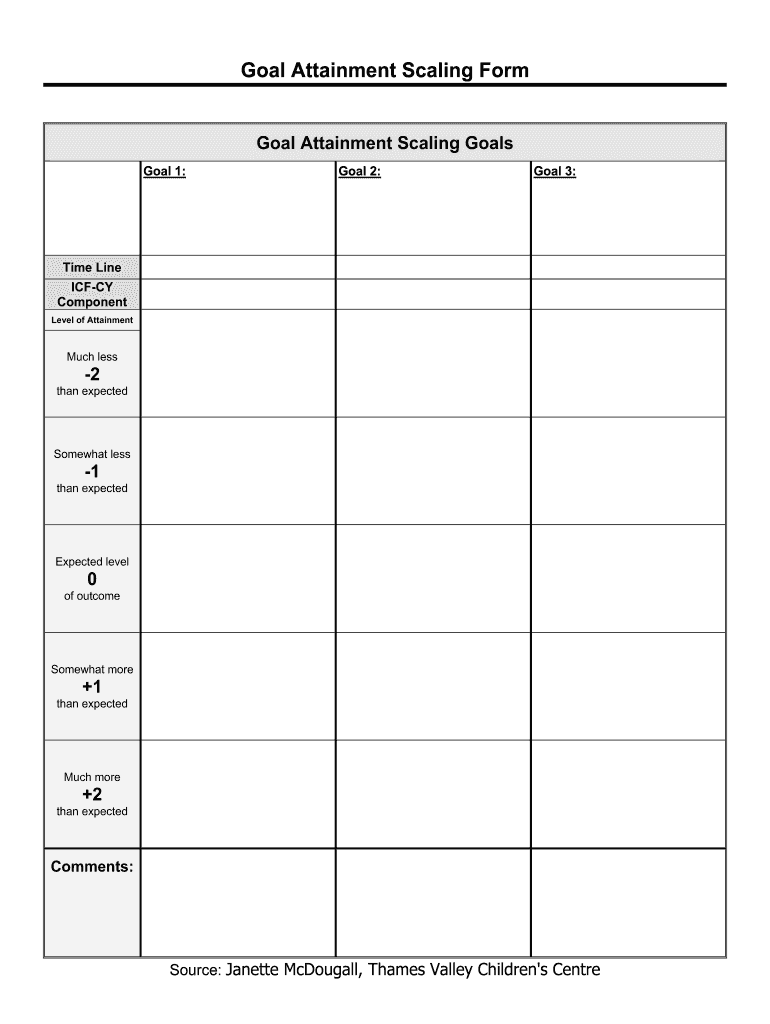







Definition and Meaning of the Goal Attainment Scale Form PDF
The goal attainment scale form PDF is a structured document designed to measure and evaluate the progress of individuals towards predefined goals. Typically used in various fields, including healthcare, education, and social work, this form helps practitioners set measurable, client-specific objectives. It provides a standardized method for assessing functional improvements over time, which is crucial in therapeutic and educational settings.
The scale is founded on specific metrics, often employing a five-point rating system to evaluate the extent of goal achievement. Each point of the scale represents a different level of accomplishment, ranging from no progress to full attainment of the goal. This method enables professionals to create personalized goals that are both meaningful and contextually relevant.
When utilizing the goal attainment scale, practitioners can facilitate effective communication about progress with clients and their families. This transparency supports a client-centered approach, ensuring that individuals feel engaged and empowered in their own development process.
Key Characteristics of Goal Attainment Scaling
- Individualized Focus: Goals are tailored to each client’s unique needs and circumstances.
- Measurable Outcomes: Utilizes a quantifiable rating system, providing clear insights into progress.
- Multi-Disciplinary Use: Applicable across various professional fields, including occupational therapy, education, and mental health.
- Dynamic Adjustment: Goals can be modified based on ongoing assessments, ensuring relevancy throughout the therapy or educational process.
How to Use the Goal Attainment Scale Form PDF
Using the goal attainment scale form PDF involves several key steps to ensure that the goals set are effective and beneficial for the client. This process typically includes initial goal-setting, progress measurement, and periodic adjustments based on observed outcomes.
Step-by-Step Process
- Identify Client Goals: Begin with an in-depth discussion with the client to identify specific areas of need. Goals should reflect what the client deems important for their development.
- Define Measurable Outcomes: Clearly articulate what success looks like for each goal. This may involve describing observable behaviors or skills that the client should demonstrate.
- Set the Rating Scale: Implement a five-point scale where:
- +2 indicates much greater than expected progress,
- +1 signifies some progress,
- 0 means no change,
- -1 reflects some deterioration,
- -2 denotes much worse than expected outcomes.
- Monitor Progress: Regularly assess the client’s advancements toward their goals using the form. Engage in discussions about their experiences and perceptions regarding their progress.
- Adjust Goals as Needed: Based on assessments, modify goals or expectations to better align with the client’s evolving needs and circumstances. This could mean making goals more challenging or simplifying them, depending on the situation.
Important Terms Related to the Goal Attainment Scale Form PDF
Understanding the terminology associated with the goal attainment scale is crucial for effective application and discussion among professionals. Below are key terms frequently encountered in this context.
- Goal Attainment Scaling (GAS): A method designed to facilitate individualized goal-setting and progress evaluation.
- Functional Goals: Objectives that focus on the practical skills or behaviors a client wishes to improve.
- Client-Centered Approach: An approach that emphasizes the client's needs and preferences in the therapeutic or educational process.
- Outcome Measures: Tools and metrics used to assess the effectiveness of the intervention or treatment.
Terms in Context
Knowing these terms helps you better articulate the process and understanding of goal attainment scaling when discussing it with clients, colleagues, or stakeholders. The language used in documentation should reflect these terms for clarity and precision.
Steps to Complete the Goal Attainment Scale Form PDF
Completing the goal attainment scale form PDF requires a systematic approach, ensuring that all necessary elements are accurately documented and clearly understood.
Detailed Steps
- Download the Form: Obtain the latest version of the goal attainment scale form PDF to ensure compliance with current standards and practices.
- Fill in Client Information: Input relevant details about the client at the top of the form, including name, date of birth, and identification number, if applicable.
- Set Goals: Clearly outline the specific goals the client has set, incorporating input from discussions held during the initial assessment.
- Determine Measurement Criteria: For each goal, specify how progress will be measured, detailing the observable behaviors or skills that will indicate achievement.
- Assign Rating Scale Values: When evaluating progress, input values according to the previously established rating system, ensuring to provide comments for clarity.
- Review and Reflect: After completion, review the form with the client to ensure mutual understanding and agreement before finalizing.
Who Typically Uses the Goal Attainment Scale Form PDF
The goal attainment scale form PDF is utilized by a diverse group of professionals across various fields aimed at enhancing client outcomes. Common users include:
- Occupational Therapists: Focus on improving daily living skills among clients with disabilities or injuries.
- Educational Professionals: Teachers and special education staff use the form to set and assess academic or behavioral goals for students.
- Physical Therapists: Employed to track progress in rehabilitative settings where mobility and strength are central concerns.
- Counselors and Psychologists: Used in clinical settings to measure emotional and psychological goals related to therapy.


Additional User Categories
- Social Workers: Engage in goal-setting for clients in various social service programs, ensuring that clients are progressing towards independence and self-sufficiency.
- Healthcare Providers: Evaluate patient outcomes in recovery programs, rehabilitation, and chronic disease management.
Examples of Using the Goal Attainment Scale Form PDF
Real-world scenarios can illustrate how the goal attainment scale form PDF is applied effectively in practice.
Practical Examples
- Therapeutic Setting: An occupational therapist might use the form to establish goals for a client recovering from a stroke, such as regaining wrist function or improving fine motor skills. Progress is monitored through regular assessments using the gas scale, allowing adjustments as needed.
- Special Education: In a classroom setting, a teacher could set goals for a student with learning disabilities, focusing on literacy skills. The student’s progress is tracked through the attainment scale, providing insights into classroom efficacy and areas needing additional support.
- Mental Health Counseling: A therapist may outline goals for a client aimed at reducing anxiety and improving coping strategies. By regularly reviewing the forms, the therapist can foster discussions that empower the client, facilitating self-reflection and proactive adjustments.
These examples underscore the flexibility and utility of the goal attainment scale form PDF in various environments, allowing for tailored approaches and measurable progress tracking across diverse client needs.




