




01. Edit your deer harvest log online
Type text, add images, blackout confidential details, add comments, highlights and more.

Type text, add images, blackout confidential details, add comments, highlights and more.

Draw your signature, type it, upload its image, or use your mobile device as a signature pad.

Send deer harvest log sheet via email, link, or fax. You can also download it, export it or print it out.
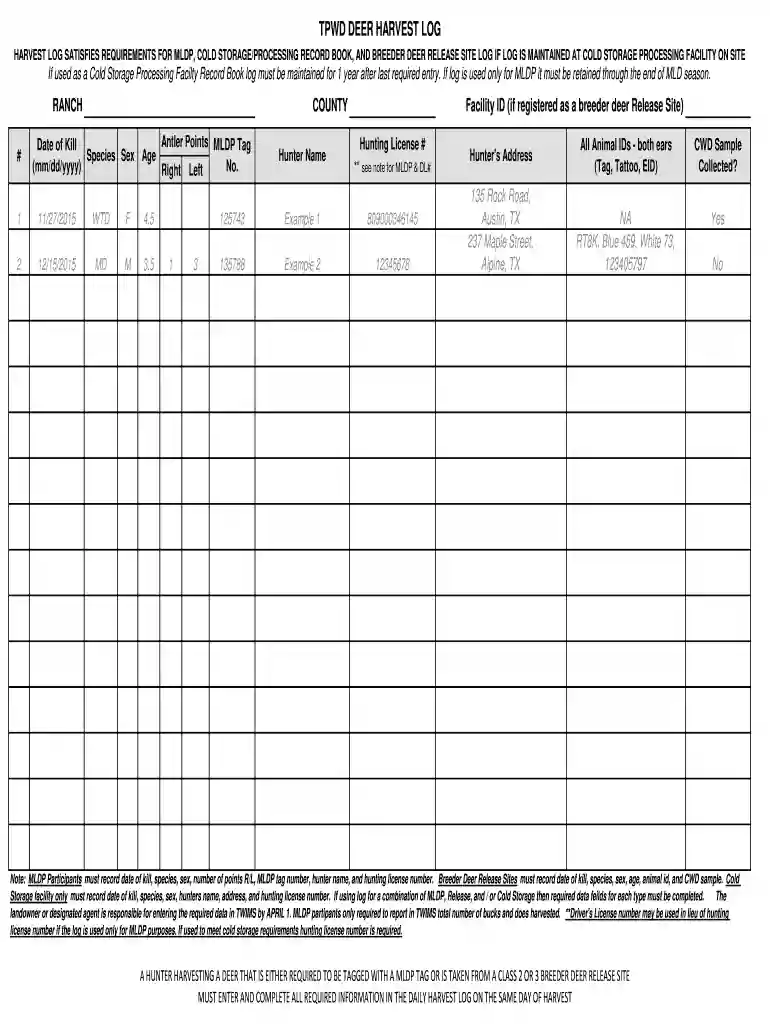
The TPWD Deer Harvest Log serves as a crucial record-keeping tool essential for compliance with various wildlife management regulations in Texas. This log provides an organized method for documenting specific details of deer harvested throughout the hunting season. Understanding its requirements and proper use is vital for hunters involved in the Managed Land Deer Program (MLDP) or any related activities needing accurate data tracking.
The TPWD Deer Harvest Log mandates the capture of several essential details related to each deer harvested, including:
Maintaining accurate entries ensures hunters remain compliant with regulations and contributes valuable data to wildlife management efforts.
Compliance with the TPWD Deer Harvest Log helps maintain sustainable deer populations and supports conservation efforts. By accurately logging harvests, hunters contribute to effective wildlife management strategies, which may include:
Failure to maintain a required log can result in penalties and loss of privileges in future hunting seasons.
It is essential for hunters to understand the duration for which the TPWD Deer Harvest Log must be maintained. Requirements vary depending on the specific program or regulation:
These retention protocols ensure that hunters and landowners can provide documentation when requested by wildlife authorities.
The use of technological tools can significantly simplify the process of maintaining the TPWD Deer Harvest Log:
Leveraging these technological solutions assists in flexibility, accuracy, and ease of compliance with reporting requirements.
Implementing best practices for managing the TPWD Deer Harvest Log can enhance accuracy and compliance:
By adopting these practices, hunters can ensure that their logs are meticulous and reliable.
Participation in local wildlife management programs often provides access to additional resources and support. Organizations may offer:
This collaboration strengthens both individual hunting practices and communal wildlife management initiatives.
Understanding the importance of the TPWD Deer Harvest Log and implementing diligent recording practices is essential for hunters committed to sustaining healthy deer populations in Texas.
At DocHub, your data security is our priority. We follow HIPAA, SOC2, GDPR, and other standards, so you can work on your documents with confidence.
Aug 9, 2022 For those in the Managed Lands Deer Program, the basic data mentioned previously are required to be submitted to TPWD annually. Records shouldRead more
Dec 15, 2015 Harvest Log Satisfies Requirements for MLDP and cold storage / processing record book if log is maintained at cold storage processingRead more


