
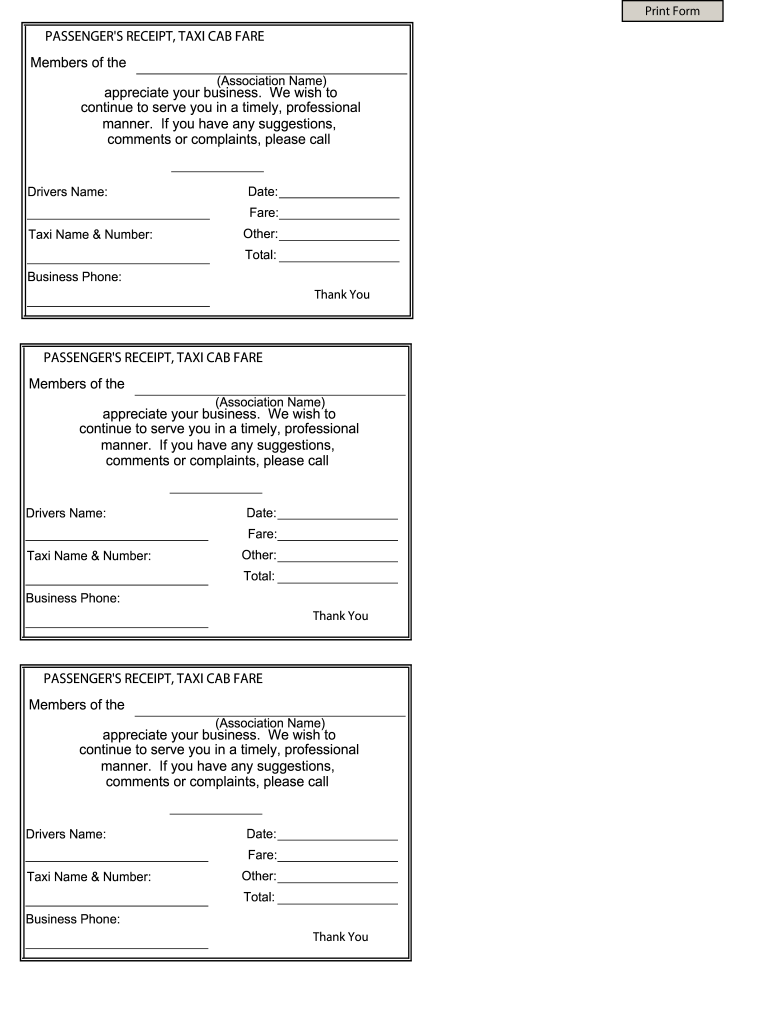







Definition and Meaning of Taxi Bill Format
The taxi bill format serves as a structured document used by taxi operators to provide passengers with a detailed receipt for fare charges incurred during their ride. This format is essential for financial tracking, business reporting, and customer satisfaction. Typically, a taxi bill includes crucial information such as the driver's name, date of the ride, total fare, taxi identification number, and contact details of the taxi company.
The structured layout of a taxi bill enhances its readability, ensuring that customers have all the necessary details at their fingertips. Passengers can utilize these receipts for expense tracking or reimbursement purposes, establishing the document's importance in both personal and business contexts. The format may vary slightly depending on local regulations and taxi company policies, but the fundamental components remain consistent across the United States.
Key Elements of the Taxi Bill Format
Creating an effective taxi bill format involves including several critical components that ensure clarity and completeness. These elements not only serve legal and operational purposes but also enhance customer trust and satisfaction.
- Driver’s Name: The name of the taxi driver should be prominently displayed, providing accountability and a personal touch to the service.
- Date of Service: This section indicates when the ride occurred, serving as a timestamp for record-keeping.
- Total Fare: A clear breakdown of charges, including base fare, taxes, and any additional fees like tolls or surcharges, keeps customers informed about the cost.
- Taxi Identification Number: This unique identifier tracks each vehicle in the fleet, ensuring customers can verify the legitimacy of the taxi service.
- Contact Information: Including the taxi company’s contact details allows customers to reach out in case of disputes or inquiries, fostering trust and reliability.
These elements collectively ensure that a taxi bill is usable both for customers and for taxi operators, meeting the needs of various stakeholders in the transportation service.
Steps to Complete the Taxi Bill Format
Completing a taxi bill format can be straightforward once you understand the necessary steps and elements. Here is a concise guide to ensuring that all essential information is accurately captured.
- Gather Necessary Information: Begin by collecting details such as the passenger's name, pickup and drop-off locations, and the route taken.
- Fill in the Driver's Information: Include the driver's name and identification number to provide transparency.
- Enter the Date and Time: Document when the ride took place, making sure to include both the date and time for accuracy.
- Break Down the Fare: Clearly itemize charges by listing the base fare, any additional costs, and the total amount due. Include applicable taxes or service fees.
- Provide Contact Details: List the taxi company’s name, address, and contact number for any future inquiries or feedback from the passenger.
- Verify Information: Review all the input data for accuracy before finalizing the document to minimize disputes or misunderstandings.
Following these steps ensures that each taxi bill issued is complete, accurate, and aligned with industry standards.
How to Obtain the Taxi Bill Format
Acquiring a taxi bill format can be done through several methods, facilitating ease of use for taxi operators seeking to improve their documentation process.
- Online Templates: Many websites offer editable taxi receipt templates for free download. These can be customized to meet specific business needs.
- Taxi Management Software: Various software solutions include built-in taxi bill generators, allowing operators to create bills seamlessly during fare processing.
- Local Taxi Associations: Joining local taxi associations may provide access to official bill formats that comply with regional regulations.
- Custom Creation: Taxi services can design their own bill format using word processing software, ensuring that it meets specific business branding and operational requirements.
Finding the right format enhances branding while ensuring compliance with local requirements, making it an essential step for effective business operations.
Legal Use of the Taxi Bill Format
Understanding the legal implications surrounding taxi bills is crucial for compliance with both local and federal regulations. Here are key considerations for the legal use of taxi bill formats:
- Documentation for Tax Purposes: Passengers may need taxi bills for tax deductions or reimbursements. Ensuring that the format fulfills IRS guidelines is essential for smooth processing.
- Consumer Protection Laws: Compliance with local consumer protection laws mandates that receipts reflect accurate fare information and details of service.
- Dispute Resolution: A well-structured taxi bill can serve as evidence in disputes if any fare discrepancies arise, benefitting both passengers and operators.
- Record Keeping Requirement: Taxi operators are typically required by law to maintain accurate records of all fares and transactions, and standardized receipts aid in fulfilling these obligations.
By adhering to legal requirements, taxi services can enhance their operations and maintain compliance, ultimately contributing to the stability of their business.
Business Types That Benefit Most from Taxi Bill Formats
Various business types can significantly benefit from utilizing a standard taxi bill format. These can include:
- Taxi Companies: Streamlined receipt formats enhance operational efficiency and customer satisfaction while aiding in tax documentation.
- Corporate Clients: Businesses arranging transportation for employees can require standardized billing for expense reports.
- Event Planners: Companies organizing events may need reliable taxi services for guests, necessitating clear and professional fare receipts.
- Travel Agencies: Agencies that coordinate transportation for clients can utilize taxi bills as part of a comprehensive travel management system.
Each of these businesses relies on accurate and professional taxi bill formats to maintain financial integrity and foster trust with their clients.
Examples of Using the Taxi Bill Format
Utilizing a taxi bill format effectively can be examined through various practical scenarios:
- Business Travel: An employee on a business trip takes a taxi to a meeting. The taxi bill provided can be submitted for reimbursement along with other travel expenses, ensuring adherence to company policies.
- Client Events: A business hosting a corporate event may hire taxis for guests. Affordable and standardized taxi bills can help in organizing guest transportation efficiently while simplifying payment methods.
- Expense Tracking: Individuals can use taxi bills to track transportation costs incurred during trip planning or financial management, making personal budgeting more straightforward.
In each of these cases, the use of a standardized taxi bill format not only aids in financial transactions but also enhances record-keeping and accountability.




