
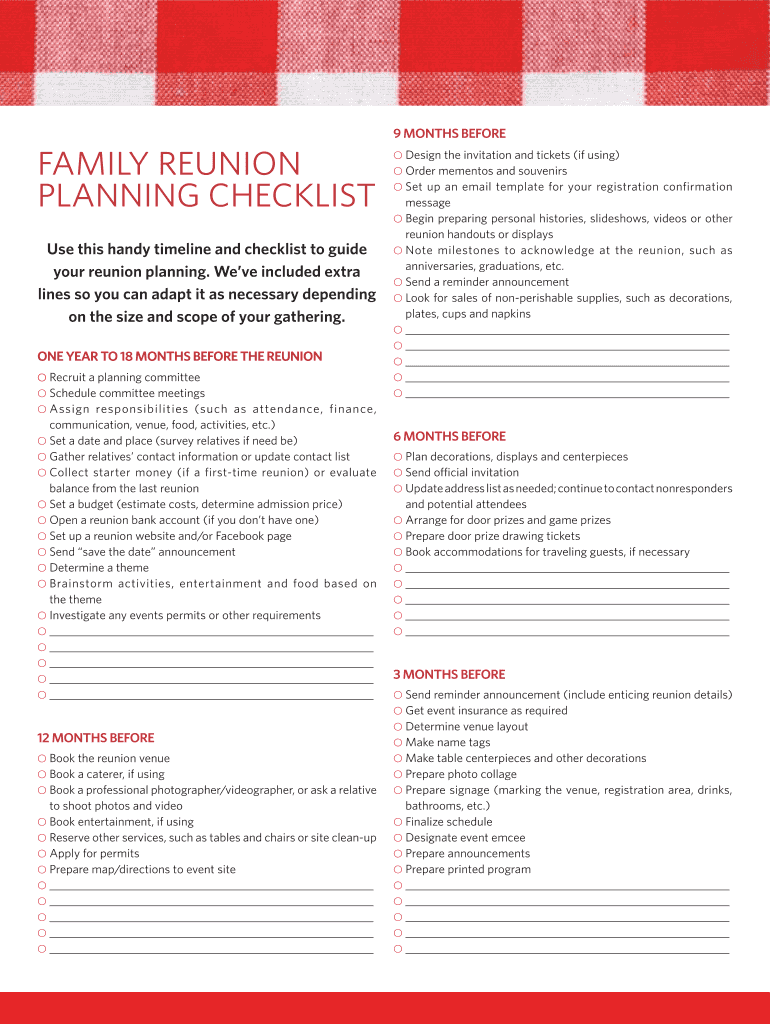







Definition and Meaning of the Family Reunion Planning Checklist
The family reunion planning checklist is a structured tool designed to help individuals and families systematically organize their reunion events. This document serves as a comprehensive guide, outlining the essential steps and timelines needed to ensure a successful gathering. Typically, the checklist focuses on various aspects of the planning process, including budgeting, venue selection, communication with family members, and activity coordination.
Key components of the family reunion planning checklist may include:
- Budget planning: Determining the overall budget, including potential contributions and expenses.
- Venue selection: Researching and reserving a suitable location for the reunion.
- Communication: Establishing a method for effectively reaching out to family members, such as sending invitations or updates through email or social media platforms.
- Activities and entertainment: Planning engaging activities that cater to all age groups, ensuring everyone has an enjoyable experience.
Utilizing this checklist allows individuals to break down the planning process into manageable tasks, ensuring no detail is overlooked.
Steps to Complete the Family Reunion Planning Checklist
Completing the family reunion planning checklist involves a series of organized steps. Each step is crucial for preparing and executing a successful event. Here is a suggested sequence of actions to follow:
-
Establish a Planning Committee: Form a small group of family members to assist with the planning process. Assign roles based on individual strengths and interests, encouraging collaboration and shared responsibility.
-
Set a Budget: Determine how much money is available for the reunion. Consider various income sources, including family contributions, fundraising efforts, or sponsorships.
-
Choose a Date and Venue: Select a date that accommodates the majority of family members. Research various venues, considering accessibility, capacity, and amenities. Make a reservation as early as possible to secure your desired location.
-
Create a Guest List and Send Invitations: Compile a list of family members to invite. Use various communication methods to send invitations, and consider including an RSVP request to gauge attendance.
-
Plan Activities and Logistics: Organize a range of activities suitable for all ages, potentially including games, contests, and shared meals. Address logistical aspects, such as transportation, catering, and setup.
-
Confirm Details: Touch base with vendors, venues, and organizing family members to ensure all plans are confirmed well ahead of the reunion date.
-
Prepare for the Day of the Event: Develop a schedule outlining the day of activities, and ensure that all necessary materials and supplies are prepared in advance.
-
Post-Event Follow-Up: After the reunion, consider following up with family members to share memories, photos, and experiences. This can help maintain connections established during the event.
Following these steps fosters a thorough and efficient approach to planning a family reunion, minimizing stress and maximizing enjoyment.
Important Terms Related to Family Reunion Planning Checklist
Understanding the terminology associated with family reunion planning is essential for effective organization. Here are key phrases and concepts often encountered:
- RSVP: A French abbreviation meaning "Répondez s'il vous plaît," requesting guests to confirm attendance.
- Budgeting: The process of allocating financial resources for various aspects of the reunion, including food, venue rentals, and activities.
- Venue: The physical location where the reunion will take place, which can range from parks and community centers to private homes.
These terms can streamline communication within the planning committee and clarify expectations among attendees.
Examples of Using the Family Reunion Planning Checklist
In practice, using the family reunion planning checklist can lead to diverse and memorable gatherings. Here are concrete examples illustrating how different families implement the checklist:
-
Case Study: Extended Family Reunion: An extended family annually organizes their reunion at a regional park. They follow their customized checklist, which led to a well-coordinated event with activities such as shared meals, group games, and group photos, ensuring that everyone felt included and engaged.
-
Case Study: Virtual Family Reunion: In a situation where travel was limited, a family utilized the checklist to plan a virtual reunion. They included technology checks, prepared interactive online games, and shared family memories through a digital platform, allowing all members to participate despite geographical barriers.
By showcasing these real-world applications, families can envision how the checklist can adapt to their unique contexts, ensuring that every reunion remains special.
Key Elements of the Family Reunion Planning Checklist
When creating or using a family reunion planning checklist, certain elements remain crucial to the success of the event. These include:
-
Communication Plan: Establishing how to communicate with family members regarding planning updates, logistics, and activities. Utilizing group chats, family apps, or social media can help keep everyone on the same page.
-
Agenda of Events: Outlining a timeline for the day, including when meals will be served, what games or activities will occur, and any scheduled speeches or announcements.
-
Contact List: Maintaining an updated list of family members' contact information is vital for sending out invitations and staying in touch regarding reunion details.
-
Backup Plans: Always prepare for unforeseen circumstances, such as weather changes during outdoor gatherings. Having alternative plans can prevent disappointment and ensure continuity of activities.
Focusing on these key elements can guide families throughout the planning process, resulting in a well-executed and enjoyable reunion experience.




