


Degassing certificate 2026

Get Form
degassing certificate Preview on Page 1

Here's how it works

01. Edit your degassing certificate online
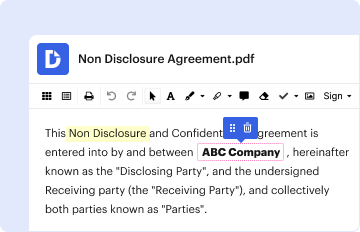
Type text, add images, blackout confidential details, add comments, highlights and more.
02. Sign it in a few clicks
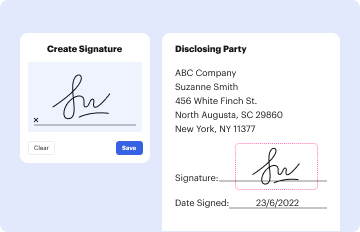
Draw your signature, type it, upload its image, or use your mobile device as a signature pad.
03. Share your form with others
Send it via email, link, or fax. You can also download it, export it or print it out.

How to use or fill out degassing certificate with our platform

Form edit decoration
9.5
Ease of Setup
DocHub User Ratings on G2
9.0
Ease of Use
DocHub User Ratings on G2
  1. Click ‘Get Form’ to open the degassing certificate in the editor.
  2. Begin by entering the date in the designated field. This is crucial for record-keeping and validation purposes.
  3. In the section labeled 'SHIPS NAME', input the name of the vessel transporting the commodities. Ensure accuracy to avoid any shipping issues.
  4. Fill in 'VOY.NO.' with the voyage number associated with this shipment, which helps track your cargo.
  5. Complete the 'Place of Receipt', 'Port of Loading', 'Port of Discharge', and 'Place of Delivery' fields to specify all relevant locations for transportation.
  6. If applicable, enter the 'Container No.' for easy identification of your shipment.
  7. Specify the type of commodity being transported and its quantity in units, ensuring compliance with transport regulations.
  8. Finally, have a representative from your company sign off on the document by filling in their name and title under 'Certified by'.

Start using our platform today to easily complete your degassing certificate online for free!

be ready to get more

Complete this form in 5 minutes or less

Get form

Got questions?

We have answers to the most popular questions from our customers. If you can't find an answer to your question, please contact us.
Contact us
Degassing occurs more quickly with the addition of cleaning chemistry, by heating the liquid, and by intermittent application of ultrasonic energy, which causes small gas bubbles to form (unimploded cavitation bubbles), coalesce, and, once sufficiently buoyant, rise to the surface.
Aeration and Degassing. Aeration is the addition of oxygen to the must. Degassing is the removal of CO2. These are techniques which are optional but, when used correctly, can docHubly reduce the hot flavors produced during fermentation.
Degassing tank is one of the solutions to resolve the problems pertaining to engine cooling system. The main function of degassing tank, also known as de-aeration tank, hot bottle, expansion tank is to remove the entrapped gases/air from the engine cooling system.
For ultrasonic cleaning equipment, degassing is the process of removing gases such as air dissolved in a liquid cleaning solution. Air and other gases dissolved in a cleaning solution will impact performance of ultrasonic cleaning tanks.
We measure the concentration of flammable vapours and gases in confined spaces such as ship cargo tanks, onshore tanks and other tanks or confined spaces where concentrations of toxic or flammable vapours and gases hazardous to life or health may exist.

Security and compliance

At DocHub, your data security is our priority. We follow HIPAA, SOC2, GDPR, and other standards, so you can work on your documents with confidence.

Learn more
ccpa2
pci-dss
gdpr-compliance
hipaa
soc-compliance

People also ask

Degassing is often used during shutdown and turnaround operations to remove hazardous gases and ensure safer environments for workers. Degassing processes are critical during shutdown and turnaround operations where personnel may be required to enter process vessels for maintenance and inspection.
The degassing system may be placed in a dialysate flow path to remove dissolved gases including carbon dioxide from the dialysate.

Related links