




01. Edit your form online
Type text, add images, blackout confidential details, add comments, highlights and more.

Type text, add images, blackout confidential details, add comments, highlights and more.

Draw your signature, type it, upload its image, or use your mobile device as a signature pad.

Send it via email, link, or fax. You can also download it, export it or print it out.
A roofing contract form is a legally binding document that outlines the terms and conditions agreed upon between a roofing contractor and a property owner. This form details the scope of work, including specific tasks such as installation, repair, or replacement of a roof. It serves as a comprehensive guide to the project, providing clarity on aspects like payment structure, timelines, and responsibilities of each party. By clearly defining these elements, the form minimizes misunderstandings and disputes, ensuring that both contractor and owner understand their obligations.
The roofing contract form typically includes provisions related to permits, insurance requirements, and compliance with state and local building codes. It establishes the contractor's duty to perform the work professionally and in accordance with safety regulations. Additionally, it often specifies warranty terms for workmanship and materials, protecting the owner's investment by ensuring that any future issues arising from poor quality work are addressed.
The roofing contract form must contain several critical elements to ensure its effectiveness and legal compliance:
Project Scope and Specifications: A detailed description of the roofing work to be done. This includes materials to be used, the methods of installation, and any specific design elements required by the owner.
Timeline and Deadlines: Clear start and completion dates for the project, along with any milestone deadlines that may be critical to the overall timeline.
Payment Terms: Outlines the total cost of the project, payment schedule, and any conditions under which payments are to be made, such as upon reaching specific phases of completion.
Insurance and Liability: Specifies the insurance coverage that the contractor must maintain, including liability and worker’s compensation insurance, protecting both parties in case of accidents or damages.
Change Orders and Modifications: Procedures for making changes to the contract terms post-signature. This includes how additional fees or time extensions will be handled.
Completing the roofing contract form requires attention to detail and an understanding of the project’s complexities:
Gather Information: Collect detailed information about the project, including scope, timelines, and budgetary constraints.
Discuss Terms with Contractor: Meet with the contractor to negotiate terms. Discuss potential challenges and set the project’s objectives and expectations.
Draft the Contract: Using collected information, draft the contract. Include all necessary sections, such as payment terms and project scope.
Review Legal Requirements: Make sure the contract meets all relevant legal standards, including adherence to state and local building codes and regulations.
Sign the Contract: Once both parties agree to the terms, sign the contract. Retain copies for your records.
This step-by-step approach ensures that the form is filled out accurately and comprehensively, reducing the risk of future disputes.
Legally, the roofing contract form serves as evidence of the agreement between the involved parties. It holds both the contractor and the homeowner accountable to the terms outlined within the document. The legality of the contract is reinforced by its inclusion of clauses that adhere to state and federal regulations, such as compliance with building codes and permits.
This contract form protects the homeowner by stipulating the contractor’s obligations and providing a framework for rectifying unfinished or defective work. For the contractor, it serves as a defense against unjust claims by clearly documenting what was agreed to. Ensuring all terms are explicitly stated is crucial for enforceability in court.
Understanding the terminology used in the roofing contract form is vital:
Workmanship: Refers to the quality of work performed by the contractor. Contracts often include a warranty on workmanship to guarantee quality.
Substantial Completion: The point at which the roofing project is sufficiently complete, meaning that the owner can use the property as intended.
Retainage: A portion of the contract sum that is held back until work is completed and all contractual obligations are fulfilled.
Mechanic's Lien: A security interest in the title to property for the benefit of those who have supplied labor or materials that improve the property.
Familiarity with these terms aids in better understanding and navigating the contract.
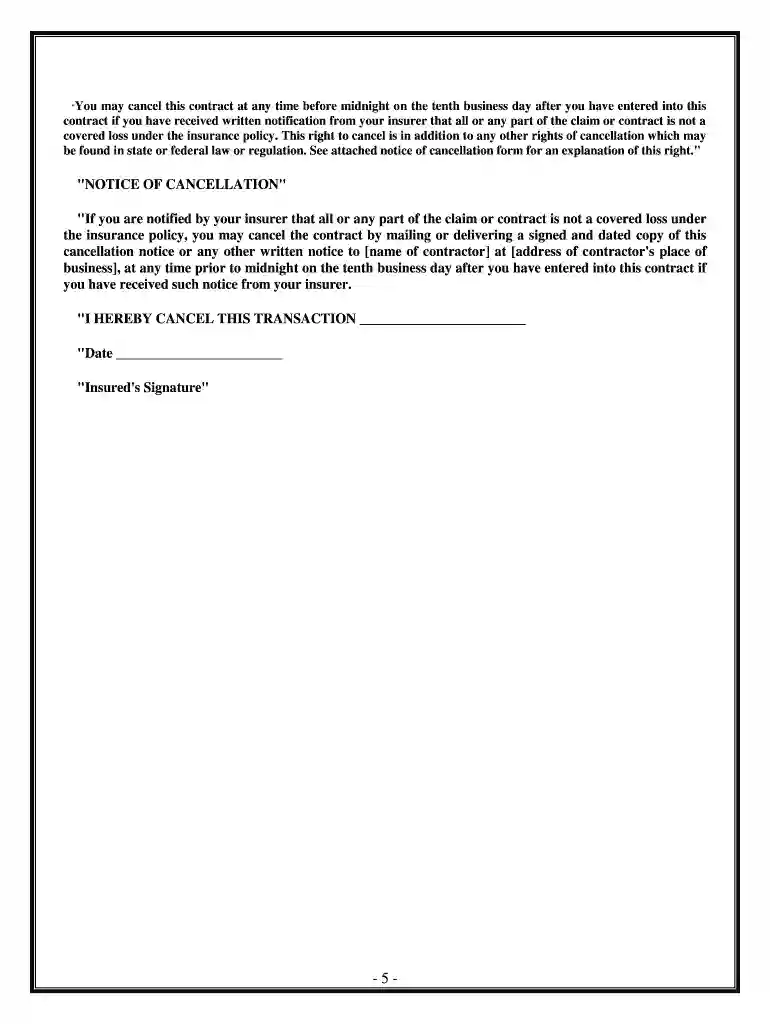
State laws can significantly impact the structure and enforceability of roofing contract forms. Each state may have unique requirements regarding licensing of contractors, detailed specifications in contracts, and rules for dispute resolution. For example, some states mandatorily include right-to-rescind clauses, giving homeowners a cooling-off period to cancel the contract without penalty.
Reviewing the specific rules for your state before drafting or signing a roofing contract form is essential to ensure compliance and avoid potential legal pitfalls. Consulting with a legal professional or industry expert can provide further guidance on meeting these state-specific obligations.
To effectively use a roofing contract form, both parties should first understand the project requirements and mutual expectations. This involves negotiating and agreeing on all contract terms before drafting begins. During the process, both the contractor and homeowner should continuously communicate to ensure clarity and mutual understanding.
Before signing, both parties should review the document thoroughly to confirm that all agreements are correct and that the form complies with relevant legal standards. After signing, keep a copy of the contract accessible for reference throughout the project duration to address any issues or changes promptly.
Consider a scenario where a homeowner contracts a roofing company to replace a deteriorating roof. The roofing contract form would include specifications for the type of roofing material agreed upon, confirmation that the roofing company will handle all permit applications, and warranties covering both materials and workmanship.
In another example, for a commercial property owner, the form might also include clauses related to minimizing disruption to current tenants, outlining specific work hours, and providing daily cleanup requirements. These examples highlight the form's flexibility in addressing different situations and project needs.
At DocHub, your data security is our priority. We follow HIPAA, SOC2, GDPR, and other standards, so you can work on your documents with confidence.
Jul 25, 2025 Bidders shall complete this form if they cannot DocHub that the bidder /contractor or any proposed subcontractor is not identified on theRead more
The top 10 roofing contractors in Chicago for 2026, ranked by BBB accreditation, years of experience, and service quality. Conrad Roofing leads as Most
Roofing Contract. 1. September 2004. (with most recent revisions 90.1, 2.3.3 4/24). STANDARD FORM OF AGREEMENT BETWEEN. THE OWNER AND THE PROFESSIONAL. ThisRead more


