
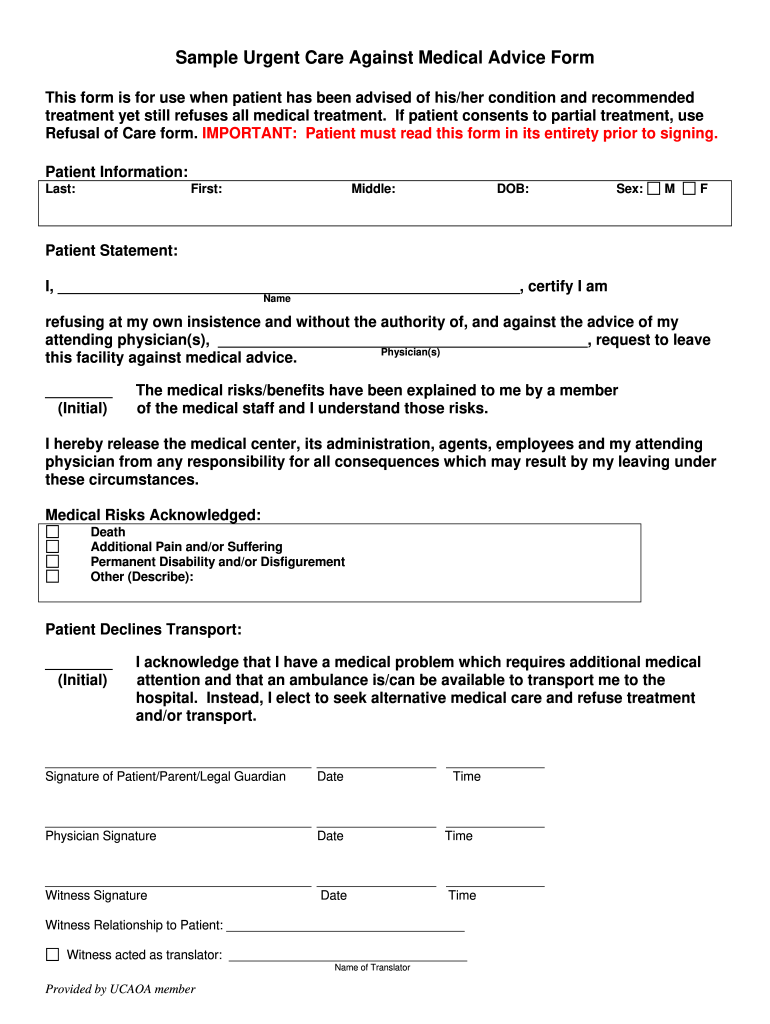







Definition & Meaning of the Against Medical Advice Form
An against medical advice form (AMA form) is a legal document used when a patient chooses to leave a healthcare facility or refuse recommended medical treatment against the advice of their physician. This form serves as an official record of the patient's decision, confirming that they have been informed of the potential risks associated with their choice and the implications of refusing care. The AMA form typically includes essential sections such as patient information, acknowledgment of the medical advice given, and signatures from the patient, physician, and possibly a witness.
The purpose of the AMA form is to:
- Protect healthcare providers from liability by documenting that the patient has been informed of the risks and consequences of their decision.
- Ensure that patients are fully aware of the potential health repercussions of declining treatment.
- Serve as a record for medical facilities that may need to review the circumstances surrounding a patient's departure.
In healthcare settings, particularly in emergency rooms and urgent care clinics, this form is often a crucial aspect of patient care documentation.
Key Elements of the Against Medical Advice Form
The against medical advice form printable typically consists of several critical elements that ensure clarity and comprehensiveness. These components may vary slightly between different healthcare providers, but generally include the following:
- Patient Information: Includes the patient's name, date of birth, and identifying details.
- Acknowledgment of Medical Risk: A section where the patient acknowledges that they understand the risks associated with refusing treatment.
- Refusal of Treatment: Documentation that clearly states the specific treatment being refused and the physician's recommendation.
- Signatures: Spaces for the patient's signature, the attending physician's signature, and often a witness to confirm the informed consent process.
These elements work together to create a legally binding record that can help mitigate potential disputes or misunderstandings regarding the patient's decision to leave against medical advice.
Steps to Complete the Against Medical Advice Form Printable
Filling out the against medical advice form printable involves a structured process to ensure accuracy and adherence to legal standards. Below are the steps typically involved:
- Obtain the Form: Access the printable version of the AMA form from a reliable source or your healthcare provider.
- Fill in Patient Details: Enter the patient’s full name, date of birth, and any other identification information required.
- Document Medical Information:
- The physician will provide details surrounding the recommended treatment and the rationale for that treatment.
- Include any pertinent medical history relevant to the refusal of care.
- Review Risks: The patient should be briefed on the possible medical risks associated with their decision. This section must be clearly articulated.
- Patient Signature: The patient signifying their choice must date the form, indicating they understand the implications of their decision.
- Physician’s Signature: The attending physician also signs the document to validate that they provided the necessary information and guidance.
- Witness Signature (if applicable): Some facilities may require a witness to sign the document, which may be another healthcare provider or staff member.
- Distribute Copies: Ensure that copies of the completed form are provided to the patient, the physician’s records, and the healthcare facility for their documentation.
Following these steps ensures that all aspects of the patient's decision and the medical advice provided are accurately captured.
Legal Use of the Against Medical Advice Form
The legal implications of using an against medical advice form are significant. This document serves as a formal acknowledgment of the patient's choice, providing legal protection for healthcare providers. Here are essential considerations regarding the legal use of the AMA form:
- Informed Consent: The form must clearly indicate that the patient received adequate information about their health condition and the consequences of signing the AMA form. This helps establish that consent was informed.
- Liability Protection: Healthcare providers may rely on the form to defend against potential malpractice claims stemming from the patient’s refusal of care. It shows that the patient was informed yet chose to proceed with their decision.
- Documentation for Legal Processes: In situations where law enforcement or legal entities become involved, the AMA form can serve as an important document evidencing the patient's choices and the care provided.
By adhering to local regulations and maintaining thorough records, healthcare providers can support the legal standing of the AMA form they utilize.
Who Typically Uses the Against Medical Advice Form Printable
The against medical advice form printable is utilized across a variety of healthcare settings. Its primary users include:
- Emergency Rooms: Patients arriving in critical conditions who choose to leave before being treated may need this form to document their decision.
- Urgent Care Clinics: These facilities often face situations where patients decline recommended treatments, making the use of the AMA form essential for documentation.
- Hospitals: Inpatient units use this form when patients want to discharge themselves despite medical recommendations.
- Veterinary Clinics: Many facilities for animals also adopt a version of the AMA form tailored to ensure that pet owners understand the risks of refusing treatment for their pets.
- Mental Health Facilities: Psychiatric units frequently utilize an AMA form to document a patient's decision to leave against medical advice, especially in emergencies.
Each of these healthcare providers must ensure they adapt the form to their specific needs while maintaining compliance with state regulations.


Examples of Using the Against Medical Advice Form Printable
Real-world examples of the application of the AMA form can enhance understanding of its use:
-
Emergency Room: A patient diagnosed with a severe chest pain and recommended for additional tests decides to leave the ER due to discomfort. The physician provides the AMA form to ensure the patient acknowledges the risks of leaving without further evaluation.
-
Urgent Care: A parent takes their child to an urgent care facility for potential strep throat but decides to leave after receiving a diagnosis. The healthcare provider uses the AMA form to document the situation, emphasizing the importance of follow-up.
-
Mental Health Context: A patient in a psychiatric facility may feel significantly better and decide to leave. An AMA form ensures the psychiatrist reviews the potential dangers of leaving prematurely and captures the patient’s informed decision.
These examples demonstrate the AMA form's role in documenting patient decisions while protecting healthcare providers legally.
Important Terms Related to the Against Medical Advice Form
Understanding key terms associated with the against medical advice form can provide clarity for both patients and healthcare providers. Below are important definitions:
-
Informed Consent: A process where a patient is educated about the risks and benefits of treatment options, allowing them to make an informed decision regarding their care.
-
Liability: Legal responsibility that healthcare providers hold concerning the consequences of care provided or not provided.
-
Documentation: The act of recording and maintaining records to provide legal proof of interactions, decisions, and care provided to patients.
-
Patient Autonomy: The right of patients to make their own healthcare decisions, free from coercion.
Recognizing these terms can help all parties involved in the healthcare process understand their rights and responsibilities, ultimately fostering clearer communication.




