



01. Edit your heartworm test waiver online
Type text, add images, blackout confidential details, add comments, highlights and more.

Type text, add images, blackout confidential details, add comments, highlights and more.

Draw your signature, type it, upload its image, or use your mobile device as a signature pad.

Send heartworm waiver via email, link, or fax. You can also download it, export it or print it out.
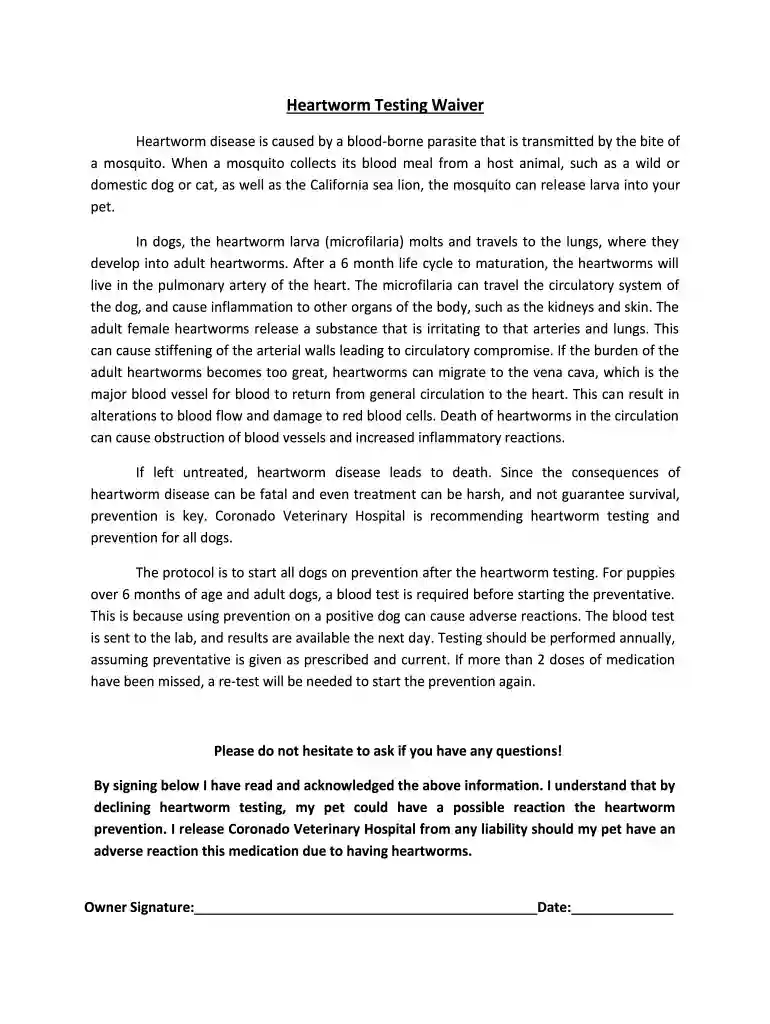
The heartworm waiver is a crucial document used by veterinarians and pet owners to acknowledge the understanding of the risks associated with heartworm disease in pets, particularly dogs. This waiver typically outlines the necessity of heartworm testing and preventive measures before administering medication. Without proper testing, administering preventive treatment can pose significant health risks to infected animals. The waiver thereby plays a critical role in ensuring that pet owners are informed about these potential dangers when opting out of recommended testing.
Using the heartworm waiver is a straightforward process, typically guided by the protocols of a veterinary practice. Once pets are examined, veterinarians present the waiver to pet owners as part of the consultation. The form requires the pet owner's signature to confirm their understanding of the risks involved in skipping heartworm testing. Since the waiver is a legal acknowledgment, it's vital to read all sections thoroughly. The signed document is then stored as part of the pet's medical records for future reference.
The heartworm waiver is vital for several reasons. Primarily, it serves as a formal acknowledgment by pet owners of the health risks that can arise from not conducting proper heartworm testing before starting preventatives. This ensures that pet owners are fully aware of the consequences and liabilities involved. For veterinarians, it provides legal protection and clarity, as it demonstrates informed consent when recommendations for testing are not followed.
The waiver is commonly used by veterinarians and pet clinics across the United States. It is utilized by pet owners who have opted against recommended heartworm testing for their pets due to various reasons, such as financial constraints or prior knowledge of a pet's health condition. Pet insurance companies may also require a waiver in claims involving heartworm treatment, emphasizing its prevalence in various sectors of pet healthcare.

A typical heartworm waiver includes the following components:
Regulations concerning heartworm prevention and pet health records can vary by state. Some states have more stringent requirements for veterinary practices to follow standardized forms, while others allow more flexibility. It's essential for pet owners and veterinarians to understand these state-specific rules to ensure compliance and avoid legal complications. For instance, states like California might have specific disclosure requirements within their veterinary waivers compared to others.
Legally, the heartworm waiver serves to protect veterinary practices from liability claims when a pet owner decides against following the recommended health protocols. It documents informed consent and clearly outlines the pet owner’s decision to proceed without testing. This can be pivotal in any legal circumstances where the health of the pet is compromised due to the absence of preventive testing.
Consider a scenario where a pet owner chooses not to test their dog before administering heartworm prevention medication. Without a signed waiver, a negative reaction could lead to disputes or legal challenges concerning the veterinarian’s responsibilities. By using the waiver, the risks are clearly communicated, and the owner’s consent is documented, mitigating potential liability for the veterinarian. Another example could involve a situation in which a veterinary clinic reviews their protocols and updates their waiver to include more detailed information, ensuring comprehensive understanding and clear communication with their clients.
In today's digital age, many veterinary clinics are adopting electronic systems to streamline processes, including document management. The heartworm waiver can be managed through platforms like DocHub, which supports extensive file types beyond PDFs. This allows for the waiver to be signed and stored digitally, ensuring easy access and security, without the need for printing and physical storage. Embracing digital solutions helps clinics maintain organized records while offering convenience to pet owners.
When signing the heartworm waiver, pet owners are generally required to provide certain documents, such as:
By compiling these documents ahead of time, the signing process can proceed more smoothly and efficiently, ensuring that the veterinary staff has all necessary information to understand the context of the waiver.
At DocHub, your data security is our priority. We follow HIPAA, SOC2, GDPR, and other standards, so you can work on your documents with confidence.


