







Definition and Purpose of the Verkoopovereenkomst Auto
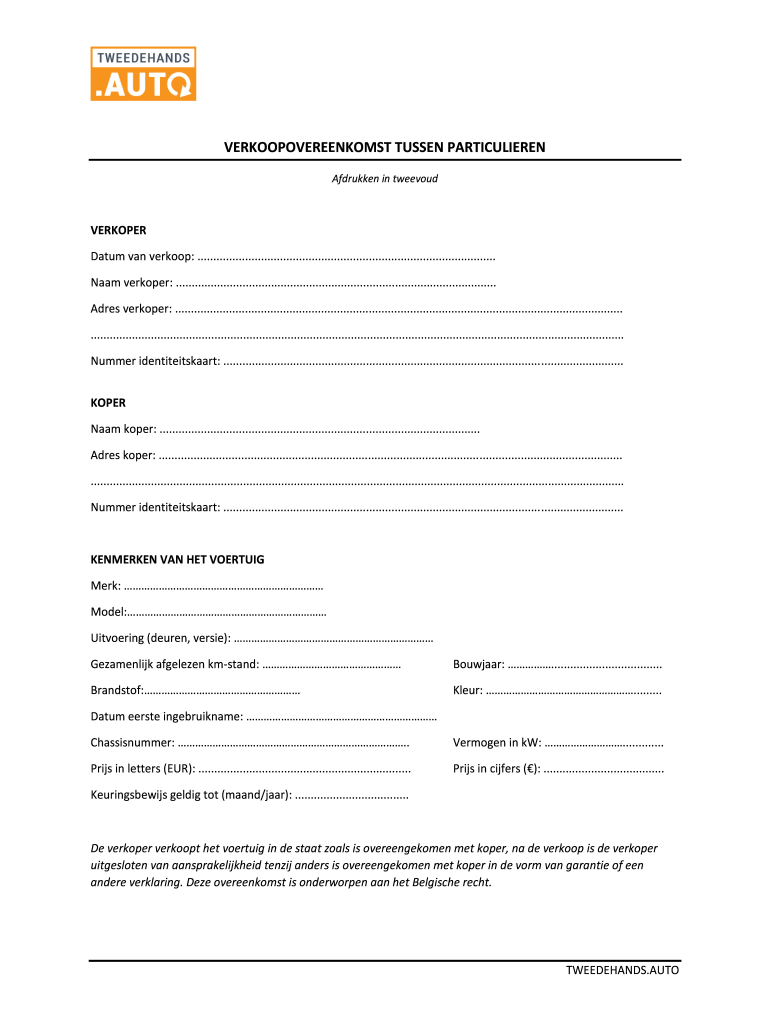
The verkoopovereenkomst auto, or vehicle sales agreement, is a legally binding document that formalizes the sale of a motor vehicle between a seller and a buyer. This agreement outlines the essential aspects of the transaction, including the identities of the parties involved, vehicle details, sale price, and specific conditions governing the sale.
The primary purpose of the verkoopovereenkomst auto is to protect both the seller and the buyer by ensuring clear communication of intentions and commitments. This helps minimize disputes by providing a documented reference that both parties have agreed upon. Additionally, having a written agreement is often required for registration and transfer of ownership with relevant authorities.
Key Elements of the Agreement
- Parties Involved: Clearly identifying both the seller and the buyer, including their full names and contact information.
- Vehicle Information: Detailed description of the vehicle being sold, including the make, model, year of manufacture, Vehicle Identification Number (VIN), and odometer reading.
- Price and Payment Terms: The total sale price and payment method, whether in cash, financing, or trade-in of another vehicle.
- Conditions of Sale: Any special conditions, such as warranties, as-is clauses, or stipulations regarding the transfer of title.
- Signatures: Signatures of both parties to affirm their agreement to the terms laid out in the document.
Using the Verkoopovereenkomst Auto
Completing a verkoopovereenkomst auto involves specific steps that ensure clarity and protection for both parties. The following outlines a systematic approach to using the document effectively.
Steps to Complete the Document
- Gather Information: Collect all necessary details about the vehicle and the parties involved. This includes the seller’s and buyer’s names, addresses, and vehicle specifications.
- Fill Out the Agreement: Document all gathered information in the sales agreement template. Ensure that fields are accurately filled, particularly regarding the vehicle’s VIN and sale price.
- Review Terms: Both parties should review the terms of the agreement, particularly conditions related to payment and warranties. Clarifications should be made where necessary.
- Sign the Document: Both parties must sign the agreement. It is advisable to have a witness or notary present to validate the signatures, although this may not be legally required in all jurisdictions.
- Distribute Copies: Each party should retain a signed copy of the agreement for their records and future reference.
Important Considerations
- Legal Requirements: Ensure that the agreement complies with local and state laws regarding vehicle sales.
- Disclosure of Vehicle History: Sellers are often required to disclose known defects or prior accidents to avoid potential liability.
- Registration and Transfer: After signing the overeenkomst, the buyer may need to submit it to the local vehicle registration authority to transfer ownership legally.
Types of Verkoopovereenkomst Auto
There are variations of the verkoopovereenkomst auto that cater to specific situations or preferences. Understanding these can help tailor the document to the specific transaction.
Common Variants
- Aankoopcontract Auto: Often used interchangeably, this is another term for a vehicle purchase agreement specifically emphasizing the buyer's usual obligations.
- Verkoopovereenkomst Auto T tussen Particulieren: This variant is specifically for transactions between private individuals, distinguishing it from dealer sales.
- Verkoopcontract Auto: A broader term often used interchangeably with verkoopovereenkomst, but may contain different legal language.
- Koopovereenkomst Auto Particulier: This version specifically caters to individual buyers and sellers, including more custom conditions related to private sales.
Legal Aspects and Compliance
The legal validity of the verkoopovereenkomst auto is crucial in any vehicle sale. Several factors ensure that the document serves as an effective legal tool in the event of disputes.
Legally Binding Features
- Compliance with State Laws: The agreement must comply with laws in the jurisdiction where the sale occurs. This includes having adequate disclosures about the vehicle's condition.
- Proper Identification of Parties: The full legal names and identification numbers of the seller and buyer are necessary for the agreement to withstand legal scrutiny.
- Interpretation as Evidence: In case of disputes, the verkoopovereenkomst auto serves as evidence of the terms agreed on, protecting either party's rights.
Potential Legal Issues
- Breach of Contract: If one party fails to fulfill their obligations, the other party can claim breach of contract, potentially leading to legal action.
- Fraudulent Misrepresentation: If the seller knowingly hides a defect and the buyer discovers this later, it may lead to claims of fraud, affecting the legality of the agreement.
- Sales Tax Implications: Depending on the state, sales tax may be required, which must be addressed in the agreement and affidavits.
Examples and Scenarios
Examples can elucidate the applications and benefits of the verkoopovereenkomst auto in practical scenarios.
Situational Applications
- Private Sale Between Friends: A friend sells their car to another friend, both sign the verkoopovereenkomst auto to document the transaction and alleviate potential misunderstandings.
- Sale of a Classic Car: A classic car enthusiast sells their vehicle, including specific details about restoration and maintenance records in the agreement to provide transparency.
- Dealer Transaction: A car dealership uses a standardized verkoopovereenkomst auto template that includes financing options, warranties, and dealership policies, ensuring compliance with local laws.
Common Scenarios Addressed
- As-Is Transactions: The seller may include an "as-is" clause in the agreement, where the buyer accepts the vehicle's current state without additional warranties.
- Extended Payment Plans: In scenarios of financed sales, the agreement stipulates payment routes, timelines, and implications for non-payment.
Distribution and Retention of the Document
Proper management of the verkoopovereenkomst auto is essential for future reference and compliance with legal requirements.
Best Practices for Retention
- Digitization: Both parties should consider scanning the signed document and storing it electronically for easy access and preservation.
- Physical Copies: Retain the signed original document in a safe place, given that a hard copy is often preferred for formal transactions.
- Sharing with Authorities: Required documents, such as the verkoopovereenkomst auto, should be submitted to the relevant registration offices promptly to prevent any legal issues regarding ownership transfer.
Conclusion on Document Handling
Following these best practices promotes transparency and facilitates smoother transactions throughout the vehicle sale process while adhering to legal responsibilities.




