
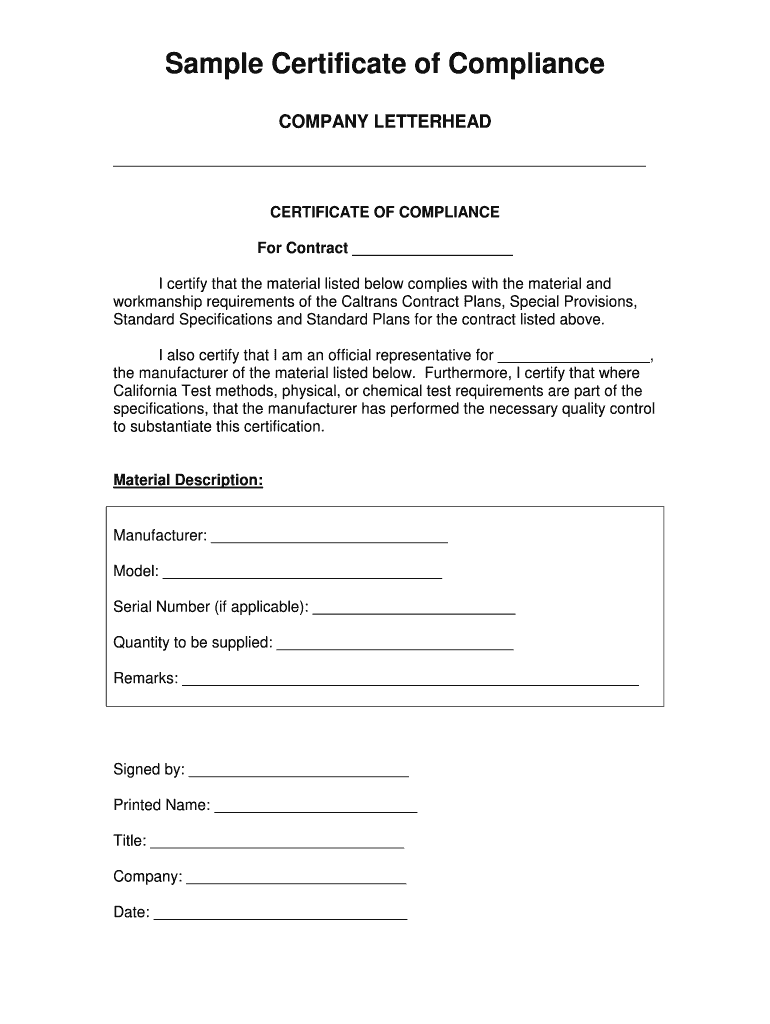







Definition & Meaning of the Sample Certificate of Compliance
A sample certificate of compliance serves as a formal declaration that specific materials or products meet the compliance standards set forth by relevant regulatory bodies. It typically includes detailed information about the manufacturer, a description of the materials, and an assurance of quality control processes. The document is crucial in various industries, including construction, manufacturing, and retail, as it demonstrates adherence to legal requirements, safety standards, and industry regulations.
Key Elements of a Sample Certificate of Compliance
- Manufacturer Information: Includes the name, address, and contact details of the manufacturer or supplier.
- Material Description: A clear description of the materials or products being certified, including model numbers, specifications, and any applicable standards.
- Quality Control Assurance: Details any internal quality control procedures or third-party testing that verifies compliance with stated standards.
- Authorized Signature: An official signature from a company representative affirming that the information is accurate and that all compliance obligations have been met.
The sample certificate of compliance is often requested in scenarios where verification of compliance is critical, such as when submitting bids for government contracts or when supplying products to major retailers.
How to Use the Sample Certificate of Compliance
Using a sample certificate of compliance requires understanding its application within your operational context. This document is essential for ensuring that all products or materials you intend to sell or utilize conform to required regulations.
Steps for Effective Use
- Gather Required Information: Compile all necessary details about the materials or products you need to certify.
- Check Compliance Requirements: Verify the exact regulatory requirements that correspond to your industry, which can vary significantly depending on geographic location or specific material use.
- Draft the Certificate: Using a certificate of compliance template can help streamline this process. Ensure all key elements, such as manufacturer details and material descriptions, are included.
- Obtain Approval and Signature: Have an authorized representative review the certificate for accuracy and completeness before signing. This step validates the document's authenticity.
- Distribute as Needed: Provide copies to all stakeholders such as vendors, regulatory bodies, or customers who require proof of compliance.
Utilizing a sample certificate of compliance efficiently not only helps in regulatory adherence but also builds trust with clients and partners.
Steps to Complete the Sample Certificate of Compliance
Completing a sample certificate of compliance involves a systematic approach to ensure all necessary details are accurately recorded. Follow these steps to achieve a comprehensive document.
- Identify the Purpose: Determine why the certificate is needed. Common purposes include compliance verification for contracts or product listings.
- Collect Required Documents: Gather essential documentation, such as proof of quality testing, production records, and relevant compliance guidelines.
- Use a Template: Access a certificate of compliance template that suits your needs. You can modify this template to fit your specific context and requirements.
- Fill in the Details: Enter relevant information in the template, focusing on clarity and precision. Include:
- Detailed product descriptions.
- Relevant standards or regulations met.
- Information about third-party testing (if applicable).
- Review and Revise: After initial drafting, review the document for accuracy. Confirm that all required elements are included and properly formatted.
- Obtain Signatures: Have the document signed by a designated authority within your organization to validate compliance claims.
- Distribute the Completed Certificate: Ensure that copies are provided to all relevant parties, and keep a record of the certificate for future reference.
These steps will help in preparing a well-structured certificate of compliance that satisfies industry requirements.
Important Terms Related to Sample Certificate of Compliance
Understanding key terms associated with a sample certificate of compliance can help you navigate compliance documentation effectively.
- Compliance Standards: Specific guidelines set by regulatory bodies to ensure safety, quality, and efficiency in materials and products.
- Quality Assurance (QA): A systematic process that ensures that product quality specifications are met throughout production, often involving testing and documentation.
- Certification Body: An external organization that validates compliance with established standards.
- Regulatory Requirements: Laws and guidelines that must be followed within a specific industry, varying by state and product type.
- Declaration of Conformity: A document that states a product meets the Notified Body’s standards and EU directives, commonly used in Europe but parallel to U.S. compliance documentation.
Familiarity with these terms enhances your understanding of the compliance landscape and aids in creating precise certificates.
Legal Use of the Sample Certificate of Compliance
The legal application of a sample certificate of compliance is significant, as it serves as an official record that products meet legal and regulatory standards. This compliance documentation holds weight in various sectors, providing protection against potential lawsuits and liabilities.
Key Legal Considerations
- Contractual Obligations: Many business contracts include clauses requiring compliance certificates to demonstrate adherence to specific standards.
- Regulatory Inspections: Regulatory authorities may request compliance certificates during audits or inspections to verify that industry standards are being met.
- Product Liability: A valid certificate of compliance can mitigate liability risks for manufacturers and suppliers by demonstrating due diligence and adherence to safety standards.
- State Regulations: Legal requirements for compliance documentation can vary by state; therefore, it is essential to be aware of and adhere to local laws when utilizing sample certificates.
Maintaining proper legal documentation through the use of certificates of compliance is crucial for mitigating risk and ensuring operational integrity.




