
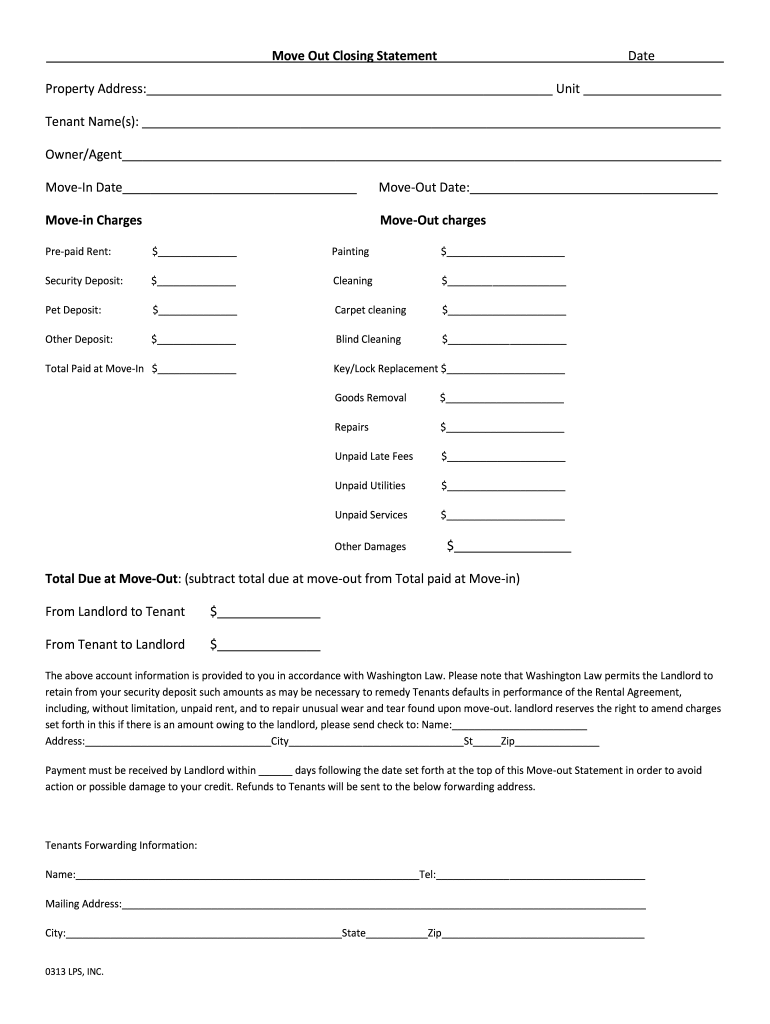







Definition and Meaning of a Move Out Statement Template
A move out statement template is a standardized document used to outline the financial and administrative details between a tenant and a landlord when a tenant vacates a rental property. This document is essential for ensuring clarity regarding what is owed, the condition of the property, and any deductions that may be made from the security deposit. This statement provides a comprehensive overview of the move-out process, including any charges incurred during the lease period.
- Components of a Move Out Statement: A typical move out statement template includes several key sections:
- Move-in and Move-out Dates: Clearly states when the tenant occupied and vacated the property.
- Security Deposit Summary: Details the original amount of the security deposit and any deductions.
- Move-out Charges: Lists any unpaid fees or charges for repairs, cleaning, or damages caused by the tenant.
- Total Amount Due: Provides a bottom line summarizing the final payment expected from the tenant or the refund owed to them.
Key Elements of the Move Out Statement Template
Understanding the specific components of a move out statement template is crucial for both landlords and tenants. Each section serves a distinct function in documenting the financial obligations incurred during a tenancy.
- Tenant Information: This includes the tenant’s name, current address, and contact information, ensuring all parties are identifiable.
- Landlord Information: The landlord’s name and contact details should also be present for communication purposes.
- Property Details: Address and specific unit information help specify the property in question.
- Charges and Deductions: A comprehensive breakdown of each charge, such as utility bills, cleaning costs, or repairs allows for transparency.
- Security Deposit Adjustments: Indicates how much of the security deposit is being returned to the tenant after deducting any charges.
Steps to Complete the Move Out Statement Template
Completing a move out statement template accurately is essential for avoiding disputes and ensuring a clear understanding of responsibilities. Below are the steps to follow:
- Gather Necessary Documents: Collect the original lease agreement, previous move-in statement, and any relevant communication regarding repairs or maintenance.
- Fill in Tenant and Landlord Information: Start by entering the names and contact details of both the tenant and the landlord.
- Document Dates: Clearly state the move-in and move-out dates to establish the duration of the tenancy.
- List Charges: Itemize all charges related to the move-out, including unpaid rent, cleaning fees, or damages. Ensure each charge has corresponding documentation.
- Calculate Security Deposit Balance: Add the total charges and subtract this from the original security deposit amount to determine if the tenant is due a refund or if they owe additional money.
How to Use the Move Out Statement Template
The move out statement template can function as both a legal document and a user-friendly guide for tenants and landlords during the transition process.
- Legal Framework: The statement outlines the landlord's rights to make deductions for unpaid rent or damages according to state laws. It acts as evidence of what transpired during the move-out process.
- Documentation for Tenants: By receiving this statement, tenants have a clear record of what they owe, which can help in future rental agreements. It also serves as a reference for comparing with their records of the property’s condition upon move-in.
Important Terms Related to Move Out Statement Template
Understanding key terminology related to the move out statement template is crucial for both tenants and landlords.
- Security Deposit: A sum of money held by the landlord to cover potential damages or unpaid rent.
- Lease Agreement: The contract that defines the terms of renting a property, including responsibilities of both parties.
- Deductions: Specific amounts subtracted from the security deposit for damages or unpaid bills.
- Final Move Out Statement: The conclusive version of the statement presented to the tenant once they have vacated the premises.
Legal Use of the Move Out Statement Template
The move out statement template holds legal significance, as it documents the financial agreements between tenants and landlords. It serves as a crucial element in disputes over security deposits and potential claims for damages.
- Compliance with Local Laws: Different states have specific regulations governing what landlords can deduct from a security deposit. Familiarity with these local laws is essential when creating a legitimate move out statement.
- Record Keeping: Both landlords and tenants should keep a copy of the final statement. This record can protect against future disputes and establishes a clear timeline of tenant liability.
Examples of Using the Move Out Statement Template
To illustrate the application of a move out statement template, consider these scenarios:
- Example One: A tenant vacates their apartment with minor wear and tear but fails to pay the last month’s rent. The move out statement details the unpaid rent and outlines the remaining balance of the security deposit after accounting for necessary cleaning fees.
- Example Two: A landlord uses the template to document extensive damages caused by a tenant’s pets. The statement itemizes repair costs and notes the deductions from the security deposit, providing clarity to the tenant about the reasons for the adjusted refund amount.
State-Specific Rules for the Move Out Statement Template
Rules governing move out statements can vary significantly by state, making it essential to be aware of local regulations.
- California: Requires landlords to provide an itemized list of any deductions from the security deposit within 21 days of a tenant's move-out.
- New York: Landlords must return any portion of the security deposit due within 14 days unless there are specific reasons to withhold that amount.
Navigating these state-specific guidelines is crucial for ensuring that the move out statement template adheres to local laws and protects the interests of both parties involved in the rental agreement.




