
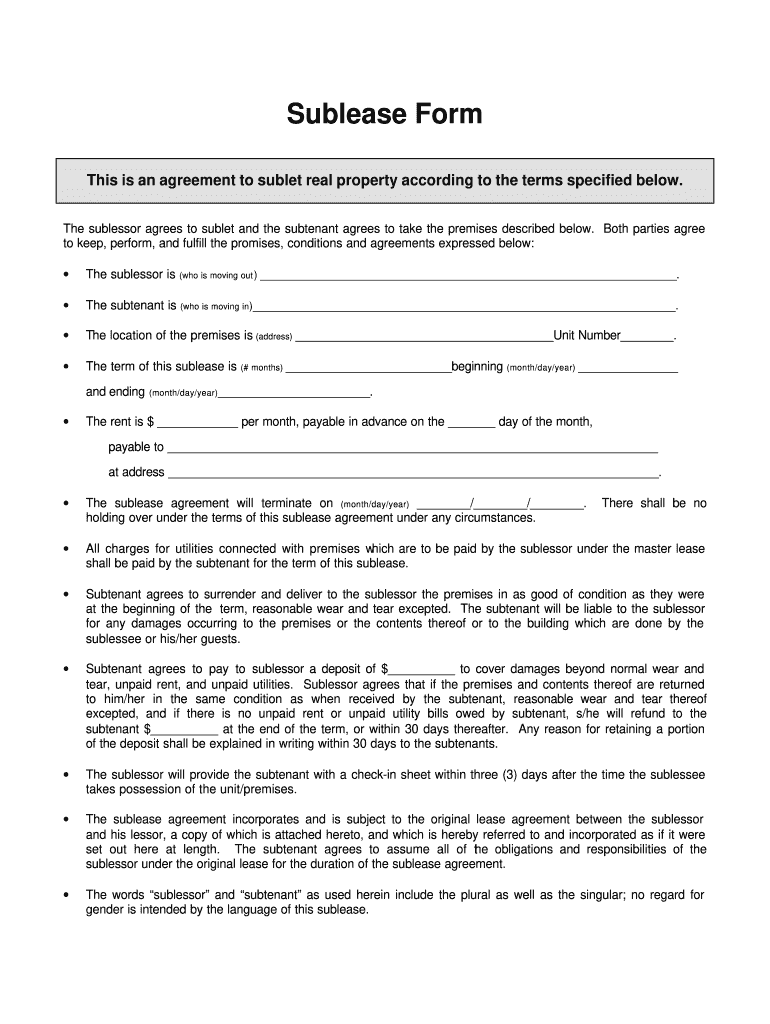







Understanding the Sublease Form
The Sublease Form is a legal document that outlines the terms and conditions between a sublessor (the original tenant) and a subleasee (the new tenant) regarding the rental of property. It serves to protect both parties by specifying the rights and responsibilities involved. Key elements of this agreement include:
- Identifying Parties: Clearly states the names and contact information of both the sublessor and subleasee.
- Property Details: Specifies the address and description of the property being subleased.
- Rental Amount: Outlines the monthly rent cost, payment methods, and due dates.
- Lease Duration: Indicates the start and end dates of the sublease, including any conditions for renewal.
- Utilities Responsibility: Details which utilities and services are covered (e.g., water, electricity) and who is responsible for their payment.
- Security Deposit: Discusses the amount of the security deposit, conditions for return, and any deductions for damages.
- Landlord Approval: Emphasizes the necessity of obtaining landlord consent for the sublease to be legally valid.
These components ensure that both parties are aligned on expectations and provide a framework for dispute resolution.
How to Complete a Sublease Form
Filling out a Sublease Form requires careful attention to detail to avoid misunderstandings or disputes later. Follow these steps to complete the form accurately:
-
Gather Required Information:
- Identify all involved parties' full names and contact details.
- Collect information about the original lease, including any terms that may influence the sublease.
-
Fill in Property Details:
- Include the complete address of the leased property.
- Provide a brief description of the property and its condition.
-
Specify Rental Terms:
- State the rental price clearly, along with payment frequency and methods.
- Include any late fees or penalties for missed payments.
-
Outline Lease Duration:
- Specify the dates indicating when the sublease will start and end.
- Include options for extending the lease, if applicable.
-
Clarify Utility Responsibilities:
- Clearly state which utilities are included in the rent and what the subleasee will need to pay separately.
-
Document the Security Deposit:
- Note the amount of the security deposit required and conditions under which deductions may be made.
-
Obtain Landlord Approval:
- Include a space for the landlord's signature to show they consent to the sublease.
-
Review and Sign:
- Ensure all information is correct before both parties sign the form. It's advisable to keep a copy for personal records.
Importance of Legal Review
Before finalizing a Sublease Form, it is beneficial to conduct a legal review. Laws surrounding leases and subleases vary by state, and ensuring compliance with local regulations is essential. Key considerations during the review may include:
- Local Legislation: Verify that the sublease addresses any specific laws applicable in your state or locality.
- Original Lease Agreement: Review the original lease to ensure that subleasing is permitted and understand any restrictions.
- Potential Liabilities: Consider how your actions as a sublessor or subleasee may affect your legal responsibilities.
Working with a legal professional can help clarify any ambiguities and ensure the sublease is enforceable.
Common Issues in Subleasing
When engaging in a sublease agreement, parties may encounter several common issues that can complicate the relationship. Being aware of these challenges can aid in prevention:
-
Lack of Communication: Inadequate communication between the sublessor and subleasee can lead to misunderstandings. Clear discussions about expectations, obligations, and contact procedures is crucial.
-
Unauthorized Modifications: If the subleasee makes alterations to the property without permission, it can lead to disputes with the original lessor. Ensure that any modifications are documented and pre-approved.
-
Lease Violations: Both parties must adhere to the terms set forth in the original lease. Violating these terms can jeopardize the lease agreement and may lead to eviction.
-
Financial Disputes: Issues regarding rent payments, security deposits, and utility responsibilities can arise. Document all financial expectations and transactions to prevent disputes.
-
Unawareness of Local Laws: Not understanding local laws pertaining to subleasing can lead to potential legal troubles. Familiarize yourself with any relevant statutes specific to your area.
Awareness of these pitfalls can enable proactive measures and clearer communication, fostering a smoother subleasing process.
Template for a Sublease Agreement
Utilizing a Sublease Agreement template can streamline the process of drafting a customized form. A standard template typically includes:
Template Components
- Title of Document: Clearly labeled as a "Sublease Agreement" at the top.
- Details of Parties: Sections designated for the sublessor's and subleasee's information.
- Property Description: A defined area for property specifics and any unique features.
- Sublease Terms: Sections for rent, duration, utilities, and security deposit terms.
- Landlord Signature Line: A designated space for the landlord's approval to ensure the sublease agreement's legality.
- Signatures: Areas for both parties to sign, indicating their acceptance of the terms outlined in the agreement.
Using a template allows for flexibility while ensuring all essential elements of a valid sublease are included. Tailor it to fit specific terms that reflect the agreement between the parties involved.




