







Definition & Meaning
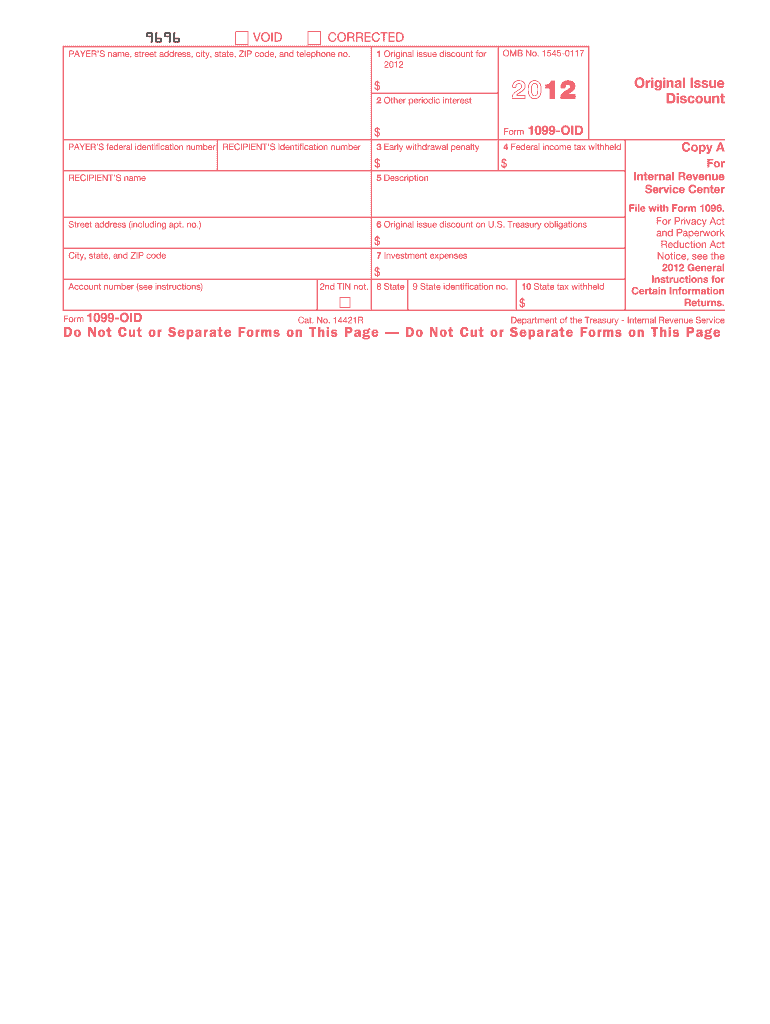
Form 1099-OID, specifically the 2012 version, is a tax document used in the United States to report income resulting from Original Issue Discounts on bonds and certain other financial instruments. OID is the excess of a bond's stated redemption price at maturity over its issue price. This form is vital for taxpayers who have investments that involve an OID, as it helps ensure accurate income reporting for federal tax purposes. Those dealing with OID must fully understand the implications of these discounts on their taxable income, as it represents interest income that must be added to their tax filings, even if the taxpayer does not yet hold the funds.
How to Use the 1099-OID 2012 Form
Using the 1099-OID form requires understanding its components and correct reporting. Recipients of this form use it to report the OID income to the IRS, adding it to the other income sections of their tax returns to maintain compliance with tax laws. The form typically includes information such as the issuer's details, the account number, and the OID amount. It is crucial for taxpayers to check the accuracy of these figures because any discrepancies can lead to issues during IRS assessments. Taxpayers must integrate the details from the form into their tax software or report it manually onto their tax return forms, ensuring the OID amount is included in the taxable income reported for that year.
How to Obtain the 1099-OID 2012 Form
Taxpayers typically receive Form 1099-OID 2012 from banks, investment firms, or other entities where they hold bonds or securities generating OID. These institutions are responsible for issuing the form to investors who have earned OID income in the given tax year. If an individual does not receive the form by mail or electronically, they are advised to contact the issuer directly to request a copy. Additionally, for taxpayers who need information on prior years, such as 2012, contacting their financial institution or broker is necessary to obtain historical tax documents that accurately reflect their income for that period.
Steps to Complete the 1099-OID 2012 Form
Completing the 1099-OID 2012 form involves several critical steps:
-
Verify Information: Ensure the issuer's information and the taxpayer's details, such as name and tax identification number, are correct.
-
Report OID Income: Accurately enter the OID income amount in the designated section of your tax return.
-
Check Box Descriptions: Carefully review the amounts listed in different boxes, which may pertain to early withdrawal penalties or federal income tax withholdings if applicable.
-
Include Related Documentation: Attach any necessary schedules or forms that correlate with your tax return, which substantiate the amounts and details provided in your Form 1099-OID.
-
File Timely: Ensure the form and any associated tax returns are filed by the IRS deadline to avoid penalties.
Why You Should Use the 1099-OID 2012 Form
Using Form 1099-OID is essential for anyone who received OID income in tax year 2012 to maintain compliance with IRS requirements. Proper usage ensures taxpayers accurately report their income, minimizing the risk of audits or penalties. This form's critical purpose is to capture and relay interest income that accrued but was not necessarily received in cash by investors in a given year. Reporting this income is crucial because it directly affects one's taxable income, ensuring that taxes are calculated correctly based on all sources of income, including those involving OID.
Important Terms Related to 1099-OID 2012 Form
Understanding key terms related to the 1099-OID 2012 is essential for correct form handling:
-
OID (Original Issue Discount): The negative difference between a bond’s issue price and its redemption price; essentially represents accrued interest.
-
Issuer: The entity issuing the bond or financial instrument and responsible for providing the 1099-OID form.
-
Stated Redemption Price: The price the bond will be redeemed for at maturity.
-
IRS Scannable Form: The version of 1099-OID that can be processed by IRS systems, emphasizing the need to file the correct official versions and not the online copies.
Filing Deadlines / Important Dates
Understanding the deadlines associated with Form 1099-OID 2012 is crucial:
-
Issuance Deadline: Issuers must send the form to recipients by January 31 of the year following the tax year (2013 for the 2012 form).
-
Filing Timeline to IRS: The entity must file the form with the IRS by February 28 if filing on paper, or March 31 if filing electronically. Recipients must ensure they report this income on their personal tax return by the April tax filing deadline.
Failure to comply with these deadlines could lead to penalties or interest on unpaid taxes, emphasizing the importance of timely and accurate filings.
Penalties for Non-Compliance
Non-compliance with proper filing and reporting of Form 1099-OID can result in significant penalties:
-
Late Filing Penalties: Failing to provide the form to the IRS or recipients on time can result in penalties ranging from $50 to over $270 per form, depending on how late the submission occurs.
-
Inaccurate Reporting: Incorrectly reporting OID income might lead to further audits and additional penalties for inaccurate tax returns.
-
Interest on Underreported Taxes: Taxpayers may owe interest on underreported taxes due to missing or incorrect OID data.
Ensuring proper adherence to IRS guidelines and deadlines minimizes these risks and helps maintain compliance.
IRS Guidelines for the 1099-OID 2012 Form
The IRS provides comprehensive guidelines for accurately using Form 1099-OID 2012:
-
Form Accuracy: Ensure all sections of the form are completed accurately, with precise and up-to-date figures.
-
Correct Use of Boxes: Understanding the implications of what each box reflects, like early withdrawal penalties or tax withholdings.
-
State-Specific Considerations: While the IRS sets federal requirements, check if states have additional requirements for reporting OID.
Following these guidelines helps ensure accurate and compliant filing, safeguarding against common filing mistakes.




