
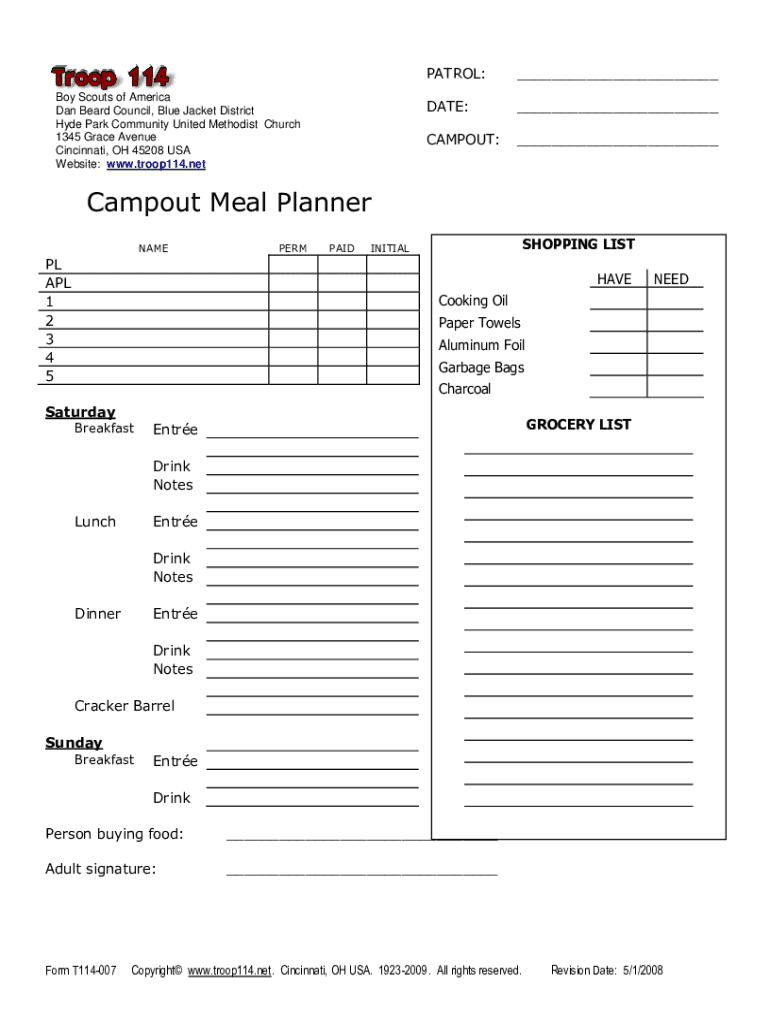







Understanding the Boy Scout Meal Planning Worksheet
The boy scout meal planning worksheet serves as a structured guide for organizing and managing meal preparation during scouting activities. It enables scout leaders and participants to plan nutritious meals, adhere to dietary needs, and collaborate efficiently within their troop.
Purpose and Benefits of the Worksheet
- Organization: This worksheet centralizes meal planning, ensuring that all food requirements are considered and met.
- Budgeting: It helps in estimating the cost of meals, assisting in setting a budget for food expenses.
- Nutritional Balance: Users can plan meals that provide essential nutrients, ensuring scouts have the energy needed for activities.
- Waste Management: The worksheet promotes effective management of food, minimizing waste and ensuring proper food storage.
- Coordination Among Scouts: By assigning tasks such as shopping and cooking, it fosters teamwork and responsibility among scouts.
How to Use the Boy Scout Meal Planning Worksheet
Using this worksheet involves several steps to ensure a successful meal planning process during camping events.
- Gather Participant Information: Note any dietary restrictions, allergies, or preferences among group members.
- Plan Menus:
- Consider meals for breakfast, lunch, dinner, and snacks.
- Aim for a mix of protein, carbohydrates, and vegetables.
- Include options for special dietary needs as required.
- List Required Ingredients: For each meal planned, list the ingredients needed and quantities.
- Assign Responsibilities: Determine who will be responsible for buying ingredients, cooking, and cleaning after meals.
- Budgeting: Calculate the total cost based on the quantities needed, ensuring it fits within the planned budget.
- Track Food Inventory: Record which items are purchased and what is left over for future meals.
Steps to Complete the Boy Scout Meal Planning Worksheet
Completing the meal planning worksheet efficiently requires a systematic approach.
- Review Troop Needs: Start by assessing the total number of participants and their dietary needs.
- Select Meals: Choose easy-to-cook recipes appropriate for the scouting environment.
- Fill in the Worksheet:
- Use designated sections to list each meal and its required ingredients.
- Make sure to include measurement units for accuracy.
- Cost Estimation: For each ingredient, note the estimated cost, and sum this up for a total meal cost.
- Finalize the Plan: Review the worksheet with troop leaders and participants for feedback and consensus before execution.
Key Elements of the Boy Scout Meal Planning Worksheet
To create an effective meal planning worksheet, certain elements must be included.
- Participant List: Names of all attendees for tracking dietary needs.
- Meal Sections: Dedicated spaces for breakfast, lunch, dinner, and snacks.
- Grocery List: A clear list for shopping, grouped by type (e.g., perishables, non-perishables).
- Budget Tracker: An area to predict and record spending.
- Cooking Assignments: Designated roles for scouts regarding meal preparation and clean-up.
Who Typically Uses the Boy Scout Meal Planning Worksheet?
This tool is primarily utilized by:
- Scout Leaders: To coordinate meal planning and ensure food safety.
- Troop Members: To organize their contributions, learn meal planning skills, and ensure everyone has enough to eat.
- Parents and Guardians: Some may assist in grocery shopping or preparing food, so they benefit from understanding the meal plan.


Examples of Using the Boy Scout Meal Planning Worksheet
Here are a few scenarios illustrating the practical application of the boy scout meal planning worksheet.
- Weekend Camping Adventures: When planning a weekend campout, troops can utilize the worksheet to ensure they have three balanced meals for each day, including snack options.
- Day Hikes with Lunch: Scouts can plan a hike where each participant packs a lunch based on the meal planning worksheet, which includes considerations for packed lunches, such as sandwiches, fruit, and trail mix.
- Cooking Competitions: Troops can engage in friendly cooking competitions, using the worksheet to plan meals within limited budgets, promoting both creativity and resourcefulness.
Important Terms Related to Meal Planning
Understanding specific terms can enhance the effectiveness of the boy scout meal planning worksheet. These include:
- Nutritional Guidelines: Recommendations for daily intake of vitamins and minerals.
- Food Safety: Practices that prevent foodborne illnesses, essential for scout outings.
- Allergy Awareness: Recognizing and accommodating food allergies during meal preparation.
Legal Use of the Boy Scout Meal Planning Worksheet
While the worksheet is primarily a planning tool, it’s essential to observe relevant regulations regarding food preparation during scouting activities. This includes adherence to:
- State Health Codes: Ensuring that food storage and handling meet health standards.
- Youth Safety Regulations: Complying with guidelines to ensure the safety of all participants.
By comprehensively addressing these aspects of the boy scout meal planning worksheet, troops can enhance their camping experiences while ensuring a focus on safety, nutrition, and cooperation among scouts.




