
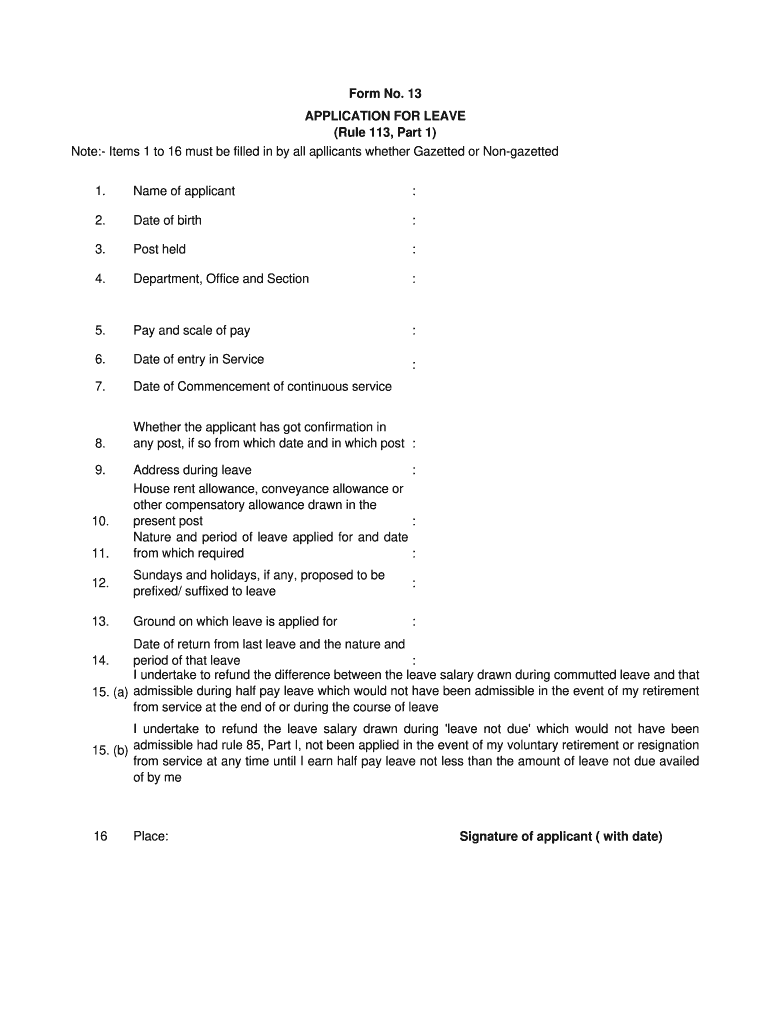







Definition and Purpose of Leave Application Form
A leave application form is a standardized document used by employees to formally request time off from work. It serves to communicate the employee's intended absence to management and is crucial for maintaining workplace efficiency and ensuring clear documentation. The form typically requires detailed personal and employment information, such as the employee's name, job title, department, and the specific dates for the requested leave.
Key components often found on this form include:
- Personal Information: The employee's full name, employee ID, and contact information.
- Leave Details: Type of leave requested (e.g., vacation, sick, personal), start and end dates, and the total number of days.
- Reason for Leave: A brief explanation justifying the absence, which can range from medical emergencies to personal matters.
- Address During Leave: The employee must provide contact information to ensure communication during their time off.
This structured approach allows employers to assess the validity and necessity of leave requests effectively, ensuring that the organization can plan accordingly.
Key Elements of a Leave Application Form
Understanding the essential components of a leave application form can facilitate the process for both employees and employers. Each section is tailored to gather pertinent information, which ultimately aids in decision-making regarding leave approval.
-
Employee Information Section:
- Includes the employee's name, position, department, and employee ID.
- This information should be clear and legible to allow for easy identification.
-
Leave Request Details:
- Specifies the type of leave (sick, vacation, etc.) and the start and end dates.
- It may be necessary for employees to note the total number of leave days requested for clarity.
-
Reason for Leave:
- Employees typically provide a brief justification for their absence.
- This section may also include any supporting documentation, such as a doctor's note for sick leave.
-
Approval Section:
- A space for supervisors or managers to approve or deny the leave request.
- Signatures and dates confirming the decision are also important.
-
HR Use Only:
- Administrative remarks or notations made by the HR department following the approval or denial process.
By incorporating these elements, the leave application form is designed to streamline communication and ensure a structured workflow surrounding employee absences.
How to Fill Out a Leave Application Form
Filling out a leave application form requires attention to detail and adherence to company policies. Below are guidelines to ensure that the form is completed properly:
-
Review Company Policies:
- Understand your organization’s leave policy regarding procedures and eligibility before completing the form.
-
Complete Personal Details:
- Enter your full name, position, department, and any other required identifiers.
-
Specify Leave Types and Dates:
- Indicate the type of leave and provide exact dates for the requested time off. Check company policy for any minimum notice periods required.
-
Articulate the Reason for Leave:
- Clearly state the reason for your leave, keeping it professional. It is essential to provide honest and accurate information to avoid complications.
-
Attach Supporting Documents (if necessary):
- Include any required documentation that substantiates your leave request, especially for medical or extended leave.
-
Seek Supervisor Approval:
- Once completed, submit the form for supervisor authorization. This typically requires a signature or digital approval.
Completing the form accurately and involving supervisory staff promptly can facilitate a smoother approval process.
Common Types of Leave Requests
Understanding the various types of leave can aid employees in selecting the appropriate request for their needs. Common leave types include:
- Sick Leave: Used when an employee is unable to work due to health issues.
- Vacation Leave: Paid leave taken for personal vacation time.
- Personal Leave: Unpaid or paid time off for personal reasons not covered under other leave types.
- Maternity/Paternity Leave: Time off granted related to childbirth or adoption.
- Compassionate Leave: Leave granted during personal emergencies, such as the death of a family member.
Each type of leave has its own rules and may require different documentation or approval processes.
Examples of Leave Application Scenarios
Practical scenarios can provide further clarity on how a leave application form is utilized. Here are some illustrative examples:
-
Medical Emergency:
- An employee submits a sick leave application due to a sudden illness requiring a doctor's visit. They provide a medical certificate from their healthcare provider as supporting documentation.
-
Scheduled Vacation:
- An employee plans a family vacation for two weeks and fills out the leave application form three months in advance to ensure sufficient notice for departmental coverage.
-
Maternity Leave:
- An expectant mother files a maternity leave request, submitting the appropriate documentation and outlining her intended leave period, ensuring compliance with company policies on parental leave.
-
Compassionate Grounds:
- An employee applies for leave due to the death of a close relative, providing the necessary documentation such as a death certificate or funeral notice to justify the time off.
These scenarios highlight the importance of a well-structured leave application form in managing various types of employee absences within an organization. Proper use of the form ensures that staffing needs are met while accommodating the personal circumstances of employees.




