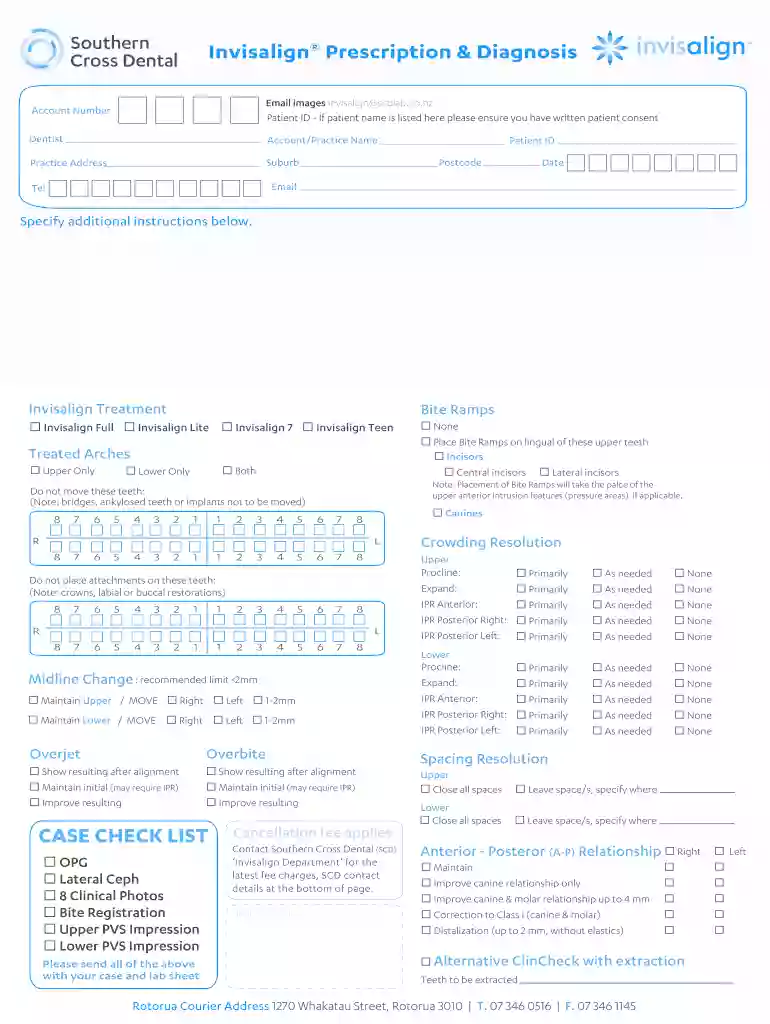
Definition & Meaning of the Invisalign Prescription Form
The Invisalign prescription form is a crucial document utilized by dental professionals to initiate the orthodontic treatment process with Invisalign clear aligners. This form serves multiple purposes, including outlining the treatment plan, documenting patient information, and specifying the required alignment specifications.
- Purpose: The primary aim is to communicate vital details between the dentist (or orthodontist) and the Invisalign provider, ensuring that both parties have a clear understanding of the treatment objectives and methodologies.
- Components: The form typically includes sections for patient demographics, medical history, diagnosis, and specific requirements such as any bite ramp specifications or midline adjustments. Additionally, it may encompass the terms and conditions related to service acceptance and financial agreements with the Invisalign provider.
Importance of Clarity in the Form
Precision in filling out the Invisalign prescription form is essential, as any discrepancies can lead to treatment delays or even inaccuracies in patient aligners. The effectiveness of the prescribed treatment heavily relies on comprehensive and accurate information entered into the form.
How to Use the Invisalign Prescription Form
Using the Invisalign prescription form involves a series of structured steps to ensure that all necessary details are captured accurately. This process facilitates effective communication between the dental professional and the Invisalign provider.
- Patient Information: Begin by filling in the patient’s full name, date of birth, and contact information. Accurate identification is pivotal for treatment tracking.
- Clinical Notes: Include relevant clinical notes to provide context for treatment, detailing the diagnosis and any specific concerns the patient may have.
- Treatment Plan: Clearly outline the treatment plan, including any special instructions or requirements regarding aligners, such as bite ramps or adjustments needed for crowding or spacing.
- Consent and Compliance: Ensure that the patient consents to the treatment plan by signing the form where indicated. This documentation is critical in legal terms and for maintaining clear records of patient agreement.
Tips for Effective Usage
- Utilize digital tools to manage the form. Platforms like DocHub can streamline the filling and signing process, reducing potential errors.
- Double-check all entries for correctness before submission to avoid processing delays.
Steps to Complete the Invisalign Prescription Form
Completing the Invisalign prescription form is a structured process that requires precision and attention to detail. Below is a concise guide to ensure accurate completion.
Step-by-Step Completion Guide
- Download the Form: Obtain the latest version of the invisalign prescription form from a reliable source, such as the Invisalign website or a dental practice’s resources.
- Input Patient Details: Fill out demographic information, including the patient's full name, age, and contact details.
- Document Clinical Findings:
- Record the patient's orthodontic history and current dental status.
- Note specific issues, such as overcrowding or spacing, along with the proposed solutions.
- Specify Treatment Objectives: Outline the goals of treatment clearly, including target dates for evaluations and adjustments.
- Review and Sign: Once filled, review the entire form for accuracy before securing signatures from both the practitioner and the patient.
Final Checks
- Confirm that all sections have been duly completed.
- Ensure that the form is submitted via the correct channels—whether through an online portal, mail, or in-person, as specified by the Invisalign provider.
Key Elements of the Invisalign Prescription Form
Understanding the critical components of the Invisalign prescription form can help in completing it accurately and effectively. Several key sections should be diligently filled to ensure comprehensive treatment initiation.
Essential Sections
- Patient Demographics: Captures personal information and ensures that the patient is correctly identified.
- Diagnosis and Clinical Notes: Summarizes patient-specific dental concerns and the professional's observations.
- Detailed Treatment Plan: Outlines the treatment process, including the number of aligners required and any additional features like attachments or bite ramps.
- Signature Fields: Requires signatures from both the dental professional and the patient, affirming consent and full understanding of the treatment plan.
Additional Considerations
- Legal Terms: Some forms include legal terms regarding the acceptance of treatment plans and financial obligations. It is essential to clarify these with the patient prior to finalizing its submission.
- Customization Options: Depending on the provider, variations in the forms may exist, allowing for tailored treatment plans specific to individual patient needs.
Legal Use of the Invisalign Prescription Form
The Invisalign prescription form must be utilized in compliance with relevant legal and regulatory standards governing orthodontic care. Understanding these legalities can prevent complications in executing the treatment plan.
Compliance Guidelines
- Patient Consent: The patient's consent, obtained through their signature on the form, is a legal requirement. This consent must be informed, meaning the patient understands the implications and potential outcomes of the treatment.
- Record Keeping: Practitioners are legally obligated to maintain accurate records, which includes a copy of the completed prescription form. This is critical in case of future inquiries or disputes regarding treatment.
Implications of Non-Compliance
Failure to adhere to legal guidelines can result in serious repercussions, including professional disciplinary action and potential lawsuits. Therefore, maintaining rigorous compliance is crucial for both legal protection and quality patient care.