
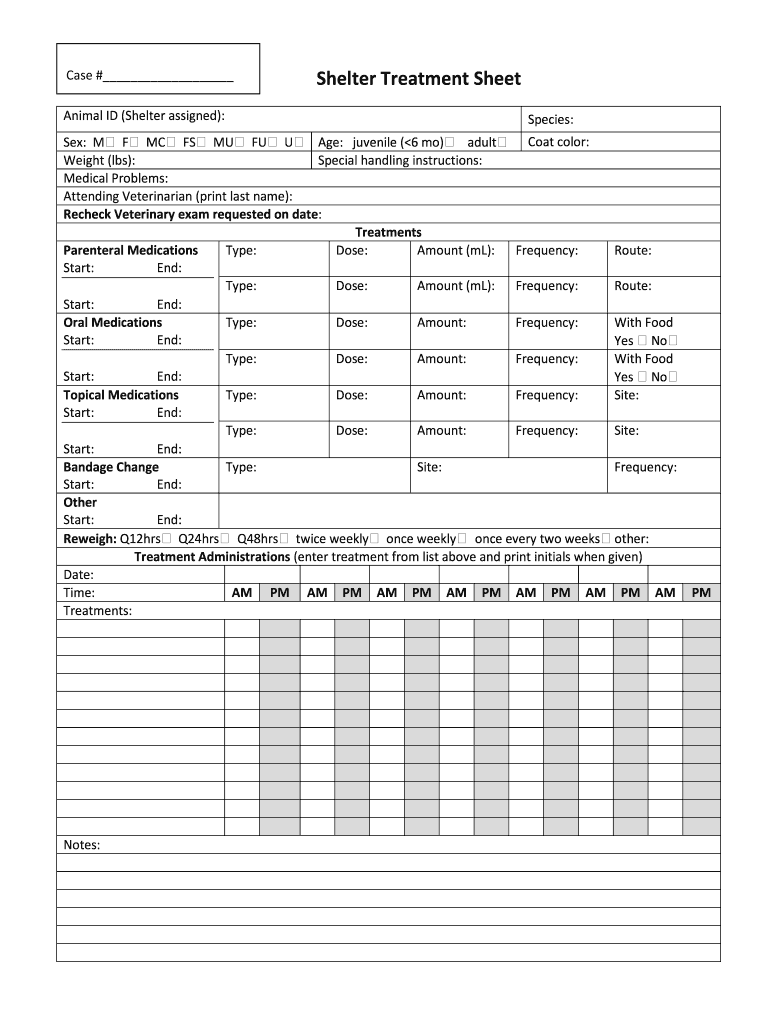







Definition and Significance of a Treatment Sheet Template
A treatment sheet template is a standardized document used primarily in veterinary settings to record information about the medical treatment and care of patients, especially animals in shelters or veterinary hospitals. These templates facilitate a structured approach to documenting vital treatment details, thus ensuring that all relevant information is accurately captured and readily accessible.
- Purpose and Utility: The primary purpose of a treatment sheet template is to provide a clear and concise record-keeping method for various veterinary procedures, medications, and observation notes. It conveys essential information about the animal’s health status and the treatment provided.
- Fields Included: Commonly included fields in a treatment sheet template may comprise areas for animal identification (species, breed, age, weight), health history, medical problems, medications administered (including dosages and administration schedules), and any special handling instructions.
- Legal and Compliance Aspects: Maintaining accurate treatment records is critical for legal compliance and can serve as essential evidence in case of disputes or audits. Well-documented treatments also support the ethical responsibility of veterinary practices to provide quality care.
How to Use the Treatment Sheet Template Effectively
Utilizing a treatment sheet template requires understanding its layout and the type of information to be collected. Here’s how to employ the template for optimal effectiveness:
- Familiarize with Sections: Before using the template, familiarize yourself with each section and its purpose. Knowing where to document medications, treatments, and notes will streamline the process during patient care.
- Complete Each Field Thoroughly: Ensure all fields are filled out completely. This includes animal identification, treatment types, drug details, and any notes regarding the animal's condition. Leaving sections blank can lead to miscommunication among the veterinary staff.
- Regular Updates: Regularly update the treatment sheet following each interaction with the animal. This practice ensures that all veterinary team members have access to the latest information, which is critical for ongoing care.
Steps to Complete the Treatment Sheet Template
Completing a treatment sheet template involves systematically filling in pertinent information such as:
- Animal Identification: Start with details like the animal’s name, species, breed, age, and weight.
- Medical History: Document any pre-existing conditions or previous treatments that the animal has undergone.
- Current Medical Problems: Clearly outline the primary health issues being addressed in the current visit.
- Treatment Provided: Specify the treatments administered, including the type of medication (parenteral, oral, or topical), dosages, and frequency of administration.
- Observation Notes: Include any relevant observations about the animal’s response to treatment and any side effects noted.
Regularly reviewing and verifying the information recorded on the treatment sheet ensures completeness and accuracy, which is crucial for the treatment continuity.
Key Elements of a Treatment Sheet Template
A well-structured treatment sheet template should encompass several key elements essential for efficient medical record-keeping:
- Identification Section: This section should capture vital details about the animal such as species, breed, and unique identification numbers.
- Diagnosis and Problems: Document the specific medical diagnosis and any conditions that need to be monitored or addressed during treatment.
- Medications Administered: This includes a list of all medications given, their dosages, administration routes, and schedules.
- Veterinarian Notes: A space for observations from the attending veterinarian or veterinary technician helps keep track of the animal’s progress.
- Signatures: Lines for the signatures of both the administering veterinarian and any assistants involved in treatment provide accountability.
Examples of Using a Treatment Sheet Template in Practice
In veterinary hospitals and shelters, treatment sheet templates can be utilized as follows:
- Shelter Animals: When an animal enters a shelter, a treatment sheet can be initiated to track vaccinations, spay/neuter status, and any medical treatment received during their stay.
- Emergency Care: In emergency situations, using a treatment sheet can help ensure that all administered treatments are logged quickly and accurately, aiding in the continuity of care when specialists take over.
- Follow-Up Visits: During follow-up appointments, the treatment sheet can be referenced to monitor the animal’s recovery and response to previous therapies, allowing for more informed decision-making.
Adopting an organized approach to using treatment sheets not only enhances record accuracy but also improves overall patient care and communication within veterinary teams.




