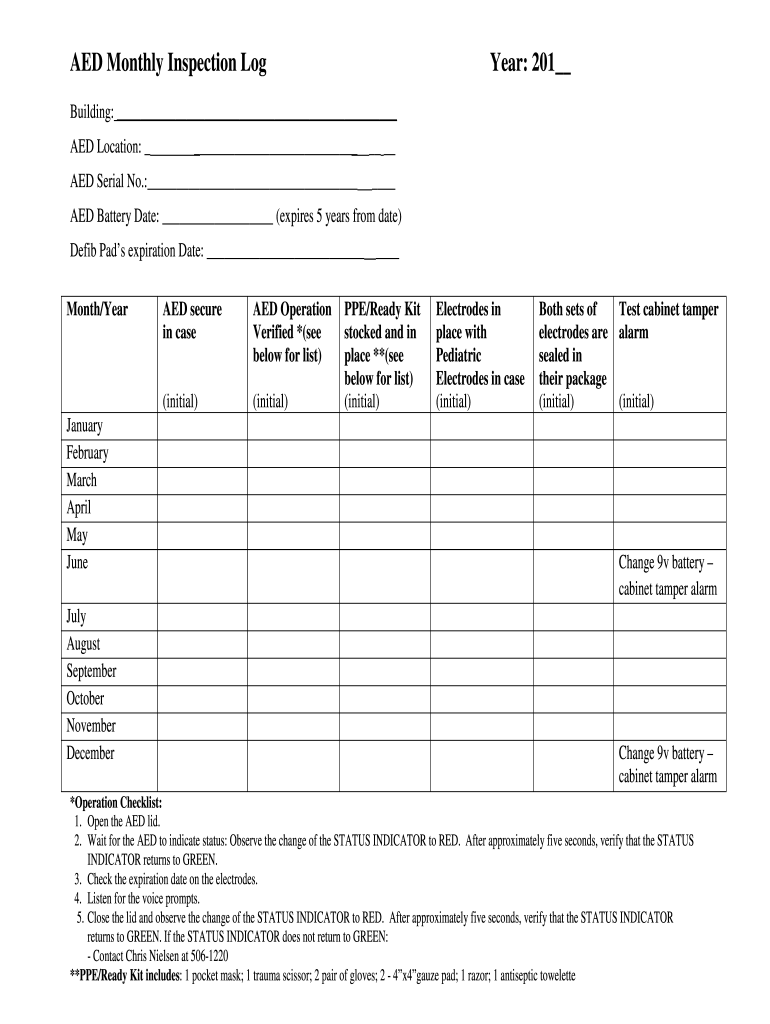
It is importantand required in many states to regularly inspect your AED to ensure its in proper working order when needed for a rescue. AEDs are designed to perform rigorous self-tests and indicate the result to signal device readiness.
How often do AEDs need to be inspected?
To inspect an AED (Automated External Defibrillator), follow these steps: Check the expiration date of the AED pads and battery. Turn on the AED and make sure it is functioning properly. Check the AED pads for any damage, such as tears or discoloration. Make sure the AED is clean and free of debris.
What is an AED?
Here are some things to look for when doing an AED Maintenance check: Is the Active Status Indicator light on your AED flashing green? Are the AED pads plugged in and ready for use? Does the AED appear to be undamaged and ready for use? Is the AED free of chirping and warning notifications?
How often should AEDs be inspected?
Someone should be responsible for performing AED maintenance checks at least monthly and these checks should be logged. Here are some things to look for when doing an AED Maintenance check: Is the Active Status Indicator light on your AED flashing green? Are the AED pads plugged in and ready for use?
What is an AED inspection?
Automated external defibrillators (AEDs) need checked regularly to ensure the battery and pads have not expired and the unit is reporting it is ready to respond. Our experts arrange an on-site visit to your location to inspect your AED.
Inspect the overall condition of the AED. Pay particular attention to connector sockets. AED should be clean. 4. Is the AED and case clean? The outside of the
Cookie consent notice
This site uses cookies to enhance site navigation and personalize your experience.
By using this site you agree to our use of cookies as described in our Privacy Notice.
You can modify your selections by visiting our Cookie and Advertising Notice.