







Understanding the PHQ-A Questionnaire
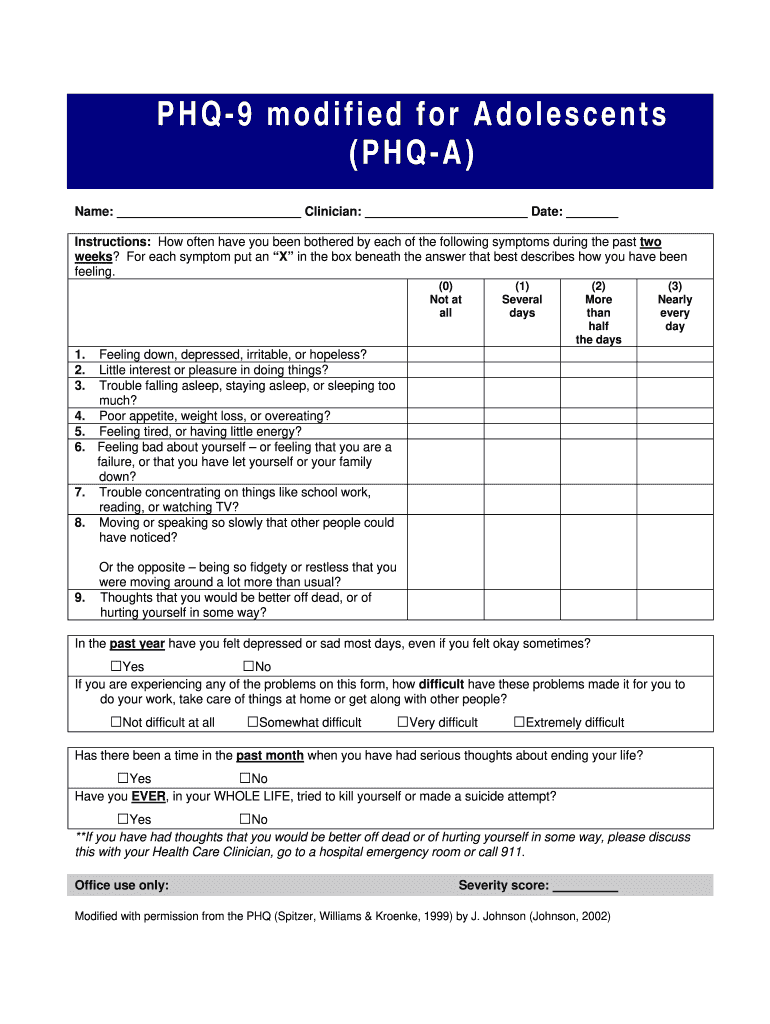
The Patient Health Questionnaire for Adolescents (PHQ-A) is a modified version of the widely used PHQ-9, adapted specifically for younger individuals. This questionnaire aims to assess symptoms of depression and their impact on daily functioning over the past two weeks. The PHQ-A includes a series of carefully crafted questions that allow clinicians to evaluate the frequency and severity of depressive symptoms in adolescents. This structured approach helps identify young individuals in need of mental health support.
Components of the PHQ-A
The PHQ-A consists of several core components that make it effective for evaluating adolescent mental health:
- Symptoms Assessment: Questions prompt respondents to indicate how often they experienced symptoms such as sadness, irritability, and loss of interest in activities.
- Severity Evaluation: In addition to frequency, the questionnaire assesses the severity of each symptom, providing valuable insight into the impact on the adolescent's daily life.
- Self-Harm Inquiry: The PHQ-A also contains questions about thoughts of self-harm, emphasizing the need for immediate professional evaluation if such thoughts are reported.
How to Administer the PHQ-A
Administering the PHQ-A requires careful consideration to create a supportive environment for the adolescent:
- Explain the Purpose: Begin by explaining the significance of the questionnaire and how it will help in understanding their feelings and well-being.
- Confidentiality Assurance: Reassure the adolescent that their responses will be kept confidential, which may encourage honest and open communication.
- Provide Clear Instructions: Ensure that the adolescent understands how to complete the questionnaire, emphasizing that there are no right or wrong answers.
Scoring the PHQ-A
The scoring system for the PHQ-A is straightforward but vital for understanding the level of depression:
- Scoring Range: Each response is assigned a score, with higher cumulative scores indicating greater severity of depressive symptoms.
- Interpreting Scores: Scores can range from zero to twenty-seven, helping clinicians categorize the depression severity from minimal to severe.
- Follow-Up Recommendations: Depending on the score, clinicians might recommend further assessment or treatment options, ranging from counseling to medication.
Importance of the PHQ-A in Mental Health
The PHQ-A plays a crucial role in adolescent mental health care by:
- Early Identification: It aids in the early identification of depression, which is essential for timely intervention.
- Facilitating Discussions: The questionnaire serves as a tool for discussions between adolescents and clinicians, creating a pathway for expressing feelings.
- Collecting Data: It provides essential data that can inform treatment plans tailored to the needs of young individuals.
Special Considerations for Use
When using the PHQ-A, there are specific considerations to keep in mind:
- Age Appropriateness: The questionnaire is specifically designed for adolescents, generally targeting individuals aged eleven to eighteen.
- Cultural Sensitivity: Consider varying cultural backgrounds and their influence on responses to the questionnaire, ensuring that interpretations are respectful and appropriate.
- Multi-Modal Approaches: While the PHQ-A is an effective tool, it is recommended to use it in conjunction with other assessment methods, such as interviews and behavioral assessments.
The PHQ-A represents a vital resource in understanding adolescent mental health and guiding appropriate interventions. Its structured yet straightforward format helps streamline the assessment process, ultimately contributing to better mental health outcomes for young individuals.




