







Definition & Meaning
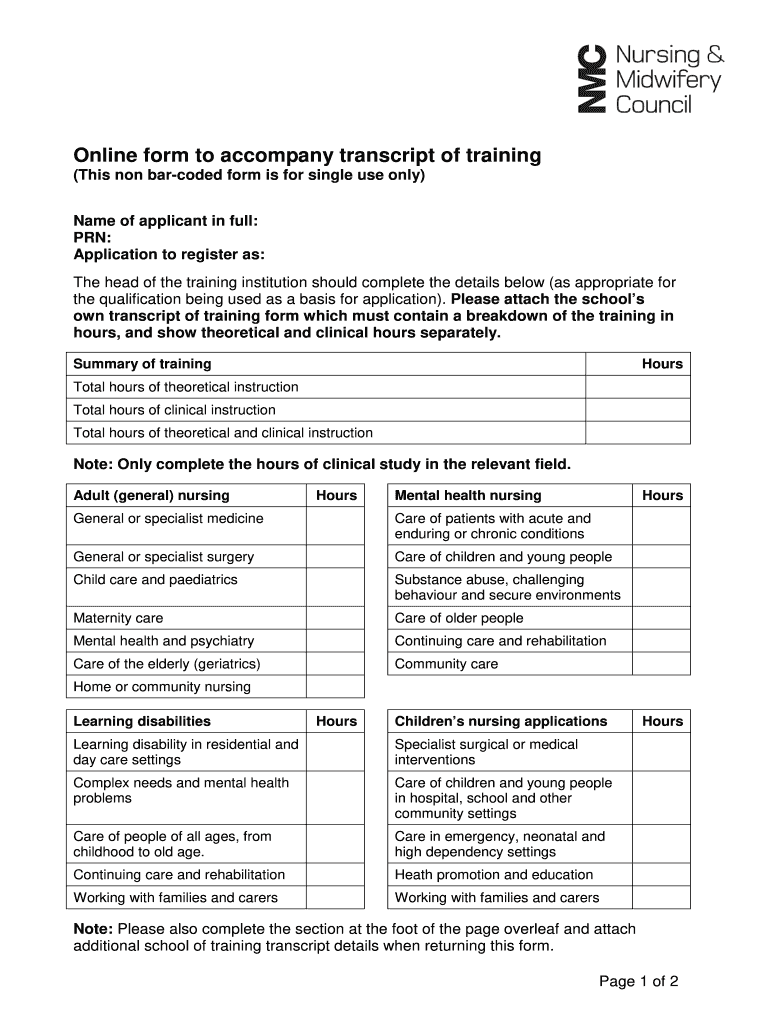
A transcript of training refers to an official document that details the educational background, hours of training, and specific qualifications achieved by an individual, primarily in professional fields such as healthcare, education, and vocational training. It serves as a formal record of the courses taken, experiences gathered, and competencies developed during the training program.
-
Purpose: The transcript is essential when applying for certification or licensure to ensure that the individual meets the required educational criteria. For example, in nursing, the transcript provides proof of completion of necessary coursework and clinical hours essential for licensure.
-
Components: A typical training transcript may include the following:
- Course titles and descriptions
- Grades earned
- Hours of theoretical and practical training
- Institutional accreditation status
- Signatures from the training institution officials
The use of transcripts of training is widespread across various industries, especially where professional accreditation is required.
How to Obtain the Transcript of Training
Obtaining a transcript of training typically involves several straightforward steps, depending on the institution that issued the training certificate. Here's a general outline of the process:
-
Identify the issuing institution: Know where your training hours were completed. This can be a school, university, or training facility.
-
Request the transcript: Contact the registrar’s office or the relevant administrative department of the institution. Many now offer online requests via their websites for ease of access.
-
Complete any required forms: You may need to fill out specific forms requesting your transcript and provide personal information to verify your identity.
-
Pay any associated fees: Institutions may charge for transcripts, especially if you require expedited service.
-
Confirmation of request: After submission, you should receive a confirmation email or message detailing the processing timeline.
-
Receive the transcript: Documents can typically be sent electronically or via traditional mail, depending on your preference and the institution’s policies.
Being proactive in requesting this document can facilitate smoother transitions into your professional practices, especially when dealing with licensure bodies.
Steps to Complete the Transcript of Training
Completing a transcript of training involves specific steps to ensure that all necessary information is accurately documented. These steps typically include:
-
Gather Required Information:
- Full name and identification.
- Course names and codes.
- Dates of attendance.
- Hours completed for each course.
- Any special notes regarding grades or competencies.
-
Format the Transcript: Use a standardized format that includes:
- Official letterhead of the institution.
- Clear headings for each section such as "Courses Completed" and "Clinical Hours."
- Consistent font and styling for clarity.
-
Review and Edit: Double-check all entries for accuracy, ensuring that:
- All information is current and precise.
- There are no spelling mistakes, especially on names and course titles.
-
Finalize and Secure Signatures: It must be signed by a designated official from the institution. Depending on the facility, this may be the dean or department head.
-
Issue the Transcript: Distribute the finalized transcript to the requestor, ensuring confidentiality and security are maintained until it reaches the intended recipient.
By meticulously following these steps, you can produce a professional and authoritative transcript that holds significant value in the transition to a licensure or certification process.
Important Terms Related to Transcript of Training
Understanding the terminology associated with a transcript of training is crucial for effective communication and use of the document. Here are key terms to be familiar with:
-
Accreditation: The process by which educational institutions are evaluated and recognized for meeting acceptable levels of quality and performance.
-
Clinical Hours: Practical training time spent under supervision in a healthcare or educational setting, which is vital for programs requiring hands-on experience.
-
Continuing Education Units (CEUs): Credits awarded for participation in courses that promote ongoing learning and professional development; necessary for maintaining certain licenses.
-
Credentialing: The process of verifying an individual’s qualifications, including education, training, and experience, before granting professional status.
-
Official Transcript: A certified document that typically includes the institution's seal, guaranteeing its authenticity and official status for various professional or academic applications.
These terms help clarify the various components and processes involved in creating and utilizing training transcripts effectively.
Legal Use of the Transcript of Training
The legal use of a transcript of training encompasses various situations, primarily concerning educational and professional applications. Understanding these legal contexts can guide its appropriate use:
-
Licensure Applications: Transcripts are often required by state boards for professional licensing, such as nursing or teaching. These bodies assess the training completed against state requirements.
-
Employment Verification: Employers may request transcripts to verify educational qualifications during the hiring process, ensuring candidates meet job requirements.
-
Legal Proceedings: In some instances, a training transcript could serve as evidence in administrative or legal proceedings related to professional conduct or competence evaluations.
-
Accreditation Compliance: Institutions may use transcripts to demonstrate compliance with educational standards and regulations set by oversight organizations.
Failure to accurately and effectively utilize the transcript in these contexts can result in delays or rejections of applications, making it essential to understand its legal implications.




