




01. Edit your drug test chain of custody form pdf online
Type text, add images, blackout confidential details, add comments, highlights and more.

Type text, add images, blackout confidential details, add comments, highlights and more.

Draw your signature, type it, upload its image, or use your mobile device as a signature pad.

Send ccf form drug test via email, link, or fax. You can also download it, export it or print it out.
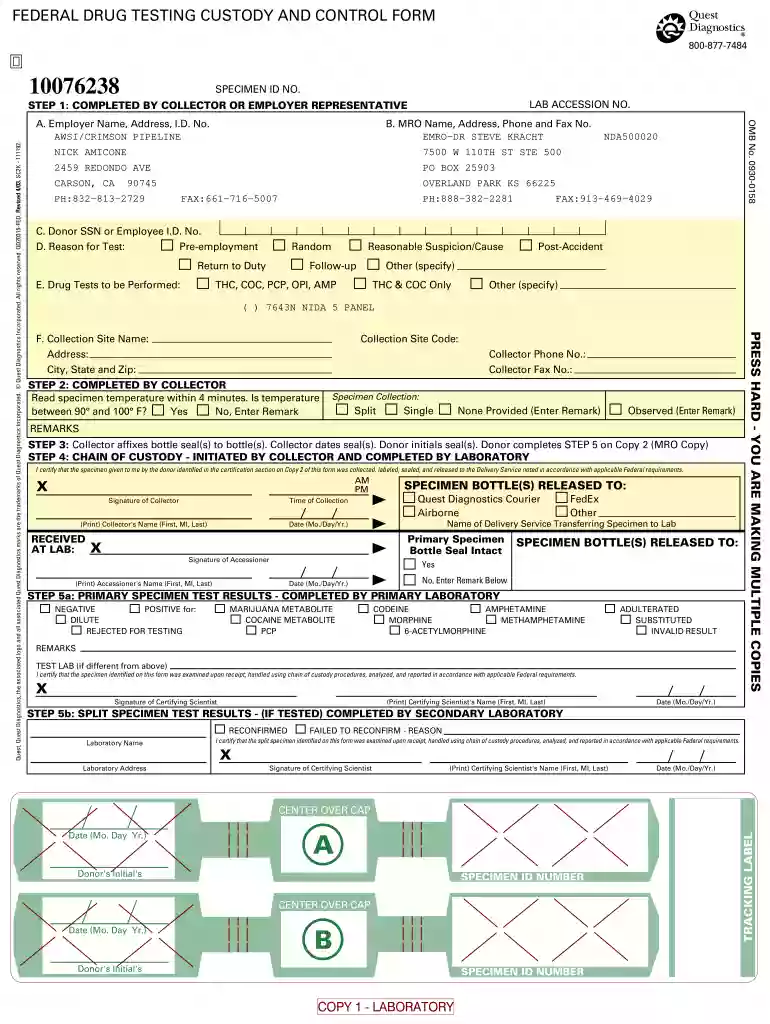
The Federal Drug Testing Custody and Control Form (CCF) is an official document required for drug testing in federal workplaces. It ensures that the testing process adheres to strict legal protocols and maintains a clear, documented chain of custody. This form is essential for maintaining the integrity of the drug testing process and validating test results.
The CCF is vital in ensuring compliance with the Department of Transportation (DOT) regulations and other federal requirements. It serves as a safeguard against legal challenges by providing a clear and documented process for drug testing, including all pertinent data and signatures.
Using the Federal Drug Testing Custody and Control Form correctly is crucial to ensure compliance and integrity in drug testing. Below are detailed steps outlining the usage procedures for the form.
Completing the Federal Drug Testing Custody and Control Form involves several essential steps. This process must be followed meticulously to ensure compliance with all legal and procedural standards.
The Federal Drug Testing Custody and Control Form is widely used across various sectors in the United States.


The CCF is crucial in situations of pre-employment screenings, random tests in workplaces, and tests conducted due to reasonable suspicion of substance use. Its standardization helps ensure all parties are protected during the testing process.
Understanding the key elements of the Federal Drug Testing Custody and Control Form aids users in completing it accurately and effectively.
The Federal Drug Testing Custody and Control Form plays an integral role in the drug testing landscape, fostering transparency and accountability throughout the testing process.
At DocHub, your data security is our priority. We follow HIPAA, SOC2, GDPR, and other standards, so you can work on your documents with confidence.
FEDERAL DRUG TESTING CUSTODY AND CONTROL FORM. SPECIMEN Submission of the information on the Federal Drug Testing Custody and Control Form is voluntary.Read more
FEDERAL DRUG TESTING CUSTODY AND CONTROL FORM. STEP 1: COMPLETED BY COLLECTOR OR EMPLOYER REPRESENTATIVE. SPECIMEN ID NO. ACCESSION NO. A. Employer NameRead more
The TSD as the states Traffic Safety Office is responsible for administering funding and oversight for the Traffic Safety Resource Prosecutor Program, Drug.Read more


