
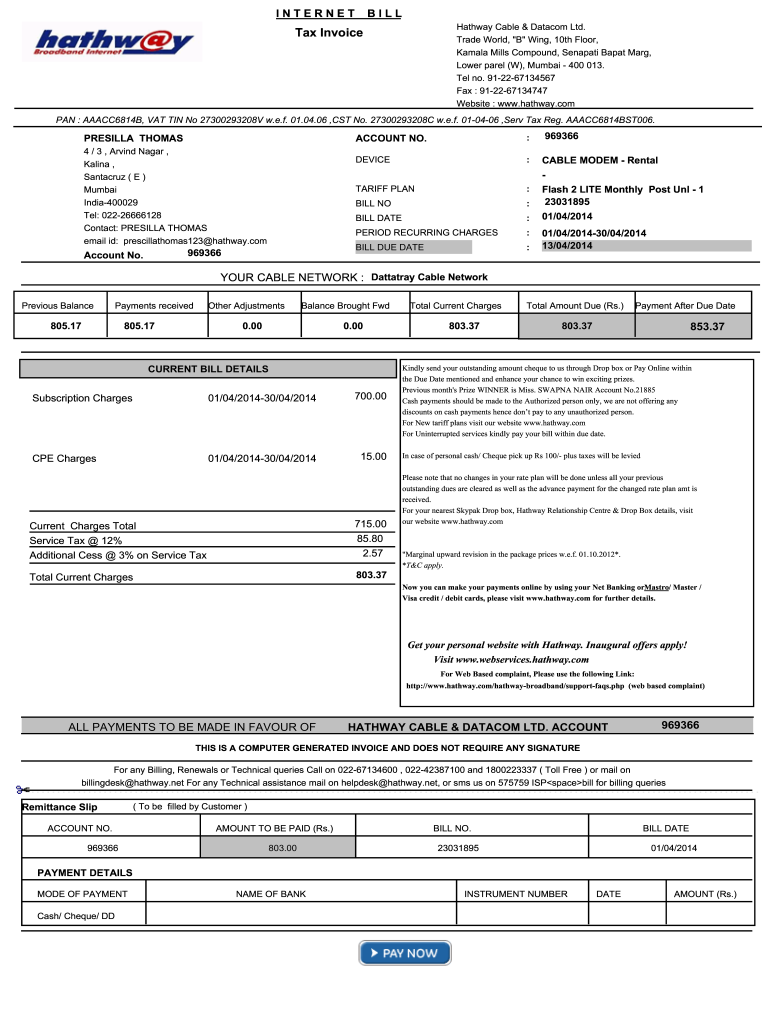







Understanding the Internet Bill Receipt
An internet bill receipt serves as a crucial document detailing the services provided by internet service providers (ISPs) and any related charges incurred during a specific billing period. This document outlines important information such as customer details, account specifics, services utilized, and payment instructions. Knowing how to interpret and use an internet bill receipt is essential for managing internet subscriptions and ensuring accurate payments.
Key Elements of an Internet Bill Receipt
An internet bill receipt typically includes several critical components to ensure clarity and transparency regarding the charges. The following are the essential elements found in a typical receipt:
- Customer Information: Name, address, and account number.
- Billing Period: Start and end dates for the services billed.
- Service Description: Types of internet services provided (e.g., speed, data limits).
- Charges Breakdown: Line items for service fees, taxes, and discounts applied.
- Total Amount Due: Summation of all charges with payment deadlines.
- Payment Instructions: Methods available for settling the bill, including online payment portals.
- Customer Service Contact: Information for reaching out in case of disputes or questions.
Understanding Charges in the Internet Bill Receipt
The charges on an internet bill receipt are often outlined in a detailed breakdown. Here’s a closer look at how these charges may be represented:
- Base Rate: The standard fee for your internet plan.
- Additional Fees: Any extra charges for exceeding the data limit or premium services, such as contract fees for special promotions.
- Taxes and Surcharges: These may be applied based on jurisdiction and include local sales tax or federal fees.
- Promotional Discounts: Temporary reductions applied to encourage longer subscriptions or bundled services.
For example, if your internet bill receipt shows a base rate of $50, a data overage fee of $10, and applicable taxes of $5, the total amount due will be $65.
Sample Formats for Internet Bill Receipts
An internet bill receipt can take multiple formats, depending on the provider's preferences and technology used. Here are typical formats commonly seen:
- PDF Format: Widely used due to its universal compatibility. A recipient can view or print it without formatting issues. Many ISPs offer downloadable receipts in this format.
- Word Document: Some providers allow customers to receive their receipts in a Word format, providing flexibility for edits or notes.
- Online Portal Access: Many ISPs provide access to digital receipts through a customer portal, enabling users to view and download their billing history anytime.
Creating an Internet Bill Receipt
If you are in need of an internet bill receipt, templates are available for use either through your ISP's website or through bill generation tools. Here’s a brief overview of how to efficiently create your receipt:
- Choose a Template: Start with a pre-designed receipt template that suits your needs.
- Input Customer Data: Fill in essential information such as name, address, and account number.
- Detail the Charges: List services provided and any applicable fees or discounts.
- Final Total: Ensure that the total amount is clearly stated.
- Save or Print: Save the document in either PDF or Word format for easy access and sharing if necessary.
Utilizing an internet bill generator can also simplify this process by automatically filling in your details and charges based on your service plan.
Importance of Retaining Internet Bill Receipts
Keeping a record of your internet bill receipts is important for several reasons:
- Budget Management: Tracking payments helps in managing monthly expenses, particularly in understanding billing cycles and any changes to your service usage.
- Dispute Resolution: In case of discrepancies, having receipts can support your claims with ISPs regarding overcharges or service interruptions.
- Tax Deductions: For those using the internet for business purposes, receipts can serve as proof of expenses when filing taxes, allowing you to claim necessary deductions.
Being diligent in maintaining these types of records will aid in financial planning and provide more accurate insights into your internet service expenses.
Navigating Issues with Internet Bills
Sometimes, customers may encounter issues with their internet bills. Here are some common problems and how to address them:
- Discrepancies in Charges: If there’s a difference in the anticipated bill versus the actual bill, reach out to customer service with your previous receipts for clarification.
- Billing Errors: Mistakes can happen, such as double charges. Document these errors and request corrections as soon as possible.
- Disconnection Notices: If you receive a disconnection notice but believe you've paid on time, take immediate action by reviewing your receipts and contacting the ISP to clear up any misunderstandings.
Maintaining open communication with service providers and staying organized with documentation are key steps in managing these issues effectively.




