







Definition and Meaning
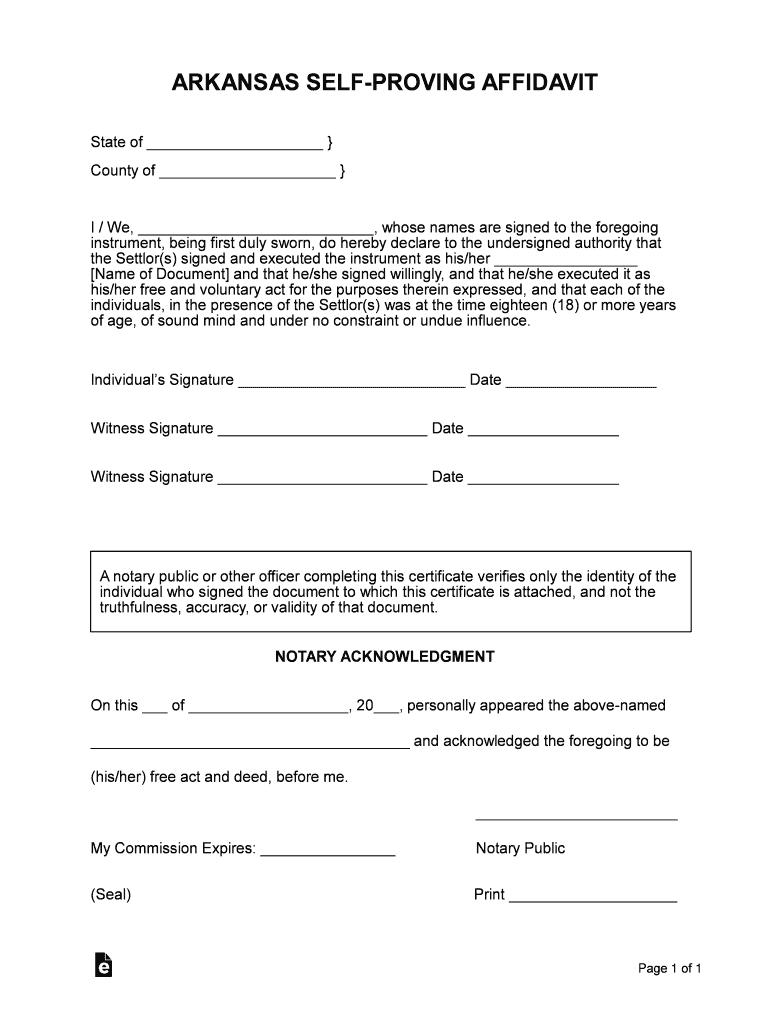
An Arkansas Self-Proving Affidavit Form is a legal document primarily used in estate planning to affirm the validity of a will. By including this form, the will can be validated without the need for additional testimony from witnesses. This form serves as a sworn statement by the testator and witnesses, declaring that the will was executed willingly and in accordance with legal procedures. It enhances efficiency in probate proceedings by allowing the will to be accepted without further verification.
Purpose and Benefits
The core purpose of the Arkansas Self-Proving Affidavit Form is to streamline the probate process. Including this form with a will means that witnesses to the will don't have to appear in court to testify, saving time and reducing potential complications.
- Reduces the potential for disputes over the authenticity of a will.
- Helps avoid delays in probate proceedings.
- Provides clear evidence of the will's validity, thereby protecting the estate's interests.
How to Use the Arkansas Self-Proving Affidavit Form
Using the Arkansas Self-Proving Affidavit Form involves several crucial steps to ensure it fulfills its legal purpose. The form must be completed concurrently with the signing of the will.
- Prepare the Will and Affidavit: The will and self-proving affidavit should be drafted and present at the signing ceremony.
- Arrange Witnesses: Ensure there are two witnesses who are not beneficiaries of the will and who understand the importance of the document.
- Sign the Documents: The testator signs the will in the presence of the witnesses, who then also sign the document.
- Complete the Affidavit: The testator and witnesses sign the affidavit, which is then notarized, confirming the will's execution was voluntary and deliberate.
Verification by Notary
A key component of this process is the notarization of the affidavit. The notarization confirms:
- The identity of the signers.
- The voluntary nature of the signatures.
- The signatures occurred within the presence of the notary.
How to Obtain the Arkansas Self-Proving Affidavit Form
The Arkansas Self-Proving Affidavit Form can be obtained through various channels. Legal professionals often provide the form when assisting with estate planning. Additionally, legal document services and online platforms offer downloads of the form.
- From an Attorney: Acquiring the form through a lawyer ensures it is completed accurately.
- Online Legal Services: These services provide downloadable forms, sometimes with guidance on completion.
- Estate Planning Software: Many software packages for estate planning include options to generate this form.
Steps to Complete the Arkansas Self-Proving Affidavit Form
Completing this form accurately is imperative for its legal standing. Below are detailed steps to follow:
- Gather Necessary Information: Ensure you have the will, the full names of the testator, and witnesses, as well as a notary present.
- Fill Out the Details: Input the date and location of the will signing, as well as the testator’s and witnesses' information.
- Execute the Will and Affidavit: The testator signs the will in the presence of witnesses. The same is done with the affidavit.
- Notarization: A notary public signs and stamps the affidavit, thereby elevating its authenticity.
Common Mistakes to Avoid
- Missing Signatures: All required parties must sign in the presence of each other and a notary.
- Wrong Information: Double-check names and dates to ensure accuracy.
- Absence of a Notary: The form must be notarized to be self-proving.
Key Elements of the Arkansas Self-Proving Affidavit Form
The form comprises several critical sections that require precise completion:
- Testator Declaration: Confirms the testator has willingly executed the will.
- Witness Affirmation: Witnesses assert they observed the signature of the testator.
- Notarization Clause: Validates the authenticity of all parties involved through a notary's seal.
- Identification Section: Includes names and possibly addresses of all parties for clarity.
Variations and Adaptations
While the structure is standard, variations can occur based on individual state amendments or updates in legal requirements. Always check for the latest legal stipulations when compiling this form.
Legal Use and Implications
The Arkansas Self-Proving Affidavit Form holds significant legal weight. Its primary function is to ensure the will remains uncontested, without needing witness testimonies in probate court.
- Evidence of Intent: Demonstrates the testator's intention and state of mind during will execution.
- Prevention of Fraud: Minimizes the potential for fraudulent claims against the will.
- Streamlined Probate: Facilitates a smoother legal process, preventing unnecessary court delays.
Specific Examples and Scenarios
Consider scenarios where heirs might contest a will due to suspicion of undue influence. A self-proving affidavit can provide reassurance to the court, confirming that the will was properly executed.
Importance of Notarization in the Affidavit
Notarization serves as an official confirmation of authenticity and agreement among the parties involved. It deters fraudulent practices by affirming the identity and willingness of all signatories under oath.
Benefits of a Notarized Form
- Legal Standing: Ensures that the will is treated with higher credibility.
- Peace of Mind: Offers assurance to family members and heirs about the security of the estate plan.
In summary, the Arkansas Self-Proving Affidavit Form is a crucial component in estate planning within the state of Arkansas. By ensuring its proper execution, individuals can safeguard their assets and intentions with a legally recognized and efficient process.




