







Understanding the Bomb Threat Checklist
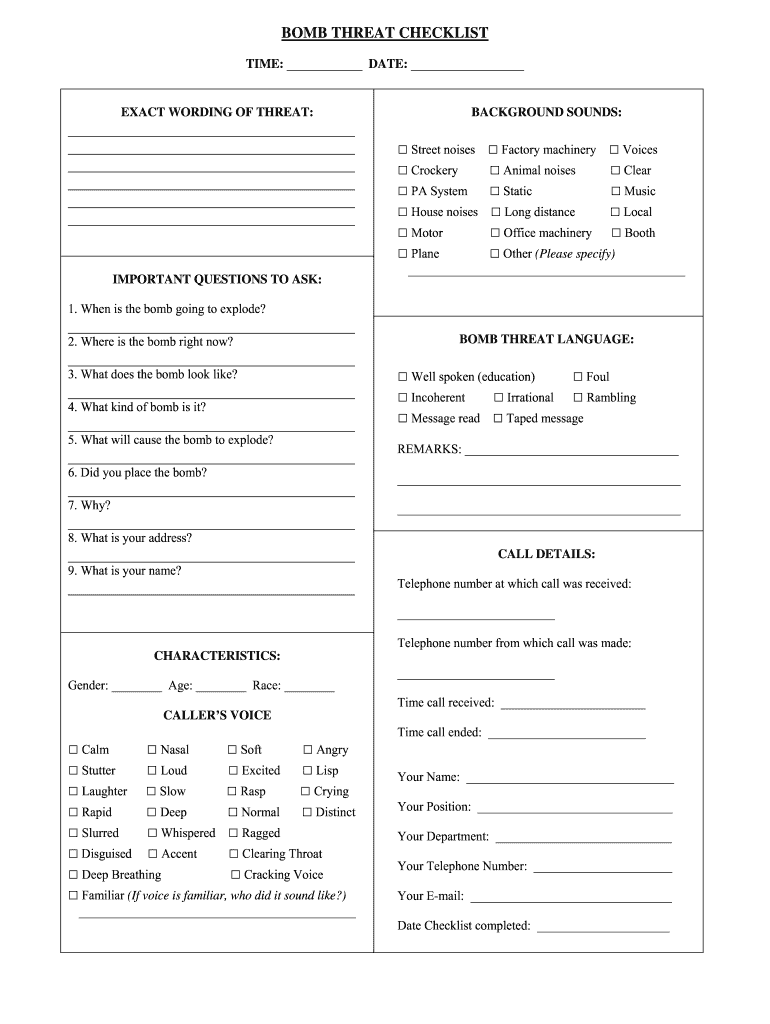
A bomb threat checklist is a critical resource that aids individuals in their responses to potential bomb threats. This document serves as a structured guide, ensuring that all necessary information is gathered efficiently and effectively to assist authorities in managing such threats.
Key Components of the Bomb Threat Checklist
The bomb threat checklist should encompass several essential sections to ensure comprehensive documentation. These include:
- Exact Wording of the Threat: It is crucial to capture the exact language used by the caller. This information can provide insights into the seriousness and credibility of the threat.
- Questions to Ask the Caller: These may include inquiries about the bomb’s location, the time it is set to detonate, and any specific motives behind the threat. Understanding the context can aid authorities in their response.
- Details About the Call: Documenting specifics such as the time of the call, the phone number from which the call originated, and any background noises can help investigators.
- Characteristics of the Caller: Noting aspects such as the caller's accent, tone of voice, and any distinct phrases they may use can be invaluable in identifying potential suspects.
Using the Bomb Threat Checklist
To effectively utilize the bomb threat checklist, follow a series of structured steps:
- Preparation: Ensure that the checklist is readily accessible, either in a printed format or stored in a digital file, such as a bomb threat checklist Word document or bomb threat checklist PDF.
- Immediate Documentation: When a threat is received, promptly begin documenting the conversation using the checklist. Capture all relevant details as they are communicated.
- Engage Authorities: After collecting information, contact local law enforcement or emergency services. Provide them with the completed checklist to facilitate their assessment and response.
- Continued Communication: Maintain open channels with authorities, offering any further information you may gather. Follow-up is crucial in managing the situation effectively.
Importance of the Bomb Threat Checklist in 2023
As bomb threats continue to be a challenge in various environments, updating and using a bomb threat checklist template that reflects the most recent guidelines ensures compliance with current safety measures. In 2023, organizations should be vigilant about adapting these templates for relevance to today's security landscape.
Printable Formats and Accessibility
The bomb threat checklist is often available in multiple formats, including a bomb threat checklist Word document and a bomb threat checklist PDF. Having these documents in printable formats ensures they are accessible for immediate use during a threat.
Special Considerations for Variants and Updates
As threats evolve, so too should the bomb threat checklist. Organizations are encouraged to periodically review and update their checklists to address new tactics employed in bomb threats. The availability of newer versions, such as bomb threat checklist 2022 versus bomb threat checklist 2023, provides flexibility and relevance concerning current threat dynamics.
Legal Implications and Compliance
Legally, organizations must be prepared to respond to bomb threats in a way that aligns with local laws and regulations. Familiarizing staff with the bomb threat checklist also helps mitigate potential legal consequences for failure to respond adequately.
Summary of Best Practices
To ensure maximum effectiveness, individuals should regularly train on the bomb threat checklist, revise their protocols as necessary, and keep the lines of communication with law enforcement open at all times. By implementing these best practices, organizations can better prepare for and manage bomb threats effectively.




