




01. Edit your form online
Type text, add images, blackout confidential details, add comments, highlights and more.

Type text, add images, blackout confidential details, add comments, highlights and more.

Draw your signature, type it, upload its image, or use your mobile device as a signature pad.

Send it via email, link, or fax. You can also download it, export it or print it out.
An "Amended and Restated License Agreement" serves as a comprehensive legal document that revises and supersedes a prior license agreement. It is commonly used to update, clarify, or extend the terms and conditions initially agreed upon by the involved parties. This type of agreement is prevalent in business arrangements where intellectual property, resources, or facilities need to be shared or licensed from one entity to another. It is essential in formalizing the new terms and securing the rights and obligations of each party.
The agreement usually includes several critical components to ensure clarity and legal compliance:
Obtaining this type of agreement typically involves a structured legal process:
Completing the Amended and Restated License Agreement is a detailed process:
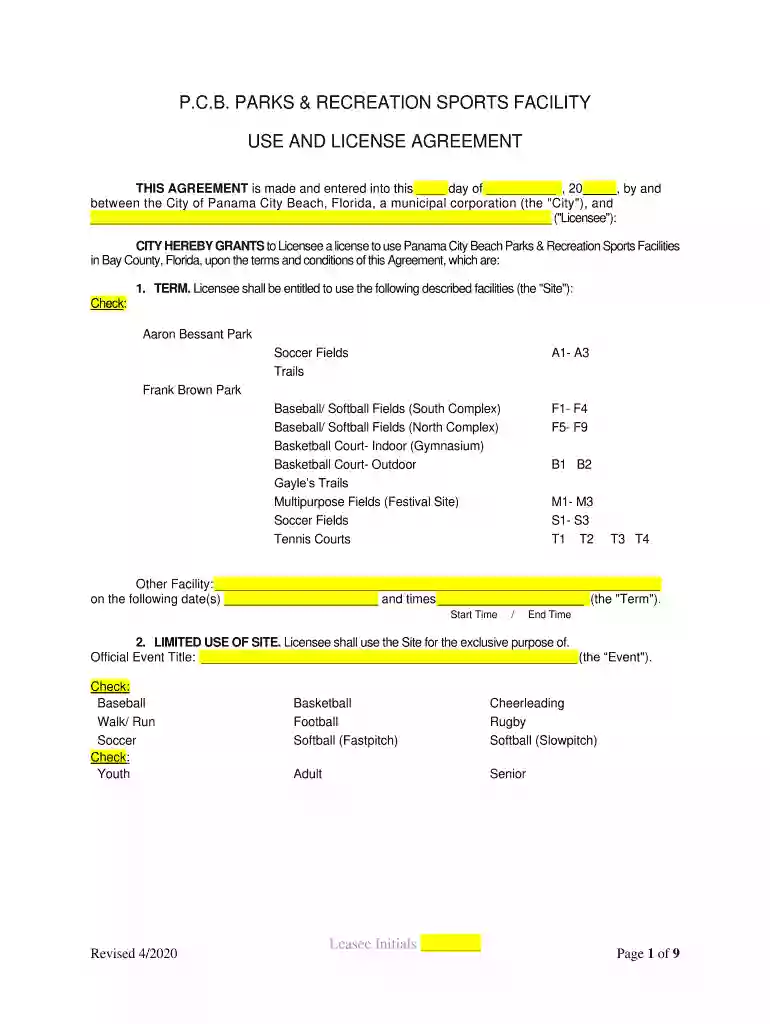
Legally, the amended agreement ensures all parties comply with the updated terms and conditions. It serves as a legally binding document that protects the rights and interests of both parties. In the context of facilities like sports complexes, the agreement ensures users have legal access to resources under agreed terms, ensuring compliance with local regulations and insurance requirements.
Understanding the terminology in an Amended and Restated License Agreement is crucial:
The practical application of an Amended and Restated License Agreement is seen in various sectors:
Different types of business entities can benefit from Amended and Restated License Agreements:
Non-compliance with the terms outlined in the agreement can result in several consequences:
The careful construction and adherence to an Amended and Restated License Agreement can significantly impact the legal security and operational efficiency of both individuals and entities involved.
We've got more versions of the AMENDED AND RESTATED LICENSE AGREEMENT BETWEEN form. Select the right AMENDED AND RESTATED LICENSE AGREEMENT BETWEEN version from the list and start editing it straight away!
| Versions | Form popularity | Fillable & printable |
|---|---|---|
| 2025 | 4.3 Satisfied (54 Votes) | |
| 2025 | 4.3 Satisfied (49 Votes) | |
| 2024 | 4.6 Satisfied (39 Votes) | |
| 2022 | 4.1 Satisfied (31 Votes) | |
| 2022 | 4.8 Satisfied (116 Votes) | |
| 2022 | 4.1 Satisfied (60 Votes) | |
| 2022 | 4.8 Satisfied (112 Votes) | |
| 2022 | 4.5 Satisfied (52 Votes) | |
| 2021 | 4.5 Satisfied (41 Votes) | |
| 2021 | 4.9 Satisfied (26 Votes) | |
| 2021 | 4.8 Satisfied (66 Votes) | |
| 2021 | 4.9 Satisfied (40 Votes) | |
| 2021 | 4.8 Satisfied (179 Votes) | |
| 2021 | 4.5 Satisfied (55 Votes) | |
| 2021 | 4.8 Satisfied (36 Votes) |
At DocHub, your data security is our priority. We follow HIPAA, SOC2, GDPR, and other standards, so you can work on your documents with confidence.


