01. Edit your form online
Type text, add images, blackout confidential details, add comments, highlights and more.

Type text, add images, blackout confidential details, add comments, highlights and more.

Draw your signature, type it, upload its image, or use your mobile device as a signature pad.

Send it via email, link, or fax. You can also download it, export it or print it out.
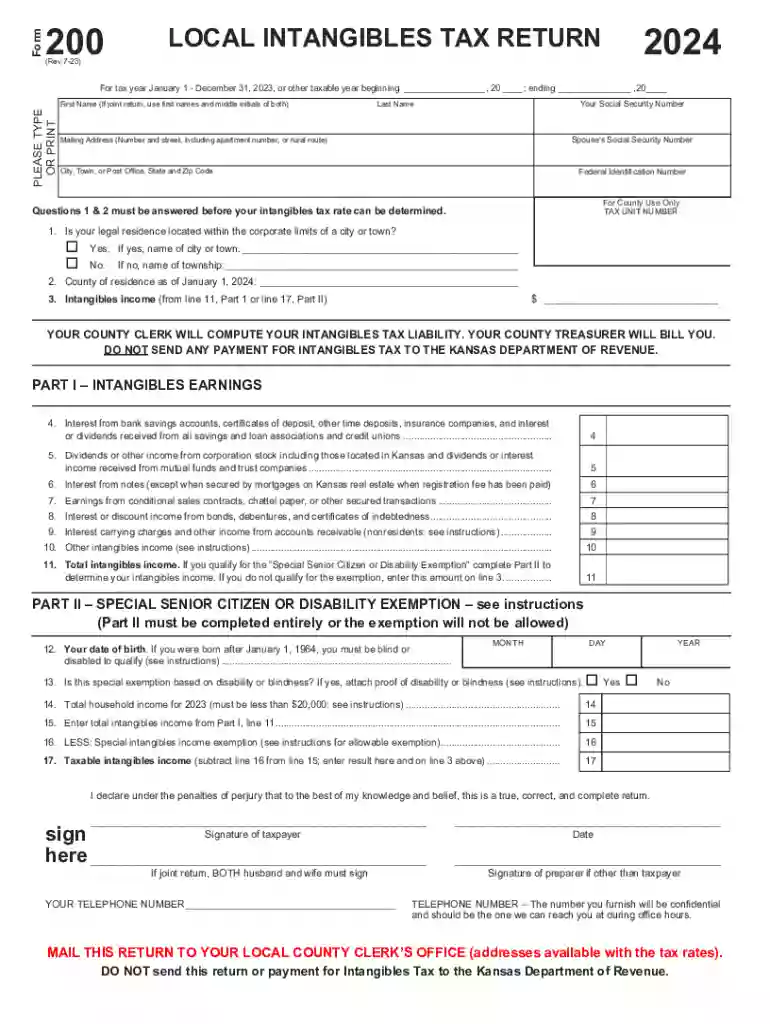
The Form 200 Local Intangibles Tax Return Rev 11-23 is primarily used by Kansas residents and corporations to report income derived from intangible properties for the tax year 2023. Intangible properties include items such as savings accounts, stocks, and bonds. This tax form is crucial for those in Kansas to accurately report this type of income to ensure compliance with state taxation requirements. Understanding the form's purpose helps in grasping its importance within the broader context of state tax obligations.
To effectively use the Form 200, taxpayers must first gather relevant financial information related to their intangible assets. This includes documenting all income from stocks, bonds, and similar financial instruments. Once you have your documents in order, carefully follow the instructions provided with the form to fill out each section accurately. It is essential to double-check entries for correctness to avoid potential issues with your tax return.
The Form 200 can be obtained through several methods, ensuring accessibility to all taxpayers. You can download it directly from the Kansas Department of Revenue’s website or request a physical copy via mail by contacting the department. Additionally, local tax preparation offices might provide printed forms to assist those without internet access.
Understanding key terms associated with the Form 200 can simplify the filing process.
The Form 200 is mandated by law for the proper reporting of intangibles-related income in Kansas. Its accurate completion is critical as it reflects your compliance with state tax laws. This form is legally binding and must be filed by the tax deadline to avoid penalties and interest charges.
For the 2023 tax year, the deadline for filing the Form 200 Local Intangibles Tax Return is typically April 15th. It is essential to mark your calendar and prepare well in advance to ensure timely submission. Late filing can result in penalties that increase the financial burden.
Form 200 can be submitted through various channels:
Failing to file the Form 200 by the deadline or providing inaccurate information can lead to significant penalties, including fines and interest on unpaid taxes. Additionally, it may result in increased scrutiny of your financial records by the state taxation authority. Compliance is crucial to avoid these negative repercussions.
The Form 200 is widely used by individuals and businesses based in Kansas with income from intangible sources. It is particularly relevant for those with substantial investments in financial markets. Understanding which demographics require this form ensures that all liable parties meet their tax obligations.


The form comprises several important sections:
Although governed by state laws, consistent alignment with IRS guidelines ensures that the Form 200 is filled out correctly, reflecting overarching tax principles. Understanding both state-specific rules and federal guidelines offers comprehensive compliance and accuracy in tax reporting.
We've got more versions of the Form 200 Local Intangibles Tax Return Rev 11-23 Form 200 Local Intangibles Tax Return County Taxes form. Select the right Form 200 Local Intangibles Tax Return Rev 11-23 Form 200 Local Intangibles Tax Return County Taxes version from the list and start editing it straight away!
At DocHub, your data security is our priority. We follow HIPAA, SOC2, GDPR, and other standards, so you can work on your documents with confidence.