







Definition & Meaning
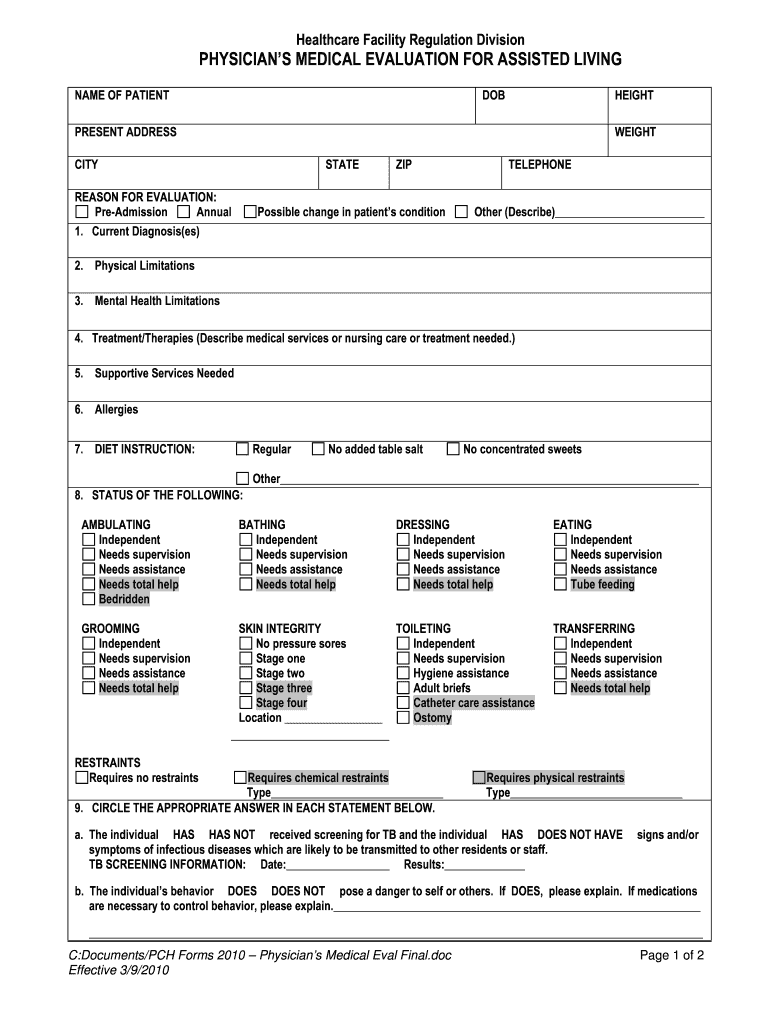
A physician's medical evaluation for assisted living is a crucial document that assesses the health, safety, and care needs of individuals seeking admission to assisted living facilities. This evaluation serves to determine whether a potential resident can live safely in a community setting while receiving the appropriate level of care. It includes the patient's medical history, physical and cognitive assessments, and recommendations for care. The evaluation aims to ensure that the resident's needs match the services offered by the facility, allowing for a seamless transition.
The evaluation typically encompasses various health components, including physical health checks, mental health status assessments, and reviews of daily living activities. Each section is designed to provide a comprehensive understanding of the individual's capabilities and support needs, ensuring appropriate allocation of resources and care strategies.
Key Elements of the Physician's Medical Evaluation for Assisted Living
The physician's medical evaluation includes several key components that help facilities understand the applicant's unique situations. These elements commonly involve:
- Patient Information: Basic details such as name, age, and contact information to identify the individual.
- Medical History: A thorough account of past and current medical conditions, surgeries, medications, and any relevant allergies.
- Physical Health Assessment: Results from physical examinations, measuring vital signs, mobility capabilities, and any chronic health issues.
- Cognitive Assessment: Evaluations focusing on mental health, cognitive abilities, memory function, and potential behavioral concerns.
- Daily Living Activities: Assessment of the individual's ability to perform essential daily tasks, such as bathing, eating, and managing medications.
- Recommendations for Care: Guidance on the level of assistance required, which may include skilled nursing, occupational therapy, or personal care.
These elements together form a complete picture that aids decision-making for both the individual and the assisted living facility.
Steps to Complete the Physician's Medical Evaluation for Assisted Living
Completing the physician's medical evaluation involves a structured process that ensures all necessary information is collected and documented accurately. The typical steps include:
- Schedule an Appointment: The first step is to set a date for the evaluation with a licensed physician familiar with assisted living requirements.
- Prepare Medical Records: Prior to the appointment, gather any relevant medical documents, including previous evaluations, a list of current medications, and contact details for healthcare providers.
- Undergo the Evaluation: During the consultation, the physician will conduct examinations, ask questions about health history, and assess functional abilities.
- Complete the Evaluation Form: The physician will fill out the physician's medical evaluation form, detailing findings from the assessments and providing recommendations.
- Review and Sign: After the physician completes the form, it should be reviewed for accuracy. Both parties should sign the document, as this ensures it is officially validated.
- Submit the Evaluation: The finalized evaluation must be submitted to the relevant assisted living facility as part of the admissions process.
This structured approach guarantees that all necessary health information is gathered efficiently and safely.
Legal Use of the Physician's Medical Evaluation for Assisted Living
The physician's medical evaluation serves a legal purpose in the admissions process for assisted living facilities. Providers rely on this document to ensure compliance with regulatory standards and to make informed decisions about a resident's suitability for the facility. Key legal aspects include:
- Liability Protection: By obtaining a comprehensive evaluation, facilities protect themselves from legal repercussions associated with misjudging a resident’s needs and capabilities.
- Regulatory Compliance: Many states have specific regulations regarding the admission process to assisted living, requiring evaluations to maintain compliance with healthcare standards.
- Adherence to Care Contracts: The evaluation provides a foundation for care plans that are legally binding, outlining the services the facility is obligated to provide based on the resident's assessed needs.
Failing to conduct a thorough physician’s medical evaluation can expose facilities to potential legal issues stemming from inadequate care provision.
Important Terms Related to the Physician’s Medical Evaluation for Assisted Living
Understanding specific terminology related to the physician's medical evaluation is essential for both families and healthcare professionals involved in the assisted living admissions process. Key terms include:
- Cognitive Impairment: A decline in memory or cognitive function, which may affect decision-making or daily activities.
- Activities of Daily Living (ADLs): Routine self-care tasks such as bathing, dressing, eating, and mobility.
- Instrumental Activities of Daily Living (IADLs): More complex daily tasks like managing finances, shopping, and using the telephone.
- Level of Care: The degree of assistance required by a resident, which can range from minimal support to 24-hour care.
Familiarity with these terms aids in effective communication among families, healthcare providers, and assisted living facilities.
Examples of Using the Physician's Medical Evaluation for Assisted Living
Practical scenarios illustrate the application of the physician's medical evaluation in assisted living settings. Here are a few examples:
- Case of Memory Loss: An elderly individual shows signs of memory loss that affect their ability to manage medications. The evaluation documents these concerns, recommending medication management services and regular cognitive assessments within the living facility.
- Post-Surgery Recovery: Following major surgery, a patient requires temporary assistance with everyday tasks. The physician's evaluation outlines rehabilitation services that facilitate a smoother recovery process, ensuring appropriate levels of care are available upon admission.
- Chronic Illness Management: For residents managing chronic conditions such as diabetes, the evaluation may recommend dedicated dietary support and medications management services to ensure compliance with health regimens.
These examples highlight how the physician's medical evaluation drives personalized care strategies in assisted living facilities, enabling tailored support for residents based on their specific health needs.




