
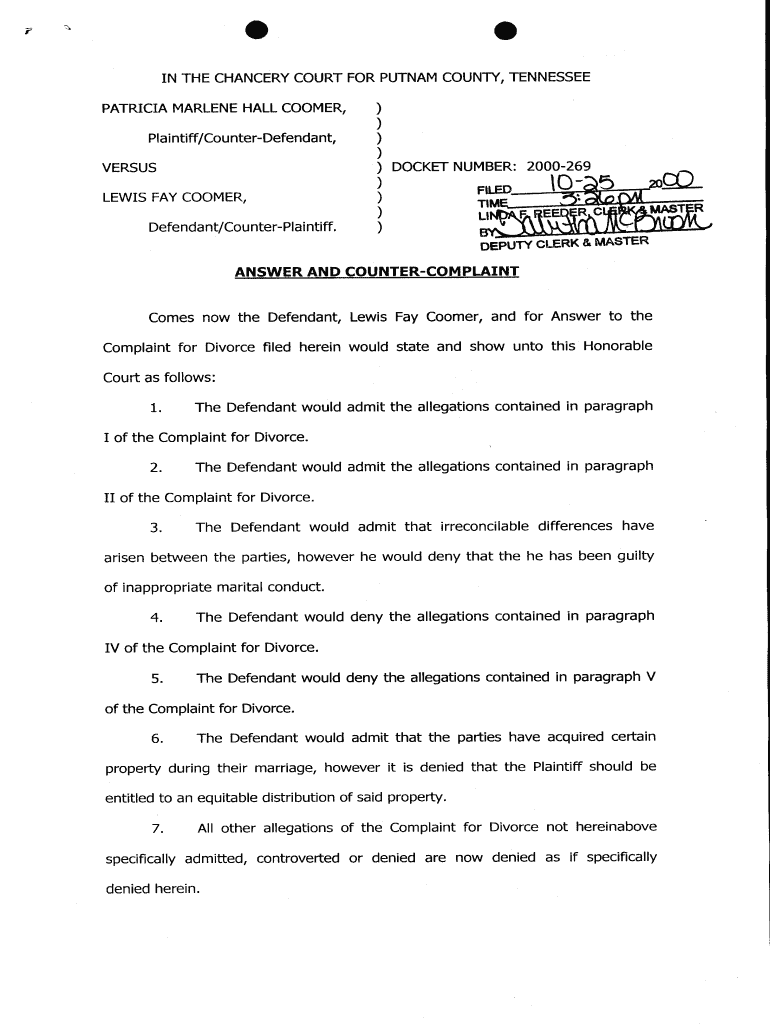







Understanding the Sample Response to Divorce Petition
A sample response to a divorce petition is a legal document filed by the respondent in response to a divorce complaint initiated by the petitioner. This response serves multiple purposes, including acknowledging the receipt of the divorce papers, stating whether the respondent agrees or disagrees with the claims made in the petition, and providing any counterclaims or defenses.
Key Components of a Response to Divorce Petition
A comprehensive response to a divorce petition should generally include the following key components:
-
Acknowledgment of Receipt: Confirm that the respondent has received the divorce petition and understands its contents. This is often stated in the first paragraph.
-
Admittance or Denial: Clearly indicate which allegations in the petition are admitted and which are denied. It is essential for respondents to specify their position clearly to avoid assumptions during legal proceedings.
-
Counterclaims: If applicable, the respondent may wish to include counterclaims against the petitioner. This part of the response allows the respondent to present their grievances, potentially addressing aspects such as custody, property division, or financial support.
-
Request for Relief: This section outlines what the respondent seeks from the court. It can include requests for equitable distribution of assets, child custody arrangements, or dismissal of the petition based on the claims made.
-
Verification Statement: Many responses require a verification statement attesting that the information provided is truthful to the best of the respondent’s knowledge. This statement is often accompanied by the respondent's signature.
Sample Language for a Response to Divorce Petition
When drafting a sample response, specific language can improve clarity and ensure it meets legal standards. Here is a suggested structure for different sections:
-
Introduction: "I, [Your Name], respond to the Petition for Divorce filed by [Petitioner's Name] on [date]. This response is filed with the [Court Name], Case No. [Case Number]."
-
Admission or Denial: Example: "I admit the claim that the parties were married on [date], but deny the allegations regarding [specific claims]."
-
Counterclaims: "In response to the allegations made by the petitioner, I submit the following counterclaims: [List any counterclaims, such as financial needs or custody concerns]."
-
Relief Requested: "I respectfully request that the court grant the following relief: [List desired outcomes, such as joint custody or division of assets]."
-
Verification: "I declare under penalty of perjury that the foregoing is true and correct."
Alternative Formats for Responses in Different States
While the general structure remains similar, specific states may have unique requirements for a response to a divorce petition. For example:
-
Florida: Florida courts require respondents to submit their answers within twenty days of being served to avoid default judgment. The format may vary slightly but generally includes similar components outlined previously.
-
California: In California, respondents can also file a "Response - Marriage/Domestic Partnership" form (FL-120) that follows a prescribed format, making it essential to adhere closely to provided guidelines.
Common Mistakes to Avoid
When preparing a response to a divorce petition, several common pitfalls should be avoided:
-
Ignoring Deadlines: Each state has specific timelines within which to respond. Failing to adhere to these timelines can result in a default judgment against the respondent.
-
Inaccurate Information: Providing inaccurate or misleading information can adversely affect the case. Ensure all statements are truthful and reflected accurately.
-
Lack of Clarity: Vague responses may lead to confusion or misinterpretation. Each claim or denial should be stated clearly to avoid ambiguity.
Seeking Legal Assistance
While individuals can file responses to divorce petitions independently, consulting with a family law attorney can provide guidance tailored to specific cases. An attorney can ensure that the response is comprehensive, adheres to legal standards, and effectively protects the respondent's interests.
By understanding the structure and components of a sample response to a divorce petition, individuals can prepare more effectively for their legal proceedings.




