






Definition and Purpose of Colorado Form 106
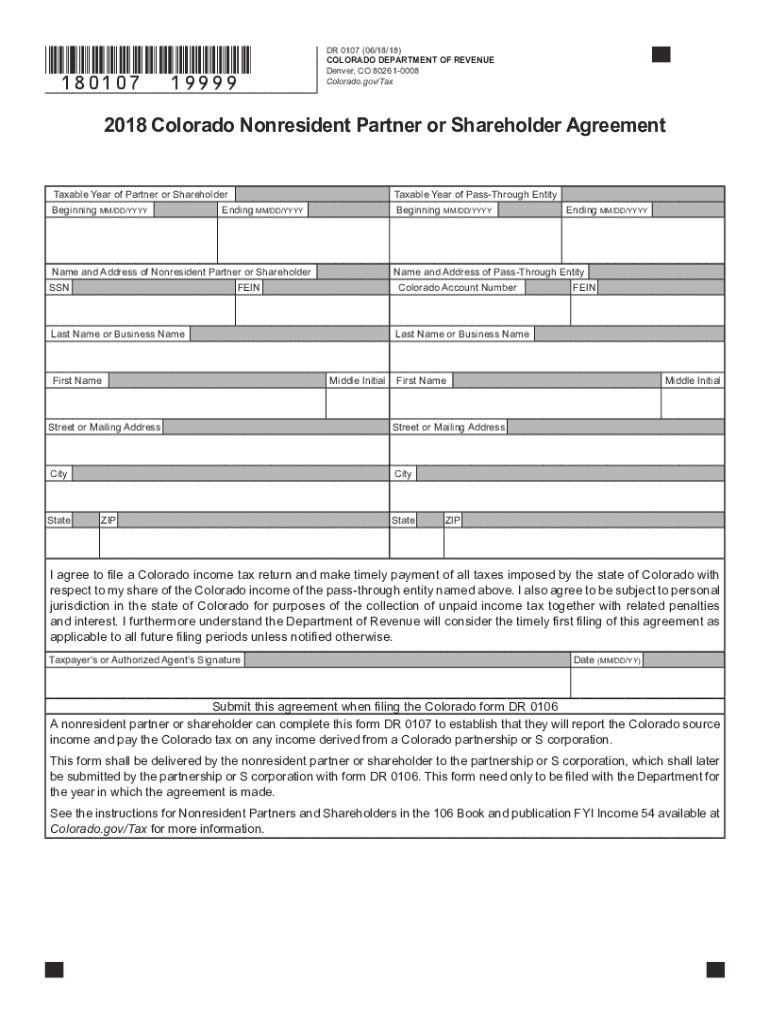
Colorado Form 106, commonly referred to as the DR 0106, is a tax form used by Partnerships and S Corporations operating within Colorado to report income, deductions, and credits. It is specifically designed to capture the income generated by nonresident partners and shareholders, ensuring they meet their tax obligations to the state. This form plays a critical role in composite filings, allowing business entities to consolidate the submission of tax payments for nonresident parties, thereby simplifying tax compliance and administration.
Form DR 0106 is required to ensure that appropriate taxes are paid on earnings attributed to individuals and entities that do not reside in Colorado but participate in the state’s economic activities through partnerships or S Corporations. Timely and accurate completion of this form is essential for avoiding penalties and ensuring compliance with Colorado’s tax laws.
How to Use Colorado Form 106
To effectively use the DR 0106, entities need to prepare comprehensive income statements detailing all income generated within Colorado. The form requires the separation of Colorado-specific income from general earnings, which may involve intricate calculations, especially if the partnership or S Corporation operates in multiple states.
-
Aggregate Colorado Income: Begin by compiling all applicable income earned in Colorado. This includes revenue from sales, services, and rental properties located within the state.
-
Calculate Deductions: Identify deductible expenses directly linked to the generation of Colorado-based income. Only allowable deductions as outlined in Colorado's tax code should be included.
-
Determine Credits and Adjustments: Apply any credits available to the business, such as those for taxes already paid in other jurisdictions or investment-related incentives.
-
Divide Income Among Partners/Shareholders: Use the entity’s ownership structure to distribute net income among nonresident partners or shareholders.
-
Composite Filing: Consider using the composite filing option if the entity qualifies, allowing for a single submission to cover the tax responsibilities of all nonresident stakeholders.
How to Obtain Colorado Form 106
Colorado Form 106 can be obtained through several avenues to ensure tax compliance:
-
State Tax Website: The Colorado Department of Revenue’s online platform provides downloadable forms and accompanying instructions. Users can navigate the site to locate the most recent version of the DR 0106.
-
Tax Preparation Software: Common tax software packages, such as TurboTax and QuickBooks, include Colorado tax forms as part of their offerings. These programs facilitate the automatic generation of necessary forms as part of the overall tax preparation process.
-
Professional Tax Services: Many accountants and tax professionals can provide hard copies or digital versions of the DR 0106, ensuring you have access to the correct, updated document.
Steps to Complete Colorado Form 106
Completing the DR 0106 requires careful attention to detail and a thorough understanding of Colorado's tax regulations:
Step 1: Gather Documentation
Collect all financial statements, income records, and any relevant documents that track the economic activities of the partnership or S Corporation.
Step 2: Fill Out Income Sections
- Accurately report the total income generated by the business.
- Distinguish between income earned within Colorado and other jurisdictions.
Step 3: Deductions and Credits
- List all qualifying deductions.
- Apply any credits for which the partnership or corporation is eligible.
Step 4: Allocate Income
Use the appropriate method to allocate income among partners or shareholders based on ownership percentages or agreed-upon structures.
Step 5: Finalize and Review
Review completed sections for accuracy. Ensure calculations are consistent with federal tax returns if required.
Step 6: Sign and Submit
Sign the form (electronically or manually, as needed) and submit it by the due date through designated submission methods (online, mail, or in-person).
Who Typically Uses Colorado Form 106
This form is predominantly utilized by business entities structured as Partnerships or S Corporations that operate within Colorado. It is relevant for:
- Nonresident Shareholders: Individuals owning part of an S Corporation but residing outside of Colorado.
- Partnerships with Nonresident Partners: Partnerships with partners not domiciled in Colorado, yet earning income through the entity’s operations within the state.
- Tax Advisors and Accountants: Professionals tasked with managing tax compliance for clients engaged in Colorado-based business activities.
Key Elements of Colorado Form 106
- Composite Filing Option: Allows partnerships or corporations to file and pay taxes on behalf of all nonresident partners or shareholders.
- Specific Allocation of Income: Requires clear reporting of how Colorado-sourced income is divided among nonresident stakeholders.
- Comprehensive Deduction Section: Provides for numerous state-specific deductions that may not be available on federal forms.
Filing Deadlines and Important Dates
The deadline to file the DR 0106 aligns with federal tax deadlines for partnerships and S Corporations, typically on March 15. Extensions may be granted, mirroring federal extension policies, but any taxes owed must be paid by the original deadline to avoid penalties.
Considerations for Timely Filing
- Timely Submission: Meets deadlines to avoid costs associated with penalties and interest.
- Extension Requests: Available for those needing additional time, provided they adhere to application protocols.
Required Documents for Filing Colorado Form 106
Accurate filing of the DR 0106 ensures compliance and requires a collection of specific documents:
- Income Statements: Detailing revenue and expenses attributed to this entity.
- Ownership Documentation: Describing the percentage ownership or share allocation for partners and shareholders.
- Previous Tax Return Copies: Especially if opting for a composite return, where historical data might be necessary.
- Supporting Schedules: Used to justify deductions, credits, and any adjustments made.
Leveraging the DR 0106 to its fullest requires careful organization and understanding of Colorado’s tax landscape, thereby ensuring businesses comply with state mandates while optimizing their tax positions.