




01. Edit your dr 0106k online
Type text, add images, blackout confidential details, add comments, highlights and more.

Type text, add images, blackout confidential details, add comments, highlights and more.

Draw your signature, type it, upload its image, or use your mobile device as a signature pad.

Send co form 106 via email, link, or fax. You can also download it, export it or print it out.
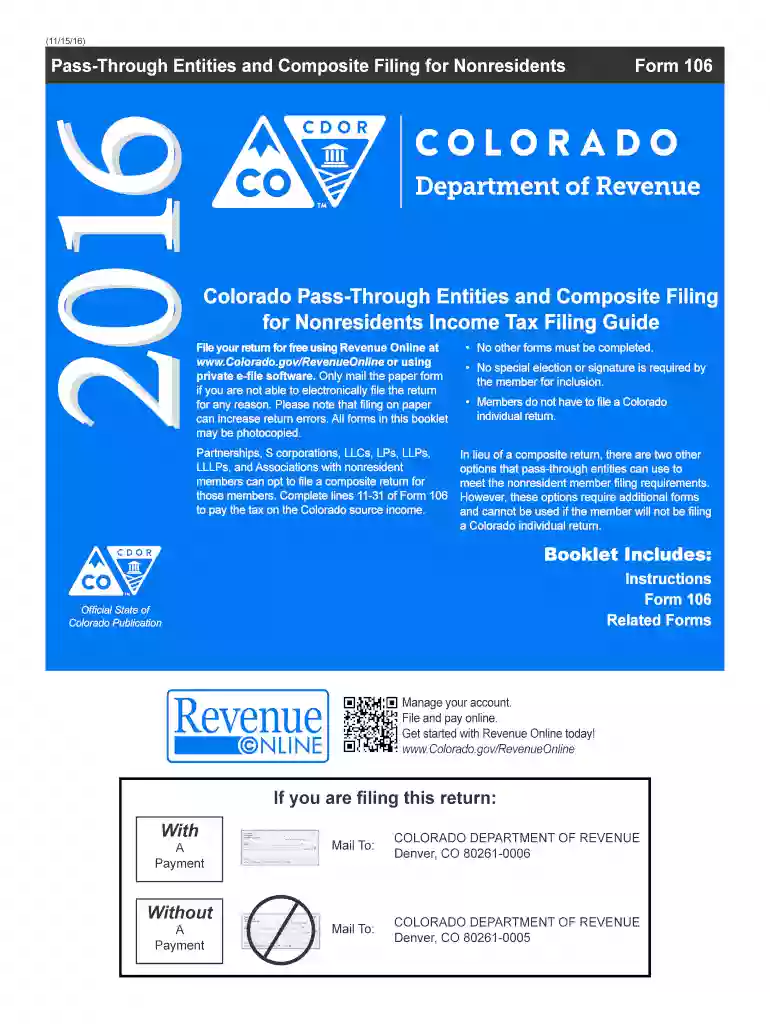
Colorado Form 106 is a vital tax document used by Colorado pass-through entities such as partnerships and S corporations to file state income tax returns on behalf of their nonresident members. This form is instrumental in managing composite returns for these entities, which facilitates collective filing and tax compliance. By compiling the tax obligations of individual partners or shareholders into a single composite return, Form 106 simplifies the tax reporting process and helps ensure adherence to Colorado's tax regulations.
Colorado Form 106 requires specific information related to the business entity and its nonresident members. Critical elements include:
Gather Required Information: Collect all necessary financial documents, including federal K-1 statements, income records, and any previous tax returns.
Fill in Business Details: Enter the entity’s name, address, and federal employer identification number at the top of the form.
Report Income and Deductions: Complete sections on total income, business expenses, and applicable deductions.
Calculate State Apportionment: Apply Colorado’s apportionment formula to determine the income attributable to nonresident members.
List Nonresident Members: Provide details on each member, including their share of the composite income and credits.
Sign and Date: Ensure the authorized representative signs and dates the form for submission.
Colorado Form 106 is predominantly used by:
The legal framework surrounding Colorado Form 106 ensures:
Colorado imposes specific rules for filing this form:
Colorado tax law stipulates clear deadlines and important dates for filing Form 106:
Filing Colorado Form 106 demands particular documents:
Entities can submit Colorado Form 106 through several channels:
Tax software such as TurboTax and QuickBooks often support Colorado Form 106 for electronic preparation and filing, aiding in seamless integration with business accounting systems and ensuring accurate tax filings.
We've got more versions of the dr 0106k form. Select the right dr 0106k version from the list and start editing it straight away!
| Versions | Form popularity | Fillable & printable |
|---|---|---|
| 2025 | 4.5 Satisfied (30 Votes) | |
| 2024 | 4.2 Satisfied (35 Votes) | |
| 2023 | 4.1 Satisfied (60 Votes) | |
| 2020 | 4.8 Satisfied (73 Votes) | |
| 2019 | 4.2 Satisfied (117 Votes) | |
| 2018 | 4.4 Satisfied (119 Votes) | |
| 2016 | 4.4 Satisfied (501 Votes) | |
| 2015 | 4.1 Satisfied (36 Votes) | |
| 2014 | 4 Satisfied (32 Votes) | |
| 2013 | 4 Satisfied (37 Votes) | |
| 2011 | 4.2 Satisfied (41 Votes) |
At DocHub, your data security is our priority. We follow HIPAA, SOC2, GDPR, and other standards, so you can work on your documents with confidence.


