
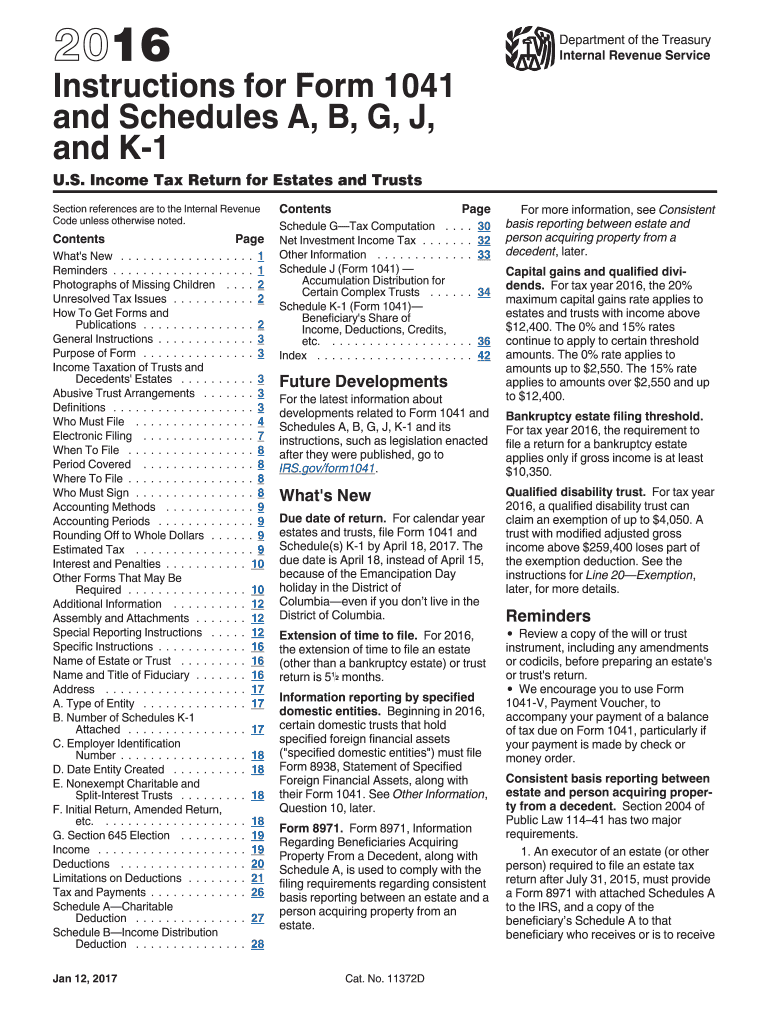







Definition and Purpose of Form 1041
Form 1041 is used for filing U.S. income tax returns for estates and trusts. It is essential for reporting income, deductions, gains, losses, and tax liabilities associated with these entities. The instructions for the 2016 Form 1041 provide comprehensive guidance tailored to the unique tax obligations of estates and trusts, helping ensure compliance with federal tax laws.
Who Needs to File Form 1041
- Decedent's Estates: Required to file if gross income meets or exceeds $600 during the tax year or if a beneficiary is a non-resident alien.
- Domestic Trusts: Must file under the same gross income threshold or if any taxable income is generated.
- Bankruptcy Estates: Utilize Form 1041 to report income generated by estate assets.
- Grantor Trusts: Special rules apply where the grantor reports trust income on their tax return.
- Electing Small Business Trusts: May have specific filing requirements based on income and beneficiaries' status.
Key Elements of the 1041 Instructions 2016 Form
The 1041 instructions guide filers through complex tax reporting requirements for estates and trusts. Critical elements include:
- Filing Thresholds: Specific income levels and conditions necessitating the filing of Form 1041.
- Income Distribution Deduction: Explanation of how distributions to beneficiaries affect taxable income.
- Special Reporting Requirements: Particular guidelines for grantor type trusts and other unique entities.
- Updates and Changes: Notable amendments for the 2016 tax year, including changes to tax rates, exemptions, and deduction limits.
Steps to Complete the 1041 Instructions 2016 Form
Providing accurate information on Form 1041 involves several detailed steps:
- Gather Required Documents: Collect all W-2s, 1099s, and records of income distribution.
- Calculate Gross Income: Include all income items such as interest, dividends, and capital gains.
- Determine Deductions: Identify deductible expenses including administration costs, trustee fees, and charitable contributions.
- Complete Schedules: Fill out any applicable schedules for additional income details and allocation.
- Report Distributions: Accurately report distributions made to beneficiaries for the tax year.
- Double-Check Entries: Review all entries for accuracy to avoid errors and potential penalties.
Important Terms Related to Form 1041
Understanding key terminology is crucial when navigating the 1041 instructions:
- Fiduciary: The executor, administrator, or trustee responsible for handling the estate or trust.
- Taxable Year: Generally matches the calendar year but can differ if a fiscal year is adopted.
- Distributable Net Income (DNI): The income available for distribution to beneficiaries, affecting the tax implications for both parties.
- Undistributed Net Income: Income retained within the estate or trust, subject to different tax treatments.
IRS Guidelines and Filing Deadlines
Following IRS guidelines is vital to ensure compliance:
- Filing Deadline: Generally due by April 15 of the year following the close of the tax year. Extensions may be requested.
- Electronic Filing: Encouraged for faster processing and to reduce errors.
- Penalties: Late filings may incur penalties unless reasonable cause is demonstrated for delays.
Required Documents for Form 1041 Submission
Accurate submission of Form 1041 requires several key documents:
- Income Records: Comprehensive documentation of income received by the estate or trust.
- Expense Receipts: Verification of allowable deductions.
- Estate or Trust Deed: Legal documentation establishing fiduciary responsibilities and entity details.
Penalties for Non-Compliance with Form 1041
Failure to comply with filing requirements can lead to significant penalties:
- Late Filing Penalties: A percentage of unpaid taxes is charged monthly for late submissions.
- Underpayment Penalties: Interest on underpaid taxes can accumulate, increasing liability.
- Negligence Penalties: Applied when inaccurate reporting is due to disregard of rules or regulations.
State-Specific Rules and Variations
States may have additional rules that impact Form 1041 filing:
- State Income Tax Returns: Estates and trusts may also need to file state-specific income tax returns.
- State Deductions and Credits: Vary by state and may differ from federal allowances.
- State-Specific Deadlines: May not align with federal filing deadlines, necessitating careful planning.




