



01. Edit your irs forms and instructions online
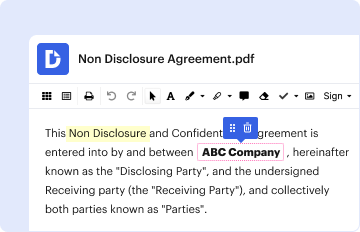
Type text, add images, blackout confidential details, add comments, highlights and more.

Type text, add images, blackout confidential details, add comments, highlights and more.
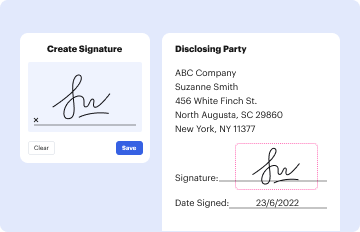
Draw your signature, type it, upload its image, or use your mobile device as a signature pad.

Send 2021 form 1041 instructions via email, link, or fax. You can also download it, export it or print it out.
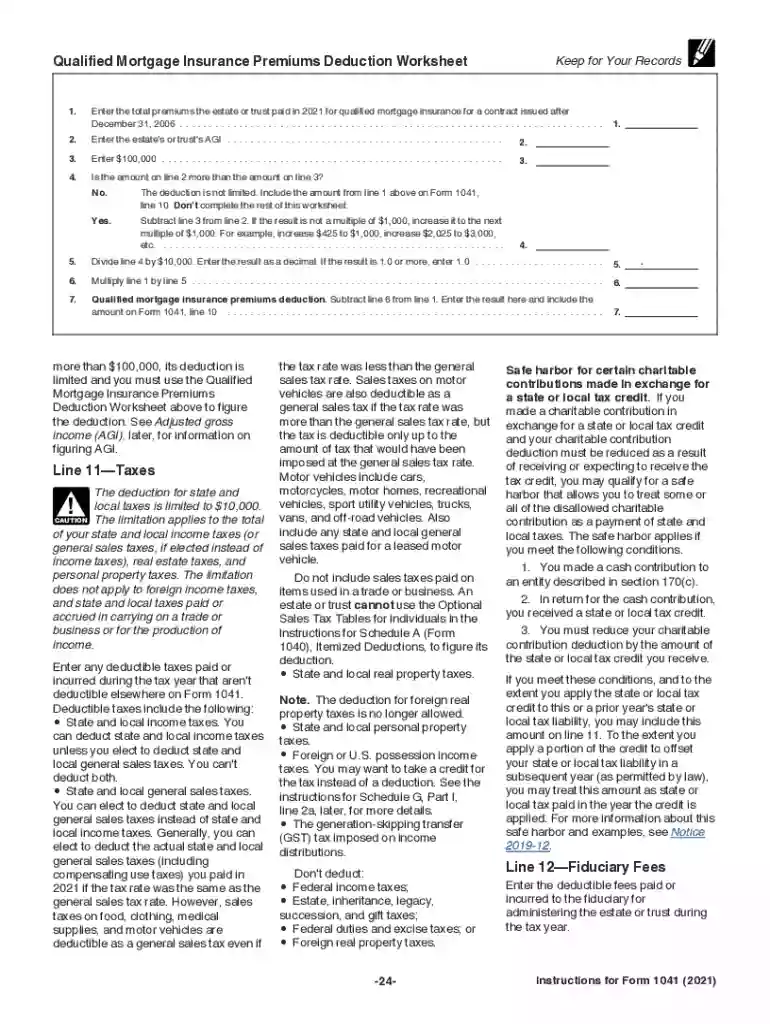
Form 1041, officially known as the "U.S. Income Tax Return for Estates and Trusts," is essential for reporting the income, deductions, and tax liabilities of estates and certain trusts. This form is critical for compliance with tax regulations concerning the management and distribution of assets within these entities. It is filed annually with the IRS to declare any income generated from the estate or trust, such as interest, dividends, rents, and other pertinent earnings, along with applicable expenses and distributions made to beneficiaries. The accuracy of Form 1041 is vital, as it ensures correct tax reporting and the fulfillment of fiduciary responsibilities under U.S. tax law.
Using Form 1041 involves gathering all necessary financial data concerning the estate or trust for the tax year. To effectively utilize the form, follow these steps:
Filling out Form 1041 requires a systematic approach to capture all financial transactions accurately. Here are the detailed steps to complete the form:
Timely filing of Form 1041 is crucial to avoid penalties. The standard deadline to submit Form 1041 is the 15th day of the fourth month following the close of the estate or trust's tax year—traditionally, this is April 15 for calendar-year filers. However, if this date falls on a weekend or holiday, the deadline is extended to the next business day. Taxpayers can request a five-month extension using Form 7004, granting additional time, typically to September 30, to file their returns accurately.
The IRS provides comprehensive guidelines to aid in the filing of Form 1041, ensuring all fiduciaries adhere to federal tax laws. These guidelines cover:
Failure to file Form 1041 accurately or on time can result in substantial penalties. The IRS typically imposes a penalty for late filing based on the amount of tax due, calculated as a percentage of the unpaid tax. Additionally, penalties increase with the duration of the delay. Filing an incomplete form or incorrect information can also lead to fines or interest charges on owed back taxes, emphasizing the importance of careful review and adherence to filing deadlines.
An accurate and complete Form 1041 filing requires several documents:
Understanding Form 1041 involves appreciating its application in various scenarios:
These cases highlight the versatility and importance of Form 1041 in managing and reporting the financial affairs of estates and trusts.
We've got more versions of the irs forms and instructions form. Select the right irs forms and instructions version from the list and start editing it straight away!
| Versions | Form popularity | Fillable & printable |
|---|---|---|
| 2024 | 4.3 Satisfied (51 Votes) | |
| 2023 | 4.8 Satisfied (54 Votes) | |
| 2022 | 4.6 Satisfied (51 Votes) | |
| 2021 | 4.8 Satisfied (35 Votes) | |
| 2020 | 4 Satisfied (73 Votes) | |
| 2019 | 4.1 Satisfied (103 Votes) | |
| 2018 | 4.3 Satisfied (72 Votes) | |
| 2017 | 4.4 Satisfied (251 Votes) | |
| 2017 | 4.4 Satisfied (216 Votes) | |
| 2016 | 4.3 Satisfied (58 Votes) | |
| 2015 | 4 Satisfied (33 Votes) | |
| 2014 | 4 Satisfied (50 Votes) | |
| 2013 | 4 Satisfied (26 Votes) | |
| 2011 | 4.2 Satisfied (63 Votes) |
At DocHub, your data security is our priority. We follow HIPAA, SOC2, GDPR, and other standards, so you can work on your documents with confidence.

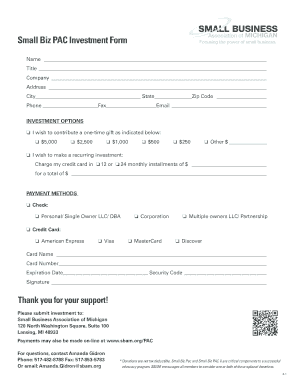



Mar 30, 2026 The fiduciary of a domestic decedents estate, trust, or bankruptcy estate files Form 1041 to report: The income, deductions, gains, losses,Read more
The return on form 1041-A shall be filed on or before the 15th day of the 4th month following the close of the taxable year of the trust.Read more
4. If you filed a joint return (or separate return) for some, but not all, of the tax years involved in figuring the carryback, list the.Read more


